Industry: Consumer Goods

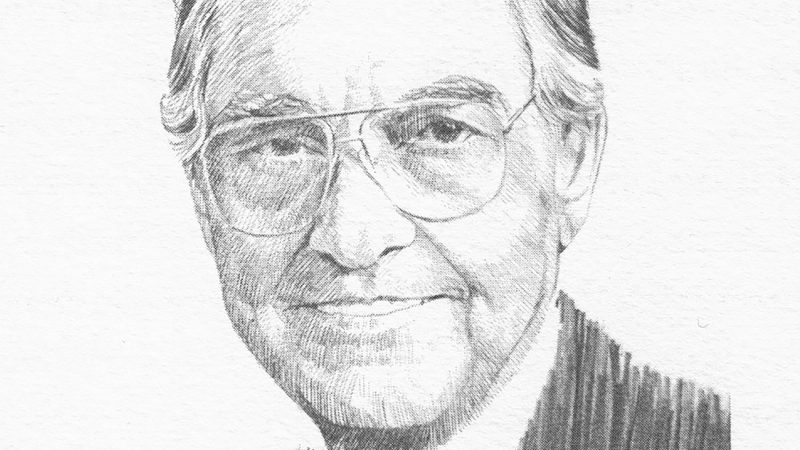
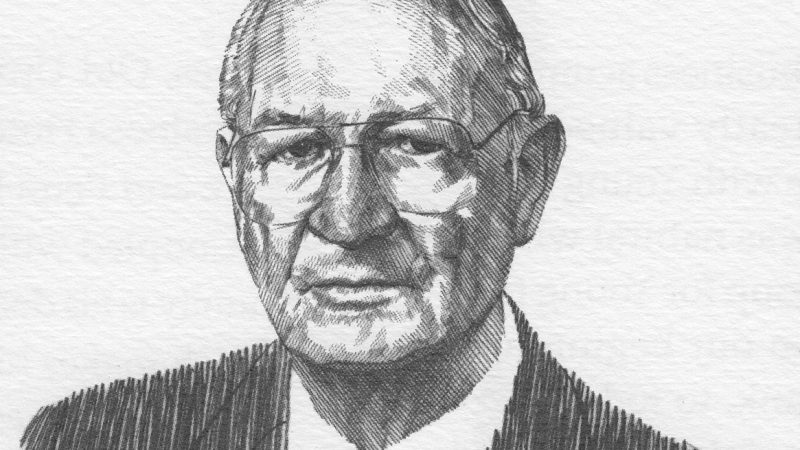
Benny M. LaRussa Jr.

  • December 5th, 2025

Benny LaRussa Jr.’s entrepreneurial instincts were shaped early in life by his family’s legacy. His grandfather, Joe Bruno, founded Bruno’s grocery store and Big B Drugs, building each into two of the South’s most recognized supermarket and drugstore chains. His father, Benny LaRussa Sr., carried on that tradition of growth by purchasing Jack’s Family Restaurants initially as a franchisee and eventually acquiring the balance of the company owned stores. Over a 30-year period Jack’s family restaurants grew from 13 stores to nearly 150 units. Growing up in this environment gave LaRussa a first-hand view of the hard work, vision, and courage required to run and expand successful businesses.

LaRussa Jr. is the founder and CEO of Sterling Capital Management, a multi-asset holding company headquartered in Birmingham, Alabama. Under his leadership, Sterling Capital has built a diverse portfolio of businesses that reflect both his strategic vision and his commitment to strengthening communities.

Today, the firm owns and operates three primary platform companies: Fenwick Food Group, which invests in and operates consumer-packaged goods businesses such as Wickles Pickles and Moore’s Marinade and Wing Sauces; American Pipe and Supply, a regional wholesale distributor of pipe, valves, and fittings; and StoneRiver Company, which specializes in the acquisition, development, and management of multi-family residential properties. Through these ventures, LaRussa has helped create companies that not only generate jobs but also provide long-term value to the regional economy.

He earned a bachelor’s degree in finance from Auburn University before pursuing a master’s degree in public and private management from Birmingham-Southern College.

LaRussa began his career in banking at the First National Bank of Birmingham, now Regions Bank. In 1985 he was a founding member of First Commercial Bank, where he spent six years gaining valuable experience in financial services and client management. This period provided him with the skills and industry insight that would prove essential when, in 1991, he co-founded Canterbury Trust Company, Inc., a privately owned state-chartered trust company. Canterbury Trust quickly established a reputation for quality and reliability with over $1 billion in assets before eventually being sold to Synovus Financial Corporation.

At Sterling Capital, LaRussa provides strategic leadership, cultivates staff development, and draws on more than 35 years of operations and investment acumen in real estate and operating companies. The success of StoneRiver, American Pipe & Supply, and Fenwick Food Group are a direct reflection of his ability to combine sound investment practice, strategic execution, and operational excellence with a long-term, community-minded approach.

LaRussa has devoted much of his time and energy to civic and philanthropic service. He currently serves on the board of directors for Security Engineers Inc., Quarterbacking Children’s Health Foundation, Ascension Healthcare, and the Joseph S. Bruno Charitable Foundation. He has also supported organizations such as the Juvenile Diabetes Research Foundation, UAB Comprehensive Diabetes Center, Children’s Hospital of Alabama, and The Bell Center. His commitment to community is reflected in the countless number of nonprofit boards he has served.

LaRussa has served on boards for St. Vincent’s Health System, Bruno’s, Inc., Jack’s Family Restaurants, Synovus Bank of Birmingham, and Auburn University Foundation where he chaired the board from 2019 to 2020 and also served on the Auburn University Real Estate Foundation. His long record of service to Auburn includes many years on the Dean’s Advisory Committee for the Raymond J. Harbert College of Business. In 2022, the Alabama Chapter of the Association of Fundraising Professionals honored him as a VIP (Volunteer in Philanthropy) for his support of UAB’s Comprehensive Diabetes Center.

He and his wife, Lynn, live in Birmingham. They have two daughters and four grandchildren.

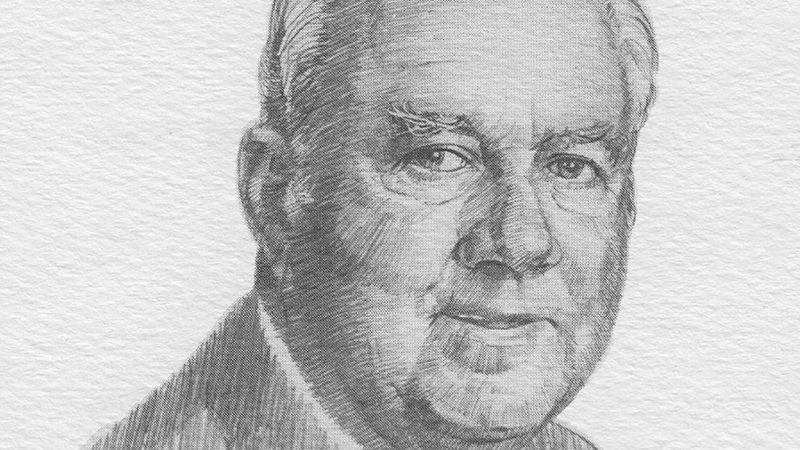
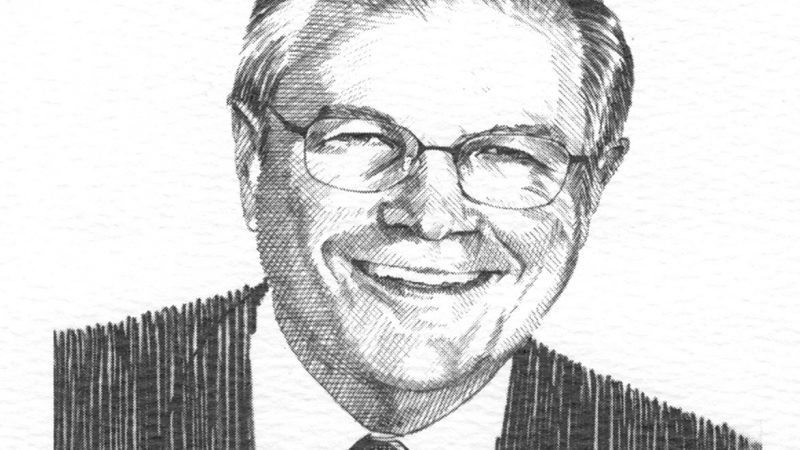
Terry C. Anderson

  • December 5th, 2025

The Anderson name is associated with leadership, service, and vision. That legacy continues with Terry C. Anderson, chairman and CEO of American Promotional Events, Inc. American Promotional Events, Inc., better known as TNT Fireworks, was founded by his grandfather Clyde W. Anderson in 1920. TNT Fireworks has grown under three generations of family leadership into the largest distributor of consumer fireworks worldwide.

Today, TNT Fireworks is a global powerhouse, importing and distributing products throughout the United States, Asia, and Puerto Rico. Its products can be found in 49 states, reaching customers through more than 40,000 big-box retailers, grocery chains, wholesale clubs, and discount stores, as well as through over 5,000 seasonal stands and tents often operated by nonprofit and community organizations.

Terry is the third generation of the Anderson family to lead TNT Fireworks. Following family tradition, Terry joined the business to continue its legacy of responsible consumer fireworks sales and community partnerships. That legacy extends far beyond fireworks. “Terry has continued to strengthen the family legacy of philanthropy, community service, and civic leadership,” said University of North Alabama President Kenneth Kitts. “The University of North Alabama is proud to call Terry Anderson our friend.”

As CEO, Anderson has been at the forefront of expanding both the reach and the reputation of TNT Fireworks. Working closely with state leaders, he helped pave the way for the legal sale of consumer fireworks in 49 states. He also spearheaded the company’s groundbreaking partnerships with national retailers including Walmart, Target, Costco, Kroger, Publix, Lowe’s, Home Depot, and dozens more. These efforts solidified TNT’s presence across the country, making it the go-to brand for safe, high-quality fireworks.

Along the way, Anderson led major acquisitions including Pyrodyne America, Freedom Fireworks, Atlas Enterprises, and Red Devil Fireworks, which strengthened the company’s presence in the West and Northwest. By 2002, these acquisitions were unified under the TNT Fireworks brand, creating a single, trusted name for families celebrating holidays and special occasions nationwide.

Beyond TNT Fireworks, Anderson plays an influential role in several family-owned enterprises and ventures. He serves as chairman of Anco Far East Importers Ltd. in Hong Kong, which provides sourcing and supply chain solutions to businesses around the globe. He is also a director for Anderson Media Corporation, Books-A-Million, Inc., Whataburger NWAL Franchise, Anderson Growth Partners, B.A.S.S. LLC, and Renew Wellness Brands, LLC. Anderson’s impact goes beyond TNT. He was instrumental in the growth of Books-A-Million, which he helped transform from a regional bookstore into one of the nation’s largest booksellers. Similarly, his contributions to Anderson Merchandisers and Anderson Media Corporation have strengthened relationships with major retailers and expanded employment opportunities. Collectively, the Anderson family businesses employ more than 10,000 people nationwide, creating an enduring impact on both Alabama’s economy and the broader U.S. marketplace.

Philanthropy and community service remain cornerstones of Anderson’s leadership philosophy. He has given his time and expertise to numerous nonprofit organizations, serving on boards for The Salvation Army of the Shoals, Riverhill School Foundation, The Alabama Business Hall of Fame, The Alabama Kidney Foundation, The Fellowship of Christian Athletes, United Way of the Shoals, Healing Place of the Shoals, St. Jude Children’s Research Hospital, and the National Brain Tumor Society. Through this work, Anderson has extended his influence far beyond the boardroom, touching countless lives in his home community and beyond.

Anderson is a graduate of the University of Tennessee, having earned his Bachelor of Science in business administration. He was also a member of the Tennessee football team. He and his wife, Susan, live in Florence Alabama, and have three children, two daughters-in-law, three grandchildren, and a fourth grandchild expected in January.

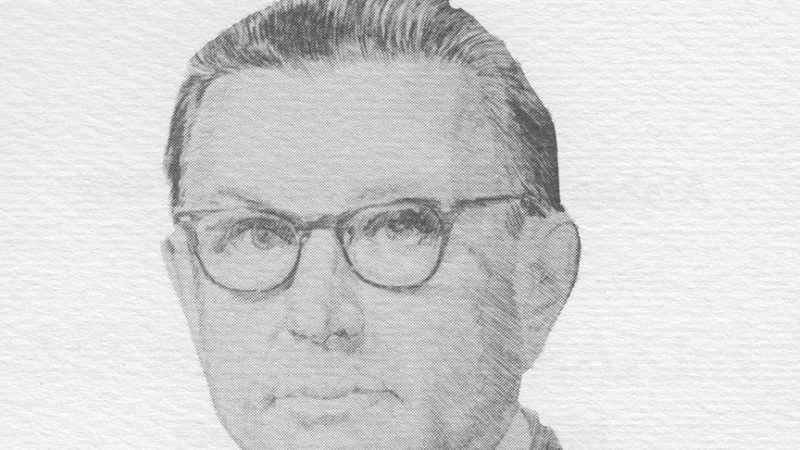
Angelo J. Bruno

  • October 26th, 2021

The late Angelo Bruno, who was Chairman of the Board of Bruno’s, Inc., has been described as a quiet, shy man who enjoyed life, loved his family, and was proud of his family’s achievements. For years he worked with his brothers building a supermarket empire that is today by far the largest chain in Alabama.

One of the eight children of Vincent and Maria Theresa Costa Bruno, Angelo J. Bruno was born in Birmingham, Alabama, on May 29, 1924. His parents had come to America from Sicily in 1909 to pursue their dreams of a better life.

When Angelo Bruno was seven years old, his oldest brother Joe (then 19 years old) used the family savings – $600 – to purchase a grocery store on the corner of Eighth Avenue North and Tenth Street in Birmingham. (The 20′ by 40′ store would fit inside a modern meat cooler.) Joe and Sam (the two oldest of the brothers) quit their jobs and moved the family into the small living quarters next to the store.

Though Joe Bruno was considered “head of the family,” the whole family participated in various capacities in operating the store. Angelo, as one of the four youngest of the six brothers, dis­ tributed handbills after school. The store offered no credit, as did most small grocery stores at the time. But because Bruno’s bought in volume, it offered an abundance and variety of quality goods at low prices. Buying in volume and selling at advertised low prices for quality goods became two factors in the growth of the Bruno stores.

Angelo Bruno continued to work in the family business throughout his school years. In effect, he learned the grocery business from the ground up.

During World War II, Angelo Bruno served in the Armed Forces in the Pacific until 1946 when he returned home and joined the rapidly expanding family business. Angelo Bruno has been called a quieter version of his oldest brother Joe Bruno (who remains Chairman Emeritus of Bruno’s, Inc., and the Big B drug store chain). Angelo Bruno certainly shared Joe Bruno’s philosophy that “You can’t stand still, and you can never stop dreaming,” and that success comes only from “a lot of hard work.”

When Bruno’s incorporated in 1959, Angelo Bruno was named Executive Vice President. In 1977, he became President and Chief Executive Officer (CEO). By 1985, he had been elected Chairman of the Board and CEO. In 1990, he remained Chairman of the Board and his son Ronald assumed the position of CEO.

When Angelo Bruno became CEO in 1977, the company’s sales were $230 million. By 1989, sales had exceeded $2 billion. By 1991, sales were approaching $3 billion.

In 1971, when Angelo Bruno was Vice President, the company went public with its first stock offering. Since that time, there have been six two-for-one stock splits. One share of Bruno’s stock purchased in 1971 for under $15 was worth 64 shares ($900) by 1990 when Angelo Bruno became Chairman of the Board.

During his tenure as CEO, the company expanded to over 230 stores in the Southeastern states. The company continued to anticipate and meet the changing needs of customers through diverse divisions of the company.

By 1991, when Angelo Bruno was Chairman of the Board, the company store formats included Food World, Bruno’s Food and Pharmacy, Food Max, Piggly Wiggly Stores in Southern Georgia, Food Fare, and Vincent’s Market.

Angelo Bruno had a genuine concern for others and a deep religious faith. (He was an active member of St. Francis Xavier Catholic Church.) During his lifetime, he shared his good fortune to improve the quality of life for others. For example, he (with his brothers) made possible the establishment of the Neuroscience Intensive Care Unit at UAB Medical Center in Birmingham.

And in 1991, Angelo, his wife Ann, and their 5 children gave $4 million dollars to The University of Alabama to help fund a new business library and computer center on the campus at Tuscaloosa. The gift was at that time the largest gift that the University had ever received from a living donor and was the lead gift in a $40 million campaign for the improvement of the College of Commerce and Business Administration and its facilities at the Capstone.

UA’s President, Dr. Roger Sayers said about the generous contribution, “It is fitting that one of the most successful, ‘home-grown’ business enterprises in the state … and the state’s oldest and most comprehensive business school … should join in addressing the needs of Alabama’s business leaders of tomorrow.”

Angelo Bruno’s statement about the generous gift is indicative of the type of person he was. He said simply, “We are very glad to have the opportunity to make a gift to the University in appreciation for the fine quality education our family has received.”

On December 11, 1991, Angelo Bruno’s life ended unexpectedly and tragically when the corporate jet crashed in Georgia, killing all on board, including the corporate pilots. Angelo Bruno; his brother (Vice Chairman of the Board and Senior Vice President) and other executives were making the traditional holiday visits to Bruno stores throughout the Southeast.

As stated in Bruno’s, Inc.’s memorial for those lost in the crash:

“This is a sad occasion for our company, our city, and our state.

“We have lost some wonderful people who have made a tremendous difference in our lives personally and professionally by the way they lived their lives.

“Lee and Angelo Bruno were among the founders of our company. Their success in business was matched by their generosity to their community.”

The memory of Angelo Bruno, a man of quiet dignity known for his spirit of sharing and helping others, will remain in the hearts of many. At the Capstone, the building which will house the Bruno Business Library and a computer center will be a “living” monument in recognition of Angelo Bruno’s lifetime achievements and contributions to his fellow man.

Angelo Bruno is survived by his wife Ann Marie Messina Bruno; four sons – Ronald, Ken, David, and Alan – and one daughter, Suzanne Bowness.

In the tradition of the Bruno family, Angelo Bruno’s son, Ronald G. Bruno, now Chairman and CEO of Bruno’s, Inc., is still looking to the future. The company is constantly anticipating the needs and concerns of the consumer by adding new stores and by participating in the support of environmental and educational programs.

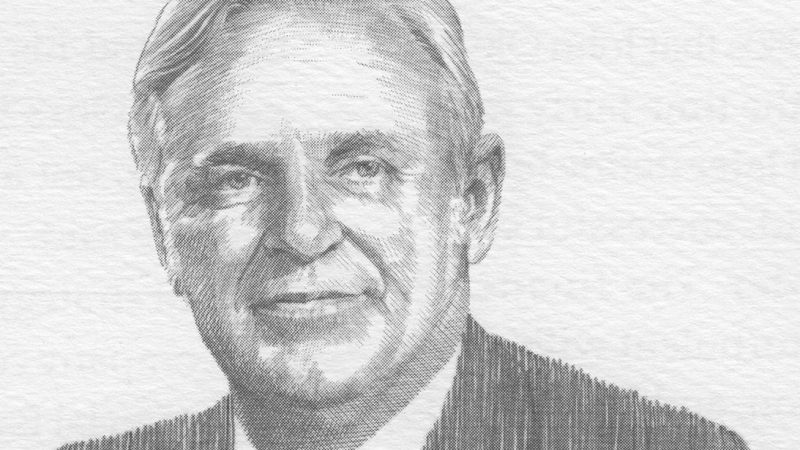
Sloan Y. Bashinsky, Sr.

  • October 26th, 2021

The career of Sloan Y. Bashinsky, Sr., is indicative of what a person with business acumen can accomplish under the free enterprise system. He started as a route salesman and rose through the ranks to the position of Chairman of the Board of the parent company of the Southeast’s largest snack food manufacturer.

Sloan Y. Bashinsky, Sr., was born in Troy, Alabama, on November 2, 1919 – the son of Cora (Young) and Leo E. Bashinsky. He received his primary and secondary education at Avondale Elementary School and Ramsey High School; McCallie School in Chattanooga, Tennessee; and Lawrenceville Prep School in New Jersey. He then entered Princeton University. In 1940, he left college to join the United States Air Force. He served as a radar navigator until his discharge in 1945.

In 1946, he went to Birmingham, Alabama, as a route salesman for Golden Flake Snack Foods, Inc. (then known as Magic City Foods Products Company, Inc.). Within ten years (in 1956), he had become president – a position he held until 1972. He reassumed the presidency between 1984 and 1985. In 1972, he became Chairman of the Board. Between 1976 and 1991, he also served as Chief Executive Officer.

Today, Sloan Bashinsky is Chairman of the Board and major stockholder of Golden Enterprises, Inc. – a holding company that owns all outstanding shares of Golden Flake Snack Foods, Inc.; Steel City Bolt and Screw, Inc. (a Birmingham-based manufacturer and distributor of bolts and special fasteners); and Nall and Associates, Inc. (a distributor of bolts and special fasteners).

He is also a director of Steel City Bolt and Screw, Inc. and Nall and Associates, Inc.

The history of the Company reflects Sloan Bashinsky’s leadership. In 1958, the company changed its name from Magic City Foods Pro­ ducts Company, Inc. to Golden Flake, Inc. Five years later, the company purchased Don’s Food’s Inc., a Nashville, Tennessee-based Manufacturer of snack food products. Don’s Foods was operated until 1966 when Golden Flake was reorganized as a Delaware Corporation and combined Don’s operations with those of Golden Flake.

The company acquired Steel City Bolt and Screw, Nall and Associates, and a real estate subsidiary in 1971.

In 1977, Golden Enterprises, Inc. was formed as a holding company with its operating division, Golden Flake Snack Foods, as a wholly-owned subsidiary. In September of that same year, the assets of the real estate and insurance subsidiary were sold, leaving Golden Flake and the Steel City group as subsidiaries.

Golden Flake manufactures and distributes a full line of snack foods. The main office and production plant are located in Birmingham. There are also plants in Nashville, Tennessee, and in Ocala, Florida. Golden Flake has approximately 1,500 employees and its annual sales exceed $100 million.

Through the years, Sloan Bashinsky has shared what he has called his “good fortune” to improve the quality of life for others.

For example, while serving on the Board of Directors of the Eye Foundation Hospital and St. Vincent’s Foundation, he was instrumental in raising funds for needed centers. He has also been an active supporter of such worthy institutions and charitable organizations as the Crippled Children’s Clinic and Foundation, Children’s Hospital of Alabama, Big Oak Ranch, and United Way.

His desire to enhance higher education can be seen in the time and financial support that he has given to educational institutions throughout the state of Alabama.

He is currently a trustee of Samford University, where he also serves as Vice-President of the Board of Directors and Chairman of the Executive Committee. In honor of his father, he donated the Leo Bashinsky Field House. Samford also received financing for the Bashinsky Press Tower. For his many contributions to Samford University’s growth, he was the recipient of the Honorary Doctor of Laws degree in 1990.

He also contributes to all Alabama independent colleges and universities. And he established the Bashinsky Foundation to fund the Golden Enterprises Scholarship Awards presented each year to dependent children of the employees of Golden Enterprises and its subsidiaries. The scholarships are given on the basis of scholastic achievement, demonstrated leadership, and participation in school and community affairs. In 1992, Sloan Bashinsky again shared some of his good fortunes with the people of Alabama who, he has said, have been so good to him. He made a $3 million gift to The University of Alabama which is being used for the construction of a new computer center for the College of Commerce and Business Administration. The computer center will be known as the Sloan Y. Bashinsky, Sr. Computer Center. It and a new business library (named in honor of Angelo Bruno, Chairman of the Board of Bruno’s, Inc. until his death in December 1991) will share a $9 million building.

According to Dr. Roger Sayers, University President, the Bashinsky Computer Center, and the Bruno Business Library will be one of the most modern of such facilities in the nation and a centerpiece for the business school complex. Dr. Barry Mason, Dean of the College of Commerce and Business Administration, has said that thousands of students each year for generations to come will benefit from Sloan Bashinsky’s investment in the future.

The building is scheduled for completion by the end of October, with final details and moving planned for November and December. It should be “open for business” by January 1, 1994. The computer center will include a wall of memorabilia from Sloan Bashinsky.

Sloan Bashinsky is a very active member of the Mountain Brook Baptist Church where he has served as Chairman of the Endowment Trust. He is also a member of the Rotary Club of Birmingham, the Birmingham Monday Morning Quarterback Club, Shoal Creek, Birmingham Country Club, and the Downtown Club.

He is married to the former Joann Fulghum of Nashville, Tennessee. They have four children – Sloan, Jr.; Major; Elizabeth (Krebs); and Suzanne (Ash) – and nine grandchildren.

Sloan Y. Bashinsky, Sr. has reaped the rewards of hard work and business success. But he has returned some of the abundant harvests to his native state for the generation of growth in future years

Mary Goss Hardin

  • October 26th, 2021

Mary Goss Hardin is a pioneer in the grocery business and was the first woman in the United States to open a food store franchise with the Piggly Wiggly Company.

The Pell City native attended Woodlawn High School in Birmingham and Howard University, now known as Samford University. After opening her first grocery, she ultimately owned 15 Piggly Wiggly/Warehouse Market stores across North Alabama. She has served as president of the Piggly Wiggly Operator’s Association, the first woman to do so, and served on the Piggly Wiggly Distributing Company’s board for more than 30 years. In 1980, she became the first woman to receive the Grocers’ Spotlight Grocer of the Year Award. She has been active in a number of civic organizations, including the Gadsden chapter of the American Red Cross and the board of directors of the March of Dimes and the Salvation Army. She has been a staunch supporter of religious institutions and has established permanent endowments for scholarships for theological students at Emory University. She has aided the New Orleans Baptist Seminary, where the Hardin Student Center is named in her honor.

Marshall B. Durbin

  • October 25th, 2021

Marshall B. Durbin, Sr. was the sort of business visionary blessed with the ability to turn his dreams into the reality of accomplishments. Born to O.C. Durbin and Ola Culp Durbin February 27, 1901, in Chilton County, Alabama, Marshall Durbin, Sr. passed away in November of 1971, leaving behind him then four brothers, five sisters, a widow, a son, and what is now one of the top poultry companies in the United States, with facilities in three states, markets as far-flung as Russia and the Far East, annual sales of about $200 million, and more than 2,200 employees.

To gain a more complete understanding of Marshall Durbin, Sr., it helps to turn the pages of history back to the late 1920s, when the enterprising young Alabamian – whose formal education ended at third grade – moved off the family farm to the big city of Birmingham to enter the real estate business. But the stock market crash of October 1929, followed by the Great Depression, led him quickly to the conclusion that this would not be the most profitable course to follow. Reviewing his options, Mr. Durbin decided that regardless of economic conditions, “People will want to eat.” So, in 1930, with $500 in funds borrowed from his bride (the late) Eula Sims Durbin, he established a retail fish stand. Two years later, he added poultry – and a second stand.

From those small retail stands Marshall Durbin Companies grew into its present-day status as a vertically integrated company, complete with its own hatcheries, breeder flocks, contract growers, warehouses, processing plants, cooking plants, feed mills, fleet, and distribution facilities. The growth in Marshall Durbin, Sr.’s business was mirrored by that of the Alabama poultry industry, which today has a major impact on the state’s economy. By producing more than 882 million broilers, it provides employ­ment for some 55,000 Alabamians and income for almost 4,000 farmers – and has a total industry impact of almost $7.5 billion.

During his years of industry leadership, Mr. Durbin actively supported organizations that would contribute to its growth – and the growth of his state. For example, he was a co­founder of the Southeastern Poultry and Egg Association, served as president of the Alabama Poultry Processors Association, and was co-founder of the Alabama Poultry Industry Association. On the national level, he was a co-founder of the National Broiler Council and the first president of the National Broiler Marketing Association, plus he served 15 years as a member of the Board of Directors of the Institute of American Poultry Industries.

“His principal business philosophy was hard work and lots of it,” remembers Marshall B. Durbin, Jr., who succeeded his father as head of Marshall Durbin Companies after working in the business with him for many years. “In the early years, he would be on the streets making per­sonal calls to hotels and restaurants at 4 a.m. – calling on the chefs in person. There was a lot of competition, and often the company that got the business was the first one there.

“He always tried to be the first one there.” Another place he came in first was in his belief that chicken could be a viable business in the South. In the pre-World War II era, the Midwest seemingly had a lock on the market due to the producers’ proximity to ample supplies of corn and grain. Mr. Durbin worked long and hard to help convince railway com­panies to move to larger rail cars and con­currently reduce rates, selling them on the argument that by the reduction they could increase volume, and profits. This led to a shift in agricultural economics, with the South producing more chickens and the Midwest focusing its efforts on growing more corn and soybean to feed those chickens. He also led the way in promoting the nutritional value of chicken; it was at his urging in the early 1960s that the National Broiler Council initiated, with Kellogg’s Corn Flakes and the Cling Peach Association, a joint advertising program centered around this theme and aimed at women’s magazines.

Marshall Durbin, Jr. also remembers his father, who over the years furthered his education with such readings as Plutarch’s Lives and Will Durant’s The Story of Civilization, as a fair man. “He was a good leader – a fair leader. I remember him as stern but friendly. Of course, as happens in most businesses we sometimes disagreed on how things should be done because of the generational differences. But I can remember that for a while after he died when I had a problem, I would still find myself getting up and going into his vacant office to ask for advice … by then I had learned that his counsel was generally right.”

The son says he believes his father, who in his later years found time for fishing and always reserved his Sundays to take his granddaughters to the zoo and then out for hamburgers, would most like to be remembered for the way he helped set the course for the poultry industry in not only Alabama and the Southeast but in the United States.

Perhaps Marshall Durbin, Sr.’s most significant legacy in that regard stemmed from his tenure on the United States Department of Agriculture National Advisory Committee in the middle 1960s. At the time, the USDA was in the process of introducing a proposal to impose production quotas and price controls on the poultry industry. Having seen what a detrimental effect similar policy measures had wreaked on the cotton industry; Mr. Durbin used his membership on the National Advisory Committee to position himself in the leadership of the opposition to quotas.

The result of those months of work in Washington, D.C., are still felt today. Thanks to the efforts of Marshall Durbin, Sr., and those who worked with him, no lids were imposed on poultry production, and unlike King Cotton, long ago dethroned in the world market, the poultry business has grown exponentially. For example, when Mr. Durbin went to Washington to first battle for this cause, the United States was producing 2.3 billion chickens annually, while in 1995 some 7.3 billion birds were produced. And over the years, Alabama has been the beneficiary of much of this growth – as is evidenced by the fact it is now the third-largest poultry-producing state in the nation.

Even 25 years ago the relevance of Marshall Durbin Sr.’s national policy work in D. C. was well known. As then said by the Southeastern Poultry Times, “His influence there was credited with helping to keep the poultry industry free of production and price controls and today the poultry industry is among the remaining ‘free enterprise’ industries of agriculture.”

Around the state, his efforts were also well recognized, as evidenced by his 1969 induction into the Alabama Poultry Hall of Fame. And upon his death in 1971, the trade magazine Broiler Industry drew upon the words of Ralph Waldo Emerson to best capture the industry leader’s accomplishments, writing, “if, as Emerson said, ‘an institution is lengthened by the shadow of one man,’ then Marshall Durbin, Sr. was such a man . . . he was a man who always knew where he was going, and how he was going to get there – a true natural leader . . . He was one of the best-integrated broiler operators in the United States.”

But perhaps the final tribute to Marshall Durbin, Sr., is that he gave his vision the roots to continue to grow.

H. Taylor Morrissette

  • October 25th, 2021

Taylor Morrissette always thought of himself as “just a sugar peddler.”

He was that and more, say family and friends, that and more. H. Taylor Morrissette was chairman and chief executive officer of Colonial Sugars, Incorporated, from 1980 until the company’s acquisition in 1986 by Savannah Foods and Industries, Incorporated. Born September 29, 1931, in Mobile, Alabama, to John Marshall Morrissette and Marlite Taylor Morrissette, when he died September 29, 1990, he was survived by his wife, Vaughan Inge Morrissette; a daughter; three sons; his mother, his brother; and grandchildren.

Taylor Morrissette attended grade school and Murphy High School in Mobile, graduating from Gulf Coast Military Academy in Gulfport, Mississippi, in 1949. In 1953 he received his bachelor’s degree from Spring Hill College, then served as a lieutenant in the U.S. Army until October 1955.

“I remember Taylor growing up as a fun person to be with and as a fine high school athlete,” reminisces Edwin J. “Jerry” Curran, Jr., a Mobile lawyer and close Morrissette family friend. “While he was a college student at Spring Hill he worked with the City of Mobile Recreational Department as a coach with underprivileged children, and he loved that work.”

In later years Taylor Morrissette would tum his capabilities and resources to other civic efforts. He served as a trustee for his college alma mater and on the Board of Overseers for Sweet Briar College, the alma mater of his bride. He was a trustee for St. Paul’s Episcopal School and past president of the Mobile Touchdown Club and America’s Junior Miss, Incorporated, and a past chairman of the Rebel Chapter of the Young President’s Organization. He was also a director of the Alabama Sheriff’s Boys and Girls Ranches, a member of the Chief Executive’s Organization, and past international vice president of the Young President’s Association.

When Taylor Morrissette finished his military service in 1955, he went to work for Henderson Sugar Refinery, Incorporated, as a route salesman. In 1963 he was elected assistant vice president of the company, and in 1964 took the office of vice president in charge of sales. Three years later he became vice president of Southern Industries Corporation in Charge of Production and Sale of Sugar, serving only one year before being elected a director of Godchaux-Henderson Sugar Company, Incorporated. He became president of that company in 1969.

“Taylor referred to himself as a ‘sugar peddler,’ and there probably was never and may never be a better one,” says Jerry Curran. “It was not his personality, good looks, charisma, or intelligence, but his capacity for real friendship with people of all walks of life that, in my opinion, marked his success.

“The truth of the matter is that Taylor would have been successful at anything he undertook, but Taylor’s father, in his early years, had been connected with the sugar business, and I believe that it was somehow in Taylor’s blood.”

In 1973 Taylor Morrissette resigned his presidency of Godchaux-Henderson to accept the presidency of North American Sugar Industries, Incorporated, a division of Borden, Incorporated. In 1980 he acquired the assets of North American from Borden and went on to form a new corporation known as Colonial Sugars, Incorporated, leading it at one point to annual sales of more than $300 million.

“He was a giant in the sugar industry, highly respected by his peers,” remembers former U.S. Congressman Jack Edwards of Mobile. “He was also well-known in the banking field, having been chairman of the board of First National Bank of Mobile and chairman of First Bancgroup, Alabama, Incorporated.”

Other of Mr. Morrissette’s business affilia­tions included serving as vice chairman of the National Association of Food Research, as a director and treasurer of the U.S. Cane Sugar Refiners’ Association, as a member of the New York Coffee and Sugar Exchange, as chairman of Marshall Biscuit Company, and as a director for Bedsole Medical, Morrison’s, Savannah Foods and Industries, and Addsco. He was also a director for AmSouth Bank, N. A., and the AmSouth Bank Mobile City Board.

“When Taylor moved from Godchaux­Henderson to Borden’s North American division, Borden had no real connection with Mobile, Alabama,” says Jerry Curran. ‘The sugar refinery was in Louisiana and of course, Borden’s headquarters were elsewhere.

“After joining Borden, Taylor prevailed on them to move the executive, accounting and sales offices of North American Sugar to his hometown, which was a meaningful addition to Mobile’s business community.”

One of the Mobile newspapers recognized Mr. Morrissette in the unlikely venue of a political column, writing:

“Though he is one of Mobile’s most success­ful businessmen, he is ‘down-to-earth’ and refreshingly open to people and tolerant of divergent thought. At the same time, he is a man of principle. His decisions are based on what is morally right rather than monetarily expedient. If this writer were going to describe the traits which this city’s leadership most needed, Taylor would have every one of them. Would that we had more Taylor Morrissette’s.”

In 1981 Taylor Morrissette suffered a heart attack, which was soon followed by a rare digestive disorder that limited his activities and finally forced him to step down as president of Colonial Sugars in 1985, immediately prior to its sale to Savannah Foods.

“Taylor Morrissette died too young,” says Jack Edwards. “He had a marvelous career and so much yet to give when that illness finally claimed his life. But for those of us who knew him best, he was an enthusiastic civic leader, great husband, and father, and a person of tremendous courage who cared deeply for his fellow man.

“No matter how busy he was, no matter how serious his illness, he never lost his concern for others.”

An avid hunter and fisherman, Mr. Morrissette was a strong supporter of many conservation efforts. Son Harris remembers that as his father’s illness wore on, he would enjoy his outdoor pursuits through his family and that to this day his children share his old hunting camp.

“He was such a great father,” Harris says, the smile in his voice apparent. “I don’t think I really realized what a great daddy I had until I read some of the letters people wrote Mother after his death. He was a generous guy, a friend to everyone.

“He was a good boss, too – I had the opportunity to work with him for about six years. He was fair and a good leader. Everyone says he was a great salesman, but he was an even better manager.”

Jerry Curran says there are a group of Mobile friends who fished and hunted with Taylor Morrissette, who visited with him and shared some of his private moments, who that when they get together always seem to find a reason to remember and discuss their friend. He sums up their feelings.

‘Taylor was one of those unusual people who come along just once in a great while who is always with you and never forgotten.”

Taylor Morrissette died at his home, with his family and friends. He was only 59.

Arthur R. Outlaw

  • October 18th, 2021

Arthur Outlaw is a man whose roots run deep in lower Alabama: the first elected mayor of Mobile in the latter half of the 20th century, the impact he made on that city’s political and business communities have forever made his name synonymous with success in Alabama’s port city.

Born September 8, 1926, to parents Mayme Lily Ricks and George Cabell Outlaw, Sr., Arthur Robert Outlaw lived on a farm outside Mobile until his family’s move into the city when he was 14. Arthur’s father Cabell was one of the found­ing fathers of Morrison’s Cafeteria in 1920 and an exemplary role model for his son to follow. In his early years, Arthur received a Catholic education through his second year of high school at the McGill Institute before transferring to Riverside Military Academy in Georgia. The man who would later give hope to Mobilians and rebuild their shaken trust in local government enlisted in the U.S. Air Force Cadet Program after his 1945 graduation and served his country for two years during World War II.

Arthur left the military in 1947 to attend The University of Alabama, where he studied for one year before completing a business degree at Spring Hill College in Mobile. His friends are quick to point out that the degree should have been in golf, for although it was not Arthur’s formal course of study, he excelled in it to such a degree that his alma mater’s golf team had an undefeated season his senior year. And while he is proud of that college accomplishment, Arthur himself is quick to point out that it was not his greatest one while at “The Hill”: that, he says, was marrying Dorothy (Dot) Smith on November 23, 1949. The couple would go on to have three children – son A. Robert Outlaw, Jr. and daughters Karen Outlaw and Mary Gay Outlaw.

While still a college student, the already ambitious Arthur took a position with the Mobile accounting firm of Holiman, Childree, and Ramsay, which held the Morrison’s account. He quickly advanced, and after graduation was employed full-time. It wasn’t long before this aggressive young businessman joined the Morrison organization itself, as a full-time assistant auditor in 1951. His initial work centered on modernizing the company’s accounting system, and later he enlisted IBM to help structure payrolls and handle food inventory and billing for warehouses. This technologically advanced arrangement occurred long before the computer age, marking Arthur as an executive with a great deal of foresight.

As he made his way up Morrison’s career ladder, Arthur found himself increasingly interested in politics. In 1964, while serving as assistant secretary and treasurer for Morrison’s, Arthur was also an adviser to Republican Jim Martin in Martin’s bid to unseat long-time U.S. Senate Democrat Lister Hill. Although Arthur’s man lost the race by a narrow margin, the race made a lasting and dramatic impact on the development of an active Republican Party in Alabama.

That same year, Arthur endured another loss – one of a more personal and tragic nature – when his beloved father passed away. Despite all this, Arthur refused to accept defeat, coming back in 1964 to help prominent Republican Jack Edwards in his successful bid that year for Congress. Then in 1965, taking a leave of absence from Morrison’s to run his own campaign, Arthur defeated eight opponents and took office as public safety commissioner of Mobile. For four years Arthur worked diligently with his fellow commissioners to increase the city’s revenues by some 60 percent, revising the gas tax and redistributing funds based on a per-capita system. But after just one term, at the urging of his brother Arthur returned to Morrison’s in 1969. And as if he had never left, within four years Arthur was named secretary and treasurer of the company. The next decade marked a period of exceptional growth for Morrison’s, which grew to encompass more than 100 cafeterias; a food service division with contracts with health care industries and hospitals, schools, and even movie sets; Admiral Benbow Inns; Morrison Imperial House Restaurants; and food service equip­ment companies. With its warehouses, coffee plant, Morrison Assurance Company, and plants for the manufacture of stainless steel, furniture, and china, Morrison’s became the most vertically integrated company in its industry.

In a display of remarkable business acumen, in 1982 Arthur supported Morrison’s acquisition of fledgling restaurant chain Ruby Tuesday, which at that time consisted of 12 units. Arthur’s vision of expanding the business his father founded quickly became a reality, and today there are more than 350 Ruby Tuesday locations. In 1984, Arthur was appointed vice-chairman of the board of Morrison’s, and while this was a major step in his business career, the Mobilian’s strong devotion to his city would again lead him into local politics. He easily found success when he ran for the post of city finance commissioner, serving out the term of the incumbent who had been ousted from office – and jailed – for fraud and extortion. Arthur was quoted at the time as saying, “None of us are very proud of the events that have taken place in the last few months, and we are certainly concerned about the image it has projected on our fine city I can­not sit on the sidelines.”

During his seven-month term, Arthur worked with the state legislature to change Mobile’s form of government to a mayor/council system instead of one based on three commissioners. Following the city residents’ vote to make this change, Arthur ran for mayor in 1985 and won, becoming the first elected mayor of Mobile since 1911. A local who understood the needs of his community and envisioned reviving the declining city, Arthur’s eight-year strategic plan for Mobile included the downtown redevelopment of a waterfront convention center, constructing a naval home port, solving the stormwater drainage problem, and developing a “Keep Mobile Beautiful” campaign. After breathing life back into his hometown during his one term as mayor, Arthur returned in 1989 to the family business, now Morrison Restaurant, Inc., as vice-chairman of the board, which is where he remains today. Seven years after his departure from politics, his company was spun off into three independent entities: Morrison Fresh Cooking, Inc.; Morrison Health Care, Inc.; and Ruby Tuesday, Inc. Arthur also currently serves as vice-chairman of the Ruby Tuesday Board of Directors.

Arthur’s successes also continued on the personal front. He was awarded an Honorary Doctorate of Humane Letters from the University of Mobile in May 1994 and was appointed to the Board of Directors of the Alabama Institute for the Deaf and Blind in 1995, two additions to a list including well more than 15 civic and service appointments and accomplishments.

His friends say, Arthur Outlaw, with all of his personal and professional successes, hasn’t changed much over the years. Throughout his triumphs as both businessman and politician, he has remained loyal to his principles and fought for his beliefs. “I believe I’ve spent the majority of my career working on problems I see as solvable,” Arthur once said. “If a problem is solvable, a little action will usually uncover the necessary solution.”

Arthur Outlaw’s life has been one of just such action, and he will be remembered for the problems he solved.

James L. Hinton, Sr.

  • October 11th, 2021

Chances are if you are a native Alabamian or have spent much time in the Southeast, you’ve had the opportunity to enjoy some of Jimmy Hinton’s work, probably in the form of a Zeigler hotdog, maybe at a football game, or roasted over a wood fire at the end of a bird hunt or on the bank of one of the state’s many lakes.

Hinton is the owner and chairman of the board of R. L. Zeigler Company, Inc., of Tuscaloosa. Under Hinton’s leadership and business philosophy, Zeigler has become one of the South’s leading processors of meat products, and its motto “Seasoned to Please” is a familiar saying in most Southern homes.

But Jimmy Hinton is much more than a hot­dog maker. An entrepreneurial spirit, unwavering support for University of Alabama athletics, and a passion for wildlife conservation have been key elements in the life and career of James Lucian Hinton.

Hinton was born in Tuscaloosa on April 8, 1923, to George and Mary Alice Hinton. He attended The University of Alabama in the 1940s before serving in the United States Army during World War II. In 1958, he married Jean Jolly, a union that produced three children: James Lucian Hinton, Jr., Mary Katherine Hinton Gibson, Elizabeth Hinton Pruett, and eight grandchildren.

R.L. Zeigler was founded by Rebel Louis Zeigler and tradition has been a matter of quality and commitment ever since. When Rebel Zeigler bought his first grocery store in the early 1920s in Bessemer, Alabama, people came from all over to buy his homemade fresh pork sausage. When his pork sausage operation outgrew the store in 1927, he incorporated and opened his first packing plant in Bessemer, enabling him to increase the production of his prize-winning sausage. Mr. Zeigler introduced the first vacuum-packed lunchmeat in Alabama, an innovation that paved the road to meat packaging principles used today.

Zeigler remains the largest independent meatpacker in the Southeastern United States, producing the No. 1 selling wiener in the state of Alabama, along with a vast array of top-selling meat items. In over 70 years, Zeigler has built a strong business that takes pride in servicing its customers with the same commitment to excellence exhibited by its founder. Mr. Zeigler died in 1964 in Birmingham and three years later the successful business was purchased by Jimmy Hinton and two other Tuscaloosa businessmen of note, Mr. Frank Moody and Paul “Bear” Bryant. Over the years Hinton bought out his partners. Today Ziegler employs more than 400 people and has offices in Tuscaloosa, Selma, and Mobile.

Hinton’s business and professional relationships extend throughout the state. He is widely known for his diverse business interests. His business philosophy is often called entrepreneurial, and it is this philosophy that has made him one of Alabama’s finest businessmen.

“Jimmy has been one of Alabama’s most successful entrepreneurs and has done so in a wide range of businesses and industries, spanning fifty years,” Paul W. Bryant Jr. writes.

Other industries in which Hinton has thrived include farming and lumber. Hinton is the founder and owner of Tusco Wood Products Company of Tuscaloosa. Under Hinton’s direction, the company manufactures quality hardwood pallets for industry and pine boxes for national defense. The company, founded in the early 1960s, employs more than 150 people.

The company became nationally known during the Vietnam War as the largest manufacturer of ammunition boxes in the United States. Ammo box production trailed off until the Gulf War broke out and Tusco was asked by the Department of the Army to resume making the wooden ammunition boxes.

In addition to the processed meat and lumber industries, Hinton made has an impact on the West Alabama real estate industry as well. He was a co-developer of McFarland Mall, Tuscaloosa’s first shopping mall.

Throughout his career and across industries, Hinton has spurred business developments, guided successful businesses, and fostered business relationships and affiliations statewide. Bryant credits Hinton as being an integral part of the economic development of west Alabama.

Hinton has served on the boards of numerous Alabama companies including AmSouth and Fayco, Inc.

As further testament to his business initiative and planning, Hinton was a founding partner of Southern United Life Insurance Company of Montgomery and Olympia Mills of Tuscaloosa.

Like many successful businessmen, Jimmy Hinton has donated both time and financial resources to charitable causes without thought or expectation of recognition. Thomas W. Moore, president of Pritchett-Moore, Inc. describes Hinton’s contributions: “His support of and contributions to civic and charitable organizations, particularly The University of Alabama and Stillman College of Tuscaloosa, have been significant.” Hinton has served on The University of Alabama’s President’s Cabinet since its inception. He also was a founder of Tuscaloosa Academy and is a member of the school’s board of directors.

Both Bryant and Moore describe him as a low-profile individual. “He has been a major financial supporter of the University’s athletics programs … in many cases that have not been apparent to those not directly involved,” Bryant writes.

Along with his business success, Hinton has done much to preserve and protect the state’s natural resources and has become known as a preeminent wildlife conservationist. He spends a considerable amount of his time working on wildlife conservation and game management. He has served for 10 years as the Chairman of the State of Alabama Conservation Advisory Board. In 1998, Hinton received the highest honor for a conservationist; the Alabama Wildlife Federation recognized him as the 1998 Conservationist of the Year.

A lifelong passion has been training and owning bird dogs, and three of his dogs have won national championships four times. As part of his conservation efforts, he owns land in Dallas County, Alabama. His land, Sedgefield Plantation, is the site each year of state and national bird dog field trials. As a result of years of dedicated work, Hinton was inducted into the Field Trial Hall of Fame in 1975.

Hinton has used Sedgefield Plantation to give Alabama hunters with disabilities a unique opportunity. He opened Sedgefield Plantation to the Disabled Sportsmen of Alabama. Deer hunters in this group now have a wonderful place to hunt, all thanks to the generosity of Hinton.

Numerous Alabama industries, conservation groups, and University of Alabama programs have reached a higher caliber of excellence due in large part to the entrepreneurial and generous spirit of James Hinton.

Charles C. Anderson

  • October 5th, 2021

In its first year of operation in 1917, Anderson News Company had sales of about $2,000. Today the four companies that grew from that small beginning have combined sales of over $3 billion and employ more than 11,000 associates, 1,728 in Alabama.

Directing much of that growth has been Charles Caine Anderson, the son of the founder. Charles C. Anderson now is chairman of the Executive Committee of Books-A-Million, Inc., Anderson News Corporation, American Promotional Events, Inc., and Treat Entertainment.

Charles C. Anderson was born November 20, 1934, in Florence, Alabama, to Ruth Keenum and Clyde W. Anderson. He attended Coffee High School and graduated from the University of North Alabama with a Bachelor of Science degree in marketing. After graduating in 1956 from UNA, he entered the family business, Anderson News Company, full time. He had worked part-time in the business since high school.

In 1956 the company operated three trucks and wholesaled magazines and paperback books in the North Alabama area.

From this company four separate companies have emerged: Anderson News Corporation, Treat Entertainment, Inc., American Promotional Events, Inc., and Books-A-Million, Inc. Anderson remains active in the companies and is chairman of the Executive Committee and on the Board of Directors of each company.

In the early years, the company’s two newsstands in Florence handled tobacco, soft drinks, etc., and sold fireworks during the Christmas season. The fireworks portion of the business was later expanded to include wholesale to other dealers in the area and continued until the state banned fireworks in 1946.

In 1957, Alabama again legalized the sale of fireworks and the family re-entered the business. Company growth since that time has been phenomenal.

Charles was joined in business in 1963 by his brother, Joel, ten years his junior. The brothers continue to work together today. In 1976, Charles’ oldest son, Charles Jr., entered the business and is currently president and CEO of Anderson News Corporation, with Joel serving as chairman.

Anderson News Company’s three trucks in 1956 have grown to a fleet of 3027 vehicles today. Anderson News is the largest magazine distributor in the U.S., the second-largest music distributor, and one of the largest book distributors. The company currently services over 40,000 retailers each week (including all major chains) with full in-store service.

Today American Promotional Events is headed by Charles’ son, Terrence, its president and CEO, and is the largest fireworks importer and distributor in the U.S., servicing 42 states. It operates under the trade name TNT Fireworks.

Anderson was the first business leader in the U.S. to receive a personal invitation to trade with China in 1972 immediately after President Nixon’s visit and was one of the first American businessmen to visit China since 1948. He traveled to Mainland China on April 15, 1972. China is considered to be the birthplace of gunpowder, a major ingredient in fireworks.

In 1962, the family began a new business, importing and publishing numismatic and philatelic items, which usually require a magnifier to view in detail. In that same year, Whitman Publishing placed with Anderson the largest order for magnifiers ever placed in the United States. As the coin and stamp business grew the company began to publish price guides to complete its line of folders, albums, and magnifiers. The company, Treat Entertainment, is lead by Charles’ son Harold, the chairman and CEO. Treat Entertainment’s subsidiary, H. E. Harris, is the largest numismatic and philatelic distributor in the U.S. Last year H. E. Harris entered a license agreement partnership with the U.S. Mint to produce an official U.S. Mint line of products to be sold at retail to the mass market. Treat Entertainment also publishes children’s books under the name Dalmatian Press, located in Nashville, Tennessee. The company recently acquired C. R. Gibson Company, which publishes inspirational albums and journals. The company recently completed a 186,000-square foot C.R. Gibson distribution center in Florence.

In 1963, the company purchased the House of Coins, which published the Black Book Coin and other guidebooks. The name was changed to House of Collectibles and Anderson continued to publish the Black Book Coin and other guidebooks until they sold House of Coins to Random House Publishing several years ago.

In 1962, Anderson together with Chan Fu Yu formed A. Yu Far East Co. in Hong Kong. The company exports consumer products from the Far East, particularly China. It has offices in Hong Kong, Shenzhen, Canton, and Changsha with packaging facilities and warehouses in Shenzhen and Changsha. Today, Anco Far East is one of the largest exporters of fireworks from China.

In 1964, the family purchased a retail bookstore in Huntsville and later opened a second in the Huntsville Mall known as Bookland. Bookland continued its growth and entered the superstore business under its Books-A-Million banner. Books-A-Million became a public company on November 2, 1992. Books-A-Million stock is traded in the Nasdaq National Market under the symbol BAMM. Books-A-Million is one of the nation’s leading book retailers and sells on the Internet at www.booksamillion.com. The company presently operates 204 stores in 18 states and the District of Columbia. The company’s wholesale operations include American Wholesale Book Company and BookSmart, both based in Florence; and NetCentral, Inc., an Internet development and service company located in Nashville, Tennessee. The company today is under the leadership of Charles’ son, Clyde, its chairman and CEO.

In 1980, the family purchased Hibbett Sporting Goods, an Alabama sporting goods chain of fourteen stores. Hibbett began a rapid growth that culminated in the company going public on October 16, 1996, and the family sold most of its interest.

Anderson is a former director of First National Bank of Florence and First United Bancorp, the University of Alabama International Business Advisory Board, and the U.S. Space and Rocket Center Board. He is a member of The University of Alabama President’s Cabinet and the University of North Alabama President’s Cabinet. He is a former member of the Board of Visitors, International Advisory Board, The University of Alabama; former member of the State Democratic Executive Committee; a charter member of the Board for the Shoals Economic Development Authority; former president, National Pyrotechnics Distributors Association; former president, Alabama Numismatic Association; and a former member of the Board of Directors, Heritage Trust Fund.

Anderson has given freely of his time and financial resources to many charitable causes and civic projects. For more than twenty years he has taken an active interest in the Salvation Army and is a former member of the Board of Directors of the Salvation Army of the Shoals and Selma, Alabama. Mr. Anderson and his family have had a long-standing interest in literacy and recently made a substantial contribution to the Florence-Lauderdale Public Library. He has made many contributions to universities, schools, and many other charitable causes through the Charles and Hilda Anderson Foundation and the Anderson Foundation. He also recently founded The Hobo Foundation for the benefit of animal shelters in North Alabama.

Mr. Anderson has been married for 50 years to the former Hilda Claire Barbour, his high school sweetheart.  Their home in Florence is a testament to their love of nature and wildlife, which includes walking trails, fishponds, and native plants. They attend Westminster Presbyterian Church. They have four sons: Charles C., Jr., Terrence C., Clyde B., and Harold M., and 11 grandchildren.