Location: Birmingham AL

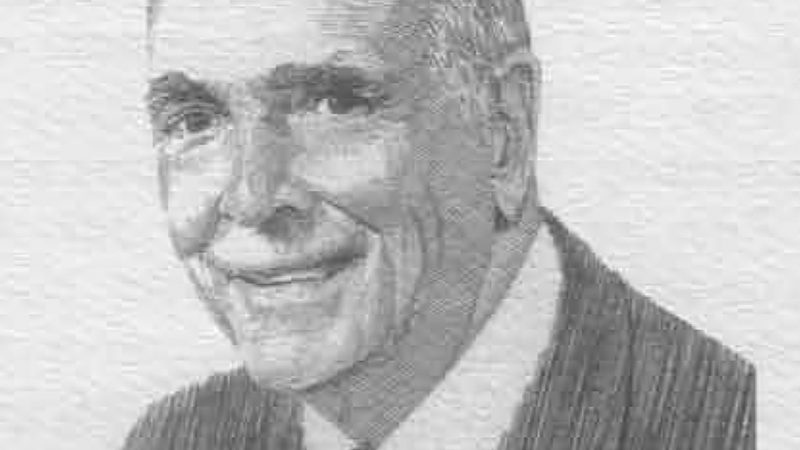
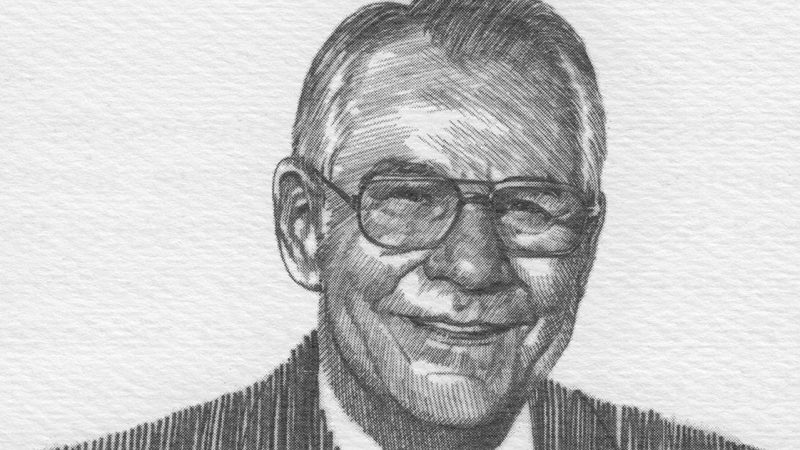
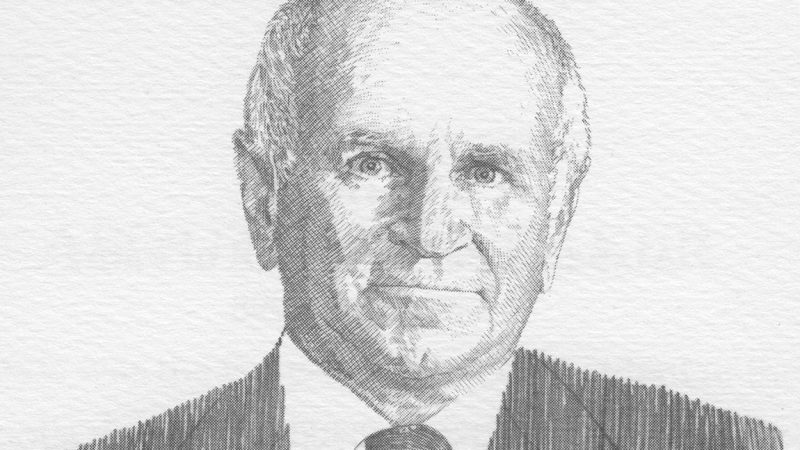
Harry B. Brock, Jr.

  • October 26th, 2021

On March 2, 1964, when Harry B. Brock, Jr. and a group of his friends opened the first new bank in Birmingham in 18 years, no none could have predicted that this small beginning would change the structure of banking in Alabama and lay the foundation for Birmingham to become a major regional banking center.

The new bank was an instant success in making a profit the first year. Harry Brock has said that this early success of Central stemmed from the fact that he is as much a salesman as a banker. The bank’s motto was, “Ask for business.” Everybody at Central – from directors to employees – sold the bank and its services.

This “unabashed salesman,” as he has been called, spearheaded the multibank holding company concept in Alabama. In 1968, Harry Brock announced that he and a group of investors consisting almost entirely of his board of directors had gained voting control of the State National Bank of Alabama … the only bank in Alabama that enjoyed the right to operate branches out­side its home county … and planned to merge it into Central.

Almost all the banks in Alabama, including the ones in Birmingham, tried to stop the merger while the Alabama Bankers Association filed a bill in the legislature that would not only prevent merger across county lines but would prevent the creation of multibank holding companies.

Harry Brock worked almost singlehandedly to kill the bankers’ bill. His determination and perseverance prevailed and the bill that might have bankrupted him and fossilized banking in Alabama failed to come out of the banking committee of either house.

While Harry Brock battled in the courts and in the legislature, some of the plaintiffs began to form a holding company of their own. Brock’s vision for banking change in Alabama and his dream for Central came true, but another holding company was the first in Alabama by three months.

Harry Brock was instrumental in the passage of the statewide Bank Merger Bill in 1980, and in 1981 was finally able to merge his banks into one bank with branches throughout the state.

In 1987, Central Bancshares of the South became the first bank in Alabama to own a bank in another state and the first out-of-state bank to own a bank in Texas. Brock named the Texas operation Compass Bancshares of Texas. Today, the assets of the Compass Banks in Texas compose almost 25 percent of Central Bancshares’ assets.

Harry Brock retired as an active officer of the Central Bank family in 1991, on his 65th birthday. He remains on the boards of the bank and holding company and holds the honorary title of Founder Chairman. At the time of his retirement, Central Bancshares ranked 98th in assets, 60th in profits, and 19th in return on equity among the top 500 banks in the United States. During his last ten years as Chairman and CEO, his stockholders enjoyed a total rate of return of 1,281 percent, the highest of any major bank holding company in the Southeast.

Harry B. Brock, Jr. was born in Fort Payne, Alabama, on March 31, 1926 – the son of Harry Blackwell and Cornelia Macfarlane Brock. The family moved to Gadsden, Alabama when he was very young. In 1944, he graduated from Tennessee Military Institute and joined the U.S. Navy. He volunteered for submarine duty and served on three submarines.

Harry Brock graduated from The University of Alabama in 1949 with a B. S. degree in Commerce and Business Administration. He returned to Gadsden where he worked in the family oil business and as a car salesman. (That same year he married Jane Hollock of Birmingham and they have three children, Stanley M. (Skip), Barrett (Mrs. Richard M. Mackay) and Harry, III (Buck), and six grandchildren.) In 1953, he took a job with Socony Vacuum Oil Company in Rochester, New York.

In 1955, he accepted a job with Exchange Security Bank in Birmingham to organize its first business development department. He was Executive Vice President when he left in 1964 to become co-founder of Central Bank and Trust Company.

Harry Brock has long been a leader in the banking industry. In 1957 – only two years after entering the banking profession – he was the first recipient of the Alabama Outstanding Young Banker Award presented by the Alabama Bankers Association.

In 1973, when the legislature adjourned without passing the budget, he prevented a complete shutdown of state government by offering state employees interest-free loans to equal their salaries until the legislature could reconvene and restore financial order. All but three state employees accepted the offer.

In addition to his leadership role in banking, Brock has given unstintingly of his time, expertise, and financial resources to help make Birmingham, Jefferson County, and the State of Alabama a better place in which to live and work.

He has been a trustee of Samford University for 30 years and served four terms as Chairman. He is currently Chairman of Samford’s Sesquicentennial Campaign with a goal of $80 million. He is a Past President of the Kiwanis Club of Birmingham and founded the Kiwanis Foundation during his term. As a certified instructor in the Dale Carnegie course for eight years, he helped hundreds of Alabamians achieve their personal goals. He is President of the Daniel Foundation of Alabama and the Brock Foundation. He is a trustee of Southern Research Institute, a member of the President’s Cabinet at The University of Alabama, and served as Chairman of the Challenge fund Division of the University’s Sesquicentennial Capital Campaign in 1980. The division exceeded its goal by 25 percent.

He was a member of the Young President’s Organization, an international group of business leaders who become President of their companies before the age of 40. He later served as President of the Chief Executives Organization, the YPO leadership graduate organization.

He was a charter member of the Metropolitan Development Board and served two terms as its President. He was also a member of Operation New Birmingham whose main purpose was to provide an avenue of communication between black and white communities and to improve race relations. He has served as Metro Chairman of the National Alliance of Businessmen, established by President Nixon to help find jobs for the hardcore unemployed and unemployed Veterans. He has served as President of the Diabetes Trust Fund and of the Governor’s Cost Control Survey. He served as co-chair of the Business Division of the Governor’s Task Force on Tax Reform.

Harry Brock has also given his time as a director or trustee of such worthy undertakings as Junior Achievement (serving on its National Board), the Jefferson County Community Chest, the Anti-Tuberculosis Association, the Jefferson County Society for Crippled Children, and the Supporters of the Comprehensive Cancer Center at UAB. He has, and continues to be, supportive of and involved in United Appeal; and has been active in many worthy projects of the Chamber of Commerce (including the development of the Civic Center).

For his professional and civic leadership as well as his many contributions to his community, Harry Brock was elected to the Alabama Academy of Honor in 1983. He is listed in Who’s Who in America, Who’s Who in American History, and the Marquise Who’s Who in America.

According to a colleague, Harry Brock exhibits qualities that standard biographical data do not necessarily reflect. He has always been a fierce and formidable competitor who does not shrink from controversy. (Harry Brock’s leadership at Central Bank of the South and his involvement in the restructuring of banking in the state would support this assessment.) “He has been a leader and a motivator, and people have followed him because they wanted to,” said his colleague, and Harry Brock is “altogether larger than life.”
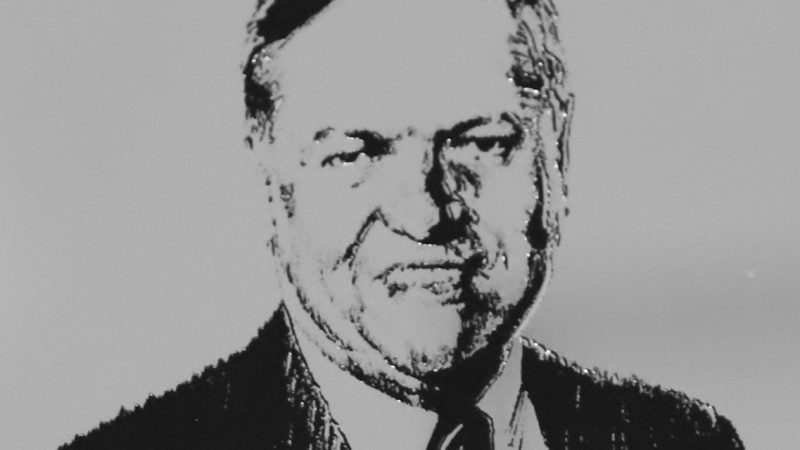
Thomas E. Rast

  • October 26th, 2021

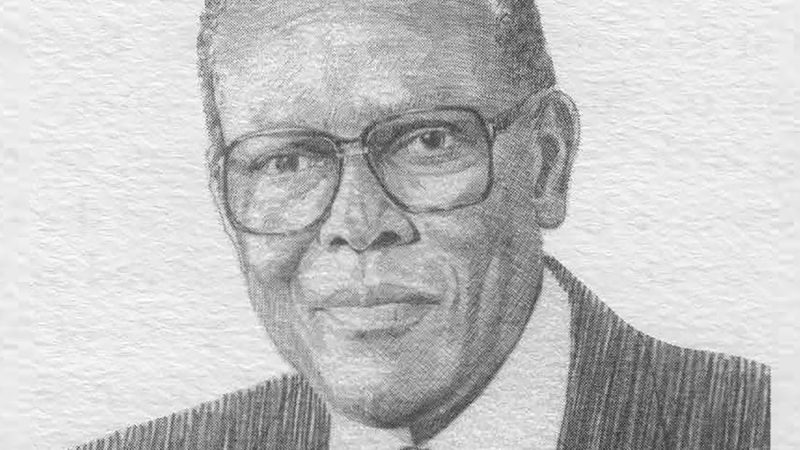
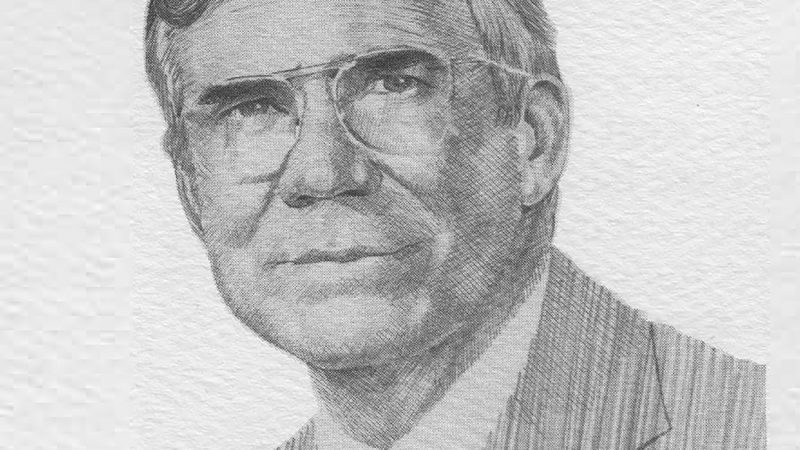
Thomas E. (Tom) Rast – Chairman Emeritus of Johnson-Rast & Hays Co. of Birmingham – has said that he is an ordinary man who has had extraordinary things happen to him. However, his extraordinary success in real estate – as well as his extraordinary service to the community and to higher education – belie this modest self-description.

Tom Rast was born in Holt, Alabama, on February 28, 1920, to Sarah A. (nee Blake) and Lucian Holt Rast. He attended Barrett Elementary School and Woodlawn High School in Birmingham (where the family had moved in the early 1920s) before he entered The University of Alabama.

At the University, Tom Rast was president of his fraternity; a member of the “A” Club and of Scabbard and Blade; and captain of the 1940 boxing team. He earned varsity letters in boxing and track. After graduating with a B.S. degree in Commerce and Business Administration in 1943, he entered the armed forces. He served in the Pacific Theater from 1944 to 1946 when he was discharged with the rank of Captain, Transportation Corps.

Returning to Birmingham, the 26-year-old veteran formed Birmingham Automatic Laundry, Inc., with his brother Holt and James Dickson. He found running three launderettes unsatisfying. It could be said that Tom Rast’s career began in 1949 when he and his friend Abner Johnson each borrowed $1500 from Johnson’s mother-in-law and established Johnson-Rast Realty in Homewood. He found that he “loved to sell I liked to get people, sign them up and study their needs. It was very exciting – meeting the needs of people – and very fulfilling.”

The enthusiasm of Tom Rast and his partner soon generated the growth of the new firm. In 1955, Robert Hays joined Abner Johnson and Tom Rast to incorporate a separate insurance company – it was “a natural” for real estate people at that time because they could insure the houses they sold. The new company – Johnson-Rast & Hays – was a one-office business with about nine agents. Its major period of growth came in the 1970s and 1980s.

In the early 1970s, the company expanded into residential property development. (Before the development operation was phased out nearly a decade later, more than 1,000 acres and more than 2000 lots had been developed.) However, the company was “capital-poor.” Tom Rast and the president of Golden Enterprises “struck a deal.” The company became a wholly-owned subsidiary of Golden Enterprises; and Rast, a member of the Golden board of directors. But in 1975, he and Robert Reed (who had joined Johnson-Rast and Hays in 1972) bought back their real estate company.

Johnson-Rast & Hays then developed a ten-year plan for concentration in commercial development and property management, commercial brokerage and residential brokerage, and the phasing out of other aspects of the business.

Johnson-Rast & Hays has since expanded into the largest real estate firm in the state with 12 branch offices, 350 sales associates, and about 70 other employees.

The firm has been involved in just about every phase of real estate. Today, the company focuses on four main facets: residential, commercial sales, commercial leasing and management, and development and joint venture activities.

Tom Rast attributes the success of Johnson­ Rast & Hays to hard work and the quality of its people. As he has said, “Get the right people in. Do the right thing. Be fair and knowledgeable.”

He has also said that all at the firm have tried to be good citizens and ethical performers.

Through service, Tom Rast has certainly stood by his belief in good citizenship. For example, he has served in various capacities in community activities such as the Girls Club of Birmingham, the United Way, the Birmingham Association of Homebuilders, the Birmingham Board of Realtors, the Diabetes Trust Foundation, the Columbia Theological Seminary, and the Monday Morning Quarterback Club. His current community activities include, among others, serving on the boards of the Crippled Children’s Foundation, the Alabama Motorists Association, the Southern Research Institute, and the Executive Service Corps of Birmingham.

Tom Rast has also been a champion of higher education. The University of Alabama and subsequently The University of Alabama System have been a major focus of Tom Rast and his wife Minnie Hayes Rast since they met at the Capstone. (They were married in 1944 and have three daughters: Martha R. Debuys, Nan R. Arendall, and Jane R. Arendall, and seven grandchildren – 6 boys, 1 girl.)

At the Capstone, he was a charter member of the Commerce Executives Society (an organization of alumni and friends of the College of Commerce and Business Administration pledged to support better education for business). He has served and is still serving, as a member of the President’s Cabinet.

He is now also serving as National Chairman of the Campaign for Alabama – a multi-million-dollar campaign that reached the halfway mark in less than a year. About this most recent service, Tom Rast has said that he has never been a part of anything like the Campaign for Alabama because it is the most professional and most complete campaign he has ever encountered. From his point of view, he says that it has to be because “I think each of us recognizes that Alabama’s first University deserves only our best efforts.”

Through the years, he has also been actively involved in the growth of the University of Alabama at Birmingham. He is a founding member of the UAB President’s Council (established in 1979) of which he is still a member. He also serves on the Board of Directors of UAB’s Medical and Educational Foundation, and both he and Johnson­ Rast & Hays, Co. have given generously to special projects and programs. In recognition of the Rast’s continuing support of UAB, the most recent residence hall was named Rast Hall in ceremonies on June 25, 1993.

In 1979, Tom Rast was appointed to the Board of Trustees of the University of Alabama System. During his 11-year tenure, he held several important committee posts. Among these were the chairmanship of the finance committee and the hospital committee. He retired from the board in 1990 and now serves as Trustee Emeritus. The appointment, he has said, was “the nicest thing that happened to me…I could feel and see what I was doing to help.”

Tom Rast has always had a desire to leave the world a better place – by doing good for humanity. For his efforts, he has been honored with many awards. Here are a few. In 1981, he was elected to honorary membership in the Rotary Club of Birmingham. In 1983, he was the first recipient of ‘The President’s Cup” awarded by the Birmingham Association of Realtors. In 1984, he was named alumnus of the year by The University of Alabama National Alumni Association. In 1986, he was elected to the Woodlawn High School Hall of Fame and the Alabama Academy of Honor. In 1989, at the first College of Commerce and Business Administration reunion and awards banquet at the Capstone, he was the recipient of the Award for Service to the Commerce Executives Society. In 1991, he received an Honorary Doctor of Laws degree from the University of Alabama at Birmingham.

Tom Rast has certainly served humanity and will leave the world a better place. He has given extraordinary service.

Joseph M. Farley

  • October 26th, 2021

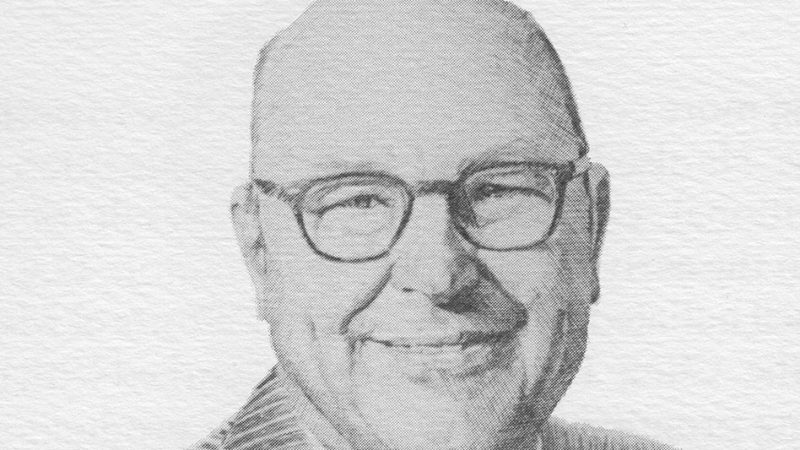
Joseph M. Farley of Birmingham is a well-known attorney and retired Alabama Power Company executive.

He attended Birmingham Southern College, then transferred to Princeton University where he earned a degree in mechanical engineering. He attended graduate school at The University of Alabama’s College of Commerce and Business Administration and completed his formal education with an LL.B. degree from Harvard Law School. He was a member of the law firm of Martin, Balch, Bingham, and Bouldin before joining Alabama Power, where he advanced to president and director. He has held a number of positions with Southern Company, including president, CEO, and director of Southern Nuclear Operating Company. He has served as president of the Alabama Chamber of Commerce and as president of the Rotary Club of Birmingham. He has been active in a number of educational and health care causes. He is a member of The University of Alabama President’s Cabinet and a member of the Culverhouse College of Commerce and Business Administration Board of Visitors.

Mary Goss Hardin

  • October 26th, 2021

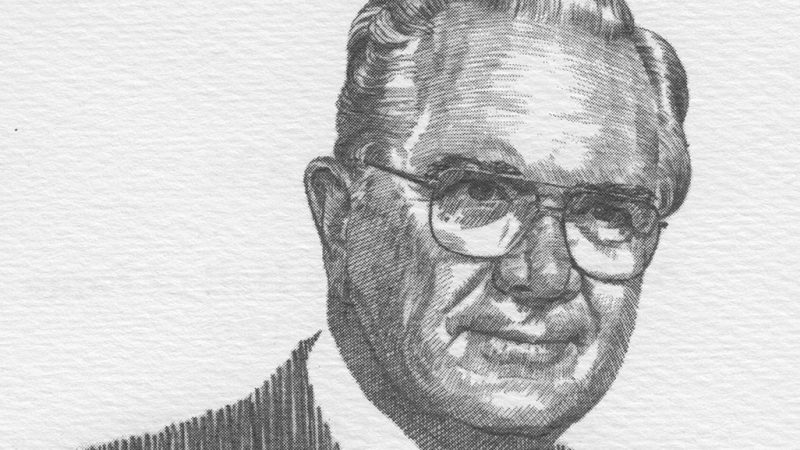
Mary Goss Hardin is a pioneer in the grocery business and was the first woman in the United States to open a food store franchise with the Piggly Wiggly Company.

The Pell City native attended Woodlawn High School in Birmingham and Howard University, now known as Samford University. After opening her first grocery, she ultimately owned 15 Piggly Wiggly/Warehouse Market stores across North Alabama. She has served as president of the Piggly Wiggly Operator’s Association, the first woman to do so, and served on the Piggly Wiggly Distributing Company’s board for more than 30 years. In 1980, she became the first woman to receive the Grocers’ Spotlight Grocer of the Year Award. She has been active in a number of civic organizations, including the Gadsden chapter of the American Red Cross and the board of directors of the March of Dimes and the Salvation Army. She has been a staunch supporter of religious institutions and has established permanent endowments for scholarships for theological students at Emory University. She has aided the New Orleans Baptist Seminary, where the Hardin Student Center is named in her honor.

William M. Spencer, III

  • October 25th, 2021

Born to Margaret Woodward Evins Spencer and William M. Spencer, Jr., December 10, 1920, in Birmingham, Alabama, Bill Spencer spent his early childhood there, moving with his family to Demopolis during the Great Depression. “My father … took over the running of my grandfather’s plantation since my grandfather had been incapacitated by a stroke,” he wrote of the move. Young Bill began his high school education in the river town, moving to Chattanooga, Tennessee, to study at Baylor School, where he graduated with honors in mathematics. Next was college at the University of the South in Sewanee, Tennessee, where he distinguished himself as a member of Phi Beta Kappa, Omicron Delta Kappa, and Blue Key, graduating with a Bachelor of Science degree in chemistry (optime means) in 1941. He was named a distinguished alumnus of that institution in 1984.

While plans were for Bill to attend the University of Pennsylvania Medical School, a call to perform service for his country intervened after one year, and he joined the United States Marine Corps on April 1, 1942. Upon completion of training at Quantico, Virginia, he was awarded a regular commission in the Corps and assigned there as an instructor. He then applied for overseas duty and was assigned to the Second Marine Division, which he joined in New Zealand in 1943 and remained with until after the end of World War II.

Again, Bill Spencer’s words: “During my service with the Second Division, I was on five landings, starting with Tarawa, where I served as an artillery forward observer and a naval gunfire spotter. We were in Saipan, Tinian, Okinawa, and Iheya Shima – an island north of Okinawa – and finally Nagasaki. We were the first troops to land there after the atom bomb was dropped.”

Discharged a captain with a Bronze Star, Bill Spencer brought his college and combat education home to Alabama, a man changed by what he had seen in the Central Pacific Theatre – and a man with a firm determination to succeed in business.

In 1946 he and an assistant purchased Owen-Richards company, then a small operation with sales of about $500,000. Under his leadership, the firm would grow to be a much larger company by the name of Motion Industries, Incorporated, with multiple branches spread across the United States. Bill Spencer was elected president of the company in 1952 and chairman in 1973. Along the way, he also attended the Graduate School of Business Administration of Harvard University and oversaw a successful initial public offering of Motion Industries in 1972. Later in his tenure, Motion was merged into Genuine Parts Company, an Atlanta, Georgia-based company traded on the New York Stock Exchange. The merger was considered particularly noteworthy for its tax-free status.

After retirement from Motion, Bill Spencer joined with others to form a new company, Molecular Engineering Associates, the aim of which was to commercialize some of the outstanding research work being done at the University of Alabama at Birmingham. He also served as chairman of this com­pany. Then, in 1986, along with Dr. John Montgomery of Southern Research Institute and Dr. Charles E. Bugg, director of the Center for Macromolecular Crystallography at UAB, he formed BioCryst Limited to make drugs by a novel method known as structure-based rational drug design. In 1994 this successful business venture by Bill Spencer had its initial public offering and is now traded on the NASDAQ stock exchange.

Along with a successful personal business career, the gentleman has also directed his business acumen and expertise to the benefit of other organizations over the years by serving as a member of the Board of Directors of Alabama Great Southern Railroad, AmSouth Bank NA, BE&K Incorporated, Health Services Foundation, Mead Corporation, Robertson Banking Company, Genuine Parts Company and Southern Research Institute. He is a current member of the BE&K, Incorporated, Emeritus Board, and the Emeritus Board of Genuine Parts Company, along with serving as an active member of the Board of Directors of Altec Industries, Incorporated; BioCryst Pharmaceuticals, Incorporated; Molecular Engineering Associates, Incorporated; Secretech, Incorporated; and Southern Research Technologies.

A member of St. Mary’s Episcopal Church, he is currently a trustee for the National Trust for Historic Preservation, the Robert Meyer Foundation, and the UAB Research Foundation. These current service efforts come as the latest chapters in a long history of such service: in the past, he has served as president of the Alabama Safety Council, the Birmingham Area Chamber of Commerce, and the Birmingham Festival of Arts; as the chairman of the Baptist Medical Center Fundraising Drive and St. Vincent’s Hospital Foundation; as president and chairman of Baptist Hospitals Foundation of Birmingham, Incorporated; and as co­chairman of the Birmingham Symphony Fund and the United Appeal Drive. He has also served on the Board of Visitors for The University of Alabama College of Commerce and Business Administration and as a member of the UAB President’s Council. Bill also founded the Spencer Chair of Medical Leadership and the Evalina B. Spencer Chair of Oncology at the University of Alabama at Birmingham.

Continuing the tradition of commitment to and leadership of the Birmingham Museum of Art begun by his father in 1959, Bill Spencer served as chairman of the Museum Board from 1986 to 1994, leading the Museum’s successful transition from an outstanding regional museum to an institution that is now enjoying national attention. His leadership was a key to the success of the $20 million campaign to renovate and expand the Museum, trans­forming it into the extraordinary new museum – with sculpture garden – that exists today.

Bill Spencer has served as president of The Club, The Downtown Club when it was operational, and The Mountain Brook Club. He was chosen as Outstanding Alabama Philanthropist in 1989 by the Alabama Chapter of the National Society of Fundraising Executives and named Citizen of the Year in 1992 by the Women’s Committee of 100.

Bill enjoys spending many of his so-called retirement days at Waldwick, the plantation home of his youth, in Gallion, Alabama. Architectural historians consider the home one of Alabama’s finest examples of Gothic Revival architecture.

The Alabama business community con­siders William M. Spencer, III, one of the finest examples of a life led in pursuit of business excellence, and in service to his community

Louis J. Willie, Jr.

  • October 25th, 2021

True, some Alabamians will always – and only – remember the son of Louis J. Willie, Sr., and Carrie Sykes Willie because he broke the color barrier at one of Alabama’s most exclusive golfing establishments, Shoal Creek, in 1990, thereby helping to avert major financial losses for the PGA and the club. And, helping to avert what to this native of Fort Worth, Texas, would have been the worst nightmare of them all – in his own words, “resurrecting the reputation of Birmingham as a racist city.”

But there are many, many others who when asked to talk of Louis Willie, will point to the more basic, day-to-day reality of his life – that he helped build and lead Booker T. Washington Insurance Company to its present-day ranking as one of the leading minority enterprises in the United States.

Born August 22, 1923, young Louis was raised by parents who instilled in each of their five children the value of an education, and the belief that if a job were worth doing, it was worth doing one’s best at that job. After graduating from Lincoln High School in Dallas, Texas, in 1939, Louis went on to pursue his bachelor’s degree in economics at Wiley College in Texas, receiving that in 1943. He then volunteered for military service during World War II, serving in the European Theatre as a sergeant in the Signal Corps until the war ended in 1945. At that point, Louis then pursued and received his Master of Business Administration degree from the University of Michigan in 1947. He took his college education to Nashville, Tennessee, to what was then Tennessee State College to serve as an instructor in that school’s business division from 1947-1950, leaving his post to become the office manager from 1950-1952 for McKissack Brothers, Incorporated, a Nashville based general contractor. It was during this time that he married spouse Yvonne Kirkpatrick, a Pembroke, Bermuda, native who is now a naturalized U.S. citizen. The two have been married for 45 years, as Louis is fond of telling people. He is also proud of the rest of his immediate family – son Louis III, his wife Mary, and grandson Louis IV.

It was in 1952 that Louis Jr. came to Birmingham, Alabama, and entered what was to be another key relationship in his life.

Louis Willie has recalled his first meeting with the founder of Booker T. Washington Insurance, Dr. A.G. Gaston, many times. Although Dr. Gaston had heard of the youthful Louis and was impressed, he was concerned about the businessman’s young age. “I balled up my fist, banged on his desk and said, ‘Nobody ever hired Louis Willie and regretted it.’”

Louis Willie got the job – and turned it into a career.

He served as controller of the company, founded in 1923 to sell burial insurance to African Americans, from 1952-1962, then assuming the position of executive vice president and holding it until he was named president, chairman of the board, and chief executive officer in 1987. He held the top office until his retirement in 1994 at the age of 71. Along the way he continued with his education, never forgetting his parents’ advice, and received the designation of Chartered Life Underwriter from the American College of Life Underwriters in 1973.

Also, along the way, the company grew – and saw other changes. In 1987 Dr. Gaston formed an Employee Stock Ownership Plan and sold the company to his employees. Today, the company has assets of approximately $50 million and is owned by its employees and employees of subsidiaries, including the A.G. Gaston Construction Company, Zion Memorial Gardens, Incorporated, and the Booker T. Washington Broadcasting Service, Incorporated, which owns WENN and WAGG radio.

And Louis Willie realized some other goals, as well. He remembers telling people that when he graduated from the University of Michigan, he knew he wanted to sit on the board of directors of a company whose stock was listed on the New York Stock Exchange. His corporate board membership roster now lists more than just one such company’s board. A comprehensive review reveals Alabama Power Company, 1984-1994; AmSouth Bank NA, 1977-1983; and the Southern Company, 1991-1994. He has also served on the boards of Citizens Federal Savings Bank, 1957-1987; the Episcopal Church Pension Fund of New York City, New York, 1973-1985; and the Federal Reserve Bank of Atlanta, Birmingham Branch, 1979-1984 (including a term as president, 1981).

But work and professional affiliations have not kept Louis Willie from fulfilling what he considers his moral and spiritual obligations. An active and devout Episcopalian since moving to Birmingham, he has served in various capacities for St. Mark’s and St. Andrew’s churches, has an impressive record as a member of several diocesan committees in Alabama, and is now a member of the Cathedral Church of the Advent.

A life member of the NAACP and former member of Alpha Phi Alpha Fraternity, Incorporated, he has served on the Board of Directors of the Birmingham Museum of Arts, the Board of Trustees of the Alabama Symphony, the Board of Directors of the Birmingham Area Chamber of Commerce, the United Way of Central Alabama (serving as general campaign co-chair in 1977), as a member of the Mayor’s Advisory Committee, on the President’s Council of the University of Alabama at Birmingham and as a member of the University of Alabama System Board of Trustees. In a position that was awarded because of a nomination by former Alabama Governor George C. Wallace, Louis has also served as a member of the Board of Directors of the Oil and Gas Lease Trust Fund of the State of Alabama from 1985 to the present.

While his membership in Shoal Creek may be the most publicized of Louis J. Willie, Jr.’s, breaking down of traditional color barriers, it was not the first. He became a member of The Club and the former Downtown Club. He is also a member of The Summit Club but will point with more pride to his work with Re-Entry Ministries, or to the Brotherhood Award he received in 1985 from the National Conference of Christians and Jews. Named Greater Birmingham Manager of the Year in 1991, he has also received the 1993 Greater Birmingham Area Community Service Award. He maintains his memberships in the American College of Life Underwriters and the Birmingham chapter of that organization and is a former member of the Board of Directors of the Alabama Association of Life Insurance Companies. He received honorary Doctor of Laws degrees from the University of Alabama at Birmingham in 1990 and Birmingham Southern College in 1992.

With a legacy of leadership, foresight, business acumen, and community service to his name, Louis J. Willie, Jr. sums up his views on life much better than anyone could do for him.

“As I see it, every day is a day of prayer,” he said. “And there is a lot of good going on in our world today. If someone else wants to be pessimistic, I say OK, that’s fine. But I’m going to find something to smile about. I think that’s important.”

Frank L. Mason

  • October 25th, 2021

In 1947, Mr. Sam Mason was having a hard time making a go of things with his business, Southeastern Tool & Die Company. Aluminum window screens were still new then, and the firm that originally only manufactured tools and dies had added three-screen parts to its production line, right as Mr. Mason’s health was beginning to fail.

“At that time,” recalls Frank L. Mason, “I really had not thought too much about starting with the company … It was more an effort to help my father. He’d helped me all his life.” So, the loyal son laid aside his mechanical engineering studies at The University of Alabama to go into business with his father. It was the first of a lot of smart business decisions the 1982 Alabama Small Business Person of the Year would make in his career.

Frank L. Mason was born May 7, 1924, to Sam Mason and Ruth Jacobs Mason in Birmingham, Alabama. He completed three semesters at The University of Alabama before enlisting in the U.S. Navy, where he completed flight training immediately prior to the end of World War II. Shortly after he went to work with his father, the company was incorporated on April 1, 1948, just five days after Frank Mason had wed Bess Powell Cooper. He received 25 percent of the stock at that time, and the business was incorporated, going on to change its name to the Mason Corporation in 1969.

Today Frank Mason is chairman of the board of his firm, which now manufactures aluminum building products for the home improvement industry, as well as some commercial building products. The Mason Corporation home office is still located in Birmingham, but the concern has grown to include locations in Dallas, Texas; Kansas City, Missouri; Raleigh and Charlotte, North Carolina; Baton Rouge, Louisiana; and Edison, New Jersey. The latest stats on the company show that it has more than 400,000 square feet in total building area, more than 180 employees at eight locations, and offers some 3,000 market items.

Over the years Mr. Mason’s entrepreneurial expertise prompted the U.S. Chamber of Commerce to put him on its board of directors and its Small Business Council. A strong advocate of sharing profits with employees, he served a stint as chairman of the Profit Sharing Council of America, an organization of companies that have profit-sharing plans. He just recently stepped down from that body’s board of directors and served as a director for the Alabama Profit Sharing Council. Profit-sharing, Frank Mason says, is one way of showing the employee he or she is important, and it makes good business sense. “With profit-sharing, you’re really following with deeds what you’re saying with words … it’s a matter of mutual interest and welfare of the company,” he says. And Mr. Mason did indeed back up his words with deeds: his company began profit-sharing as soon as it got on its feet in the early 1950s.

He has been on the National Advisory Council for the Small Business Administration, chairman of the Employee Benefits Committee for the U.S. Chamber of Commerce, and served as the second-ever chairman of the Business Council of Alabama, as well as on its board of directors. He was a member of The University of Alabama College of Commerce and Business Administration Board of Visitors. And the list goes on.

As president of the board of directors of the Alabama Chamber of Commerce, he has been a leader in the state’s push to become a player on the global business scene, stressing teamwork as the necessary element for success in such ventures. “If Alabama is to reach its full international development potential, it will be because we have all worked together to make it happen,” he was known for saying at one point.

In 1980 he was singled out by the Women’s Committee of 100 in Birmingham as the Citizen of the Year and earned his Small Business Person of the Year honors soon after that. At one point he was the member representing small businesses on the Labor and Agriculture Advisory Council for the Federal Reserve Bank of Atlanta. Two times he chaired the Alabama delegation to the White House Conference on Small Business, once in 1980 and then again in 1986. He is currently vice president of the Treasure Forest Landowners Association of Alabama, president of the Alabama Farm Owners Association and serves on the board of Canterbury United Methodist Church in Birmingham.

Over the years as he combined his business interests and natural bent for leadership, Frank Mason found himself drawn to the political arena. He became one of the first two Republicans elected to office in Jefferson County, Alabama when he won the race for justice of the peace in 1956. In 1958 he was the first Republican candidate for the U.S. Congress from Jefferson County. Then, in 1976 he served as an alternate delegate pledged to (now) former U.S. President Ronald Reagan at the Kansas City National Republican Convention; and was a delegate, again pledged to Reagan, at the Detroit Convention in 1980. He served his state in the very visible position of member, and then chairman of the State Ethics Commission during the first half of the 1990s.

Remembering his early years in the business of politics, he says he did not run for justice of the peace because he coveted the position, but because, as a Republican, he believed voters in the heavily Democratic Alabama should have a choice. They agreed; he won. That victory spurred him on to his other efforts.

“I think that small business has some real assets to bring to the political process,” says Mr. Mason. “It’s easy for people passing laws and regulations to overlook the impact of them … A person who has had to mortgage his house to meet a Friday payroll looks at spending differently than if he has never had that experience. So, I think there is validity to the small business perspective in managing government.”

Although retired from day-to-day participation in the management of the business that became his life, Mr. Mason has not retired in the traditional sense. He spends his time now on a farm of some 3,000 acres in North Alabama, where he is involved in efforts to enhance the wildlife populations of the area, and where he works about 80 head of cattle, planning to expand even more in that area. He says he enjoys meeting new people who share these interests he is able to devote more time to now, as he enjoys using talents and skills entirely different than those called for in the metal and building products industry.

Asked how he would like to be remembered, Frank L. Mason does not have to ponder long on his answer.

“I guess being remembered as a person of integrity would be about the best thing you could think of,” he says.

Wallace R. Bunn

  • October 25th, 2021

In 1941, all Wally Bunn wanted was a summer job with his local telephone company.

He wound up instead with the career of a lifetime.

Wallace R. Bunn was born October 26, 1922, in Durham, North Carolina, to parents Wallace Raikes Bunn and Alda Beck Bunn. In high school, the man who would eventually serve as director of the Hall of Fame Bowl in Birmingham, Alabama, from 1980-1983 was an athletic youngster who became an all-state end in football, served as captain of the basketball team, ran track, and was sports editor of his high school paper. He was also student body president; participated in the chorus, Boys State, and dramatics; and was voted most handsome and most popular. The real high school interest that stayed with him through the years, however, was one Miss Margaret P. Seegers, a dark-haired beauty who caught his eye early on and became his bride on December 19, 1942.

But it was before Wallace and Margaret were wed that he took that first job out of high school, a summer position with the Southern Bell Telephone and Telegraph Company as a coin telephone collector in Charlotte, North Carolina. His original plan was to enter Davidson College in the fall of ’41, but World War II loomed ugly on the horizon, and the money Wallace was earning with the phone company, he decided, would help make entry into college somewhat easier financially if he postponed matriculation for a year. The threat of war did become reality, and Wallace was sent by the telephone company to work with defense installations in a neighboring state. Southern Bell later wrote a letter canceling the position’s military deferment so young Bunn could join up with the U. S. Coast Guard, with which he served from 1943-1946.

His country served, Wallace Bunn returned to the Tarheel State to find that Southern Bell had a job – and work credit of five years – ready and waiting for him. Years later he would talk to an Alabama newspaper about his decision not to take advantage of GI Bill tuition assistance and

pursue his college degree then, saying, “If someone wants to go to college, I would advise them to go. But if you don’t have the desire, then don’t go. I have regretted not going to college, but there are times when I can say I’m glad I didn’t … I got my education the hard way, and you appreciate it more when you get it that way.”

Thus began, for the second time, a career in telecommunications for Wallace Bunn – a career that would culminate in the 1980s when he oversaw the creation of one of the largest companies in the United States after the divestiture from American Telephone and Telegraph Company of two operating companies covering nine Southeastern states.

In 1948 Wallace and Margaret were blessed with the birth of their first son, Rodney. Son Russell would join the Bunn family in 1958, and in between the family would live in Shelby, Winston-Salem and Charlotte, North Carolina, and Hattiesburg, Mississippi, as Wallace began his climb up the Southern Bell company ladder, working as a manager, a district commercial

supervisor, and a district manager. Another promotion, this one to division manager, came in 1959, and with it a move to Baton Rouge, Louisiana. But Wally was not all work and no play; during this time, he also became involved with the Boy Scouts as a Scoutmaster and a trustee. His involvement with numerous civic activities would last through the decades and be one of the reasons cited for his induction into the State of Alabama Academy of Honor in 1984.

Over the years the Bunn family would live in fourteen different cities, with their patriarch serving in increasingly more responsible management positions with each change in locale. They would first call Alabama home in 1962 when Wallace was named assistant vice president of Southern Bell. After a move to Nashville, Tennessee, he would return to Birmingham in 1969, when he was elected a director of South Central Bell and appointed vice president of operations for its five states.

Then came a shift of coastal proportions; Wallace was transferred to Seattle, Washington, as president and a director of Pacific Northwest Bell, in 1973. While in Nashville and Seattle, he served as president of the Chamber of Commerce in both cities. He would return, again, to Birmingham in 1978 as president and a director of South Central Bell.

“There’s a story about us coming back to Birmingham so much,” the business executive once told a reporter. “I had an application in for the Birmingham Country Club for a long time and they finally took me in. I paid my initiation fee and everything. Then I was transferred to Nashville, and I didn’t think I would be coming back, so I gave up my membership. Then I came back to Birmingham and had to pay my initiation fee all over again to get back into the country club. And when I was transferred to Seattle, I knew I wouldn’t be coming back to Birmingham, so I gave up my membership again. Then when I came back the last time, I had to pay the initiation fee all over again – for the third time.

“I tell my wife when I die, to keep a non­resident membership in the Birmingham Country Club. I may come back.”

From 1981 until the historic breakup of the Bell System January 1, 1984, Wallace Bunn was one of the top twelve Bell System officers involved in the planning and execution of the complete divestiture of the Bell Operating Companies from AT&T. Until his formal retirement, he served in Atlanta, Georgia, as the first chairman of the board and chief executive officer of BellSouth Corporation, the largest of the then-newly created “Baby Bells” and the fourteenth largest corporation in the nation, with 125,000 employees at the time. In 1985 he relinquished his position at BellSouth but remained on its Board of Directors through April of 1991 – fifty years after a summer of shaking the nickels out of coin telephones.

Over the years the gentleman named Young Man of the Year by the Hattiesburg Junior Chamber of Commerce in 1958 has served on twelve corporate boards, including those for such companies as AmSouth Bank, Holiday Inn, Morrison, Incorporated, and, currently, Altec Corporation. Civic and philanthropic affiliations have included Chambers of Commerce in many cities, the Salvation Army, Junior Achievement, Urban League, United Way, Rotary Club (including a still long-running stint as Poet Laureate of the Birmingham club), St. Vincent’s Hospital, Baptist Medical Center, and numerous economic development and governmental advisory bodies.

In 1988 this leader in his career field was honored by BellSouth with the creation and endowment of the Wallace R. Bunn Chair of Telecommunications at the University of Alabama at Birmingham. The chair provides leadership for the university’s Center for Telecommunications and Education Research, and Wallace Bunn – who spends his days now golfing, fishing and painting, the dark-haired beauty still by his side – believes that is vital.

“The hallmark of this business is that the progress has never stopped,” he says of his life’s professional work. “I pray it never will.”

Ehney A. Camp, Jr.

  • October 25th, 2021

Ehney Camp graduated from The University of Alabama in 1928 with a perfect grade point average.

He was just as successful in every other area of his life.

Ehney Addison Camp, Jr., was born May 9, 1907, in Maylene, Alabama, the son of William Wheeler Camp and Pearl Eugenia Hendrick. His father would pass on early in the boy’s life, and his mother would remarry, giving Ehney as a stepfather William Levert Christian. After graduating from Shelby County High School in Columbiana, Alabama, young Camp would head to Tuscaloosa, Alabama, where he would begin an incredible career of academic and civic success.

He was a member of the elite academic and social honoraries – Phi Beta Kappa, Omicron Delta Kappa, Beta Gamma Sigma, Alpha Kappa Psi, and the Jason’s. He joined Sigma Nu Fraternity, forming bonds that would last a lifetime. When he received a degree from the state university’s school of business, it was accompanied by that college’s Outstanding Student Award. Ehney was also honored with the university’s coveted Algernon Sidney Sullivan Award in recognition of his outstanding scholarship, leadership, and record of service.

The summer prior to his graduation, Ehney worked with the Birmingham firm of Ward, Sterne, and Company, now Sterne, Agee, and Leach. After his summa cum laude commencement, he obtained permanent employment with the group, and in his own words (from a History of the Investment Division of Liberty National Life Insurance Company, written in April 1973), “had an opportunity to learn something about bonds and stocks.” After a year he received an offer to open in Tuscaloosa a branch office of Bankers Mortgage Bond Company. Almost immediately after his relocation, the stock market crash of October 1929 occurred, and the company decided to assign him the task of managing the tremendous number of foreclosures and fore­closed properties that were resulting because of the flattened economy. Again, from his History: “Liberty National had previously acquired some mortgages from Bankers Mortgage Bond Company, which the latter firm was servicing for Liberty National. When Bankers Mortgage Company finally went into receivership, it became necessary for Liberty National to take over these mortgages and handle them directly. Because Liberty National had no one with the time or experience to handle these details, I was ‘thrown in’ with the deal and began employment with the company on March 21, 1932.”

And thus began the second chapter of incredible success for Ehney Camp, Jr., this one writ on his professional success.

In his career with Liberty National, which would later become a part of Torchmark Corporation, Ehney would rise through the ranks from his initial position as the first investment employee to become company treasurer in 1935, then a member of the board of directors in 1940. Three years later he was named vice president, and in 1960 was made executive vice president. After his death on January 20, 1993, Torchmark representatives called Ehney Camp “one of the key contributors to the growth and success of Liberty National Life. He was the company’s first chief investment officer … Under his direction, the company’s investments grew from some $2 million to $1 billion.” In 1984 he was named to the Torchmark Gallery of Leaders.

But Ehney was not focused only on helping his company become an insurance giant. He had a personal life, as well, and bits of that found their way into History. “I had been given the responsibility of personally preparing the annual statement,” he wrote. “My problem was to meet the deadline in getting the statement prepared prior to my marriage on February 25, 1933 … Also, since I was taking on the additional responsibilities of marriage, I apparently believed it important to render an annual report to the board … This report showed I had saved the company $1,933 whereas the company had paid my salary of only about $1,600 during the nine and one-third months I had been employed. If I had known that all the banks of the country would close their doors on March 4, 1933, only seven days after my marriage, my report probably would have been directed even more strongly toward the need the company had for my services.”

Ehney Camp married Miss Mildred Fletcher Tillman, and the two had three children, daughters Patricia Alice Camp Faulkner and Mary Eugenia Camp Boulware, and son Ehney Addison Camp III. At the time of his death the elder Camp had eight grandchildren and seven great-grandchildren, now numbering fourteen with one on the way. “The happiness of his family was the most important thing in his life,” said daughter Patricia. “The exemplary values he set for himself have been handed down to all of us.”

As his family grew, so did Ehney Camp’s civic and charitable commitments. In 1953, President Dwight D. Eisenhower appointed him to his Special Advisory Committee on Government Housing Policies and Programs. And the bonds with his fraternity and alma mater grew stronger with the passing years – he served as an advisor, then as a director of the Theta House Corporation, and as a member of the Sigma Nu Educational Foundation. In 1981 the chapter awarded him its Distinguished Alumni Award. A former president of the University of Alabama National Alumni Association, he was chosen as the 1973 Outstanding Alumnus by the Jefferson County Chapter of the Association, and in 1985 was honored by the national organization with its Distinguished Alumnus Award. The university presented him with an honorary Doctor of Laws in 1979; there is a scholarship awarded in his honor by the UA business school.

He served on The University of Alabama System Board of Trustees from 1959 to 1979, and in that capacity was instrumental in planning the growth of the University of Alabama at Birmingham. He was also a member of the committee organized by the city of Birmingham in the mid-1960s to expand the medical center, and in that capacity provided critical assistance in acquiring the land occupied by the urban university. Camp Hall, an eleven-story residence hall on the UAB campus, is named in his honor.

A former president of First National Bank of Columbiana, Ehney Camp was a former president of the Mortgage Bankers Association of Birmingham. He was treasurer and member of the executive committee of Brown-Service Funeral Homes Company, chairman of the board of trustees of First United Methodist Church of Birmingham, past president of the Birmingham Kiwanis Club, and a life member of Kiwanis International. He was a member of the Newcomen Society of North America, a board member of Acipco, served as United Way campaign chairman, and was affiliated with dozens of other civic and professional organizations. He was inducted into the Alabama Academy of Honor in 1976.

Ehney Addison Camp, Jr., was a man committed to his family and friends, his faith and community, and his alma mater. And he was committed to his profession, as his own words show so clearly.

“Because life insurance contracts span several generations, the company is more than just a business. It is an institution, with tremendous obligations and responsibilities to literally thousands of families. Those who are charged with investing its assets must constantly keep before them the nature and full meaning of this trust.”

Ehney Camp was worthy of that trust.

James Coleman Lee, Jr.

  • October 18th, 2021

Family pride, cutting-edge packaging innovations, and a fierce competitive streak have been the driving forces behind Jimmy Lee’s unparalleled success in his industry, a success made all the sweeter because this lifetime soft drink man made his mark ” with Pepsi – almost literally in Atlanta-based Coca-Cola’s back yard.

Born January 10, 1920, to parents Elizabeth Turley and James Coleman Lee, Sr., in Birmingham, Alabama, James Coleman “Jimmy” Lee, Jr. was also born to the world of sugars and fizz; his father was second-generation president and owner of the Buffalo Rock Company. As Jimmy grew up in this family with ginger ale bottling roots, he greatly anticipated the day he, too, could become a part of the business his grandfather Sidney Lee founded during the Civil War. “The Lee family is tied to the beverage industry totally,” said Jimmy, who as a small child had a drink stand in his neighborhood and would go with his father to the family plant and see the truck drivers off on their delivery routes each day. Later, at age 19 he would load those same route trucks during the summer. “I enjoy it, my entire family enjoys it,” he said. “I guess we were weaned on a soft-drink bottle.”

However, Jimmy’s dreams of joining the family business would have to wait; first came the pursuit of higher education at Birmingham Southern College and Auburn University. Then World War II erupted and his country needed him; Jimmy left college during his junior year and within three years of joining the U.S. Air Force in 1943 had climbed the ranks from private to first lieutenant while in troop carrier command in England. After military service, the young man came back to Alabama eager to become a contributor at Buffalo Rock. Sadly, it was not too long after Jimmy joined the company that it became apparent his presence was much needed; James Lee, Sr., had fallen ill, and many, of his goals were still unfulfilled.

When the senior Lee passed away in May of 1951, his son – shaken by the loss of the role model he loved so dearly – took the reins as president of Buffalo Rock. Only one month later, with company sales at approximately $1 million and with fewer than 100 employees, 31-year-old Jimmy set out to realize one of his late father’s goals: signing with the Pepsi Cola Company. Jimmy successfully bought into the Pepsi franchise, and thus he embarked on the journey that would lead Buffalo Rock to become one of the industry giant Coca-Cola’s fiercest competitors in the South as Jimmy skillfully guided his company into handling other national brand products, along with smaller regional brands.

Another move Jimmy made early in his tenure as president was to buy out the holdings other family members had in the company. “I wanted the flexibility to do well or not to do well,” he recalled years later. “If I took a chance and went broke, I didn’t want my family to suffer.”

That flexibility paid off: Jimmy bought into the Dr. Pepper franchise in 1957 and followed that move with the purchase of the 7UP franchise in 1962. Buffalo Rock received well-deserved accolades as it became the largest family-owned Pepsi-Cola operation in the country – a status it still retains today. In 1966, Jimmy moved to ensure the growth and success of his grandfather’s company by building the then-most up-to-date bottling plant in the United States on a 27-acre site on Oxmoor Road in Birmingham. Further raising the bar on its competition, Buffalo Rock also added two additional production lines to the newly opened facility and handled more flavors than most bottlers, including Pepsi Cola, Dr. Pepper, Mountain Dew, Yoo-Hoo, Hershey’s, Grapico, 7UP, Sunkist, Ocean Spray, and of course Buffalo Rock. The company now has seven production lines and has added Tropicana to its family of products.

It was also in the 1960s that Jimmy made his mark on the soft drink industry with the first of his bold packaging innovations. In 1967 Buffalo Rock became the first company to market a 10-ounce non-returnable bottle – an innovation made even more remarkable because of its easy-open spin-top close feature. After that the number of employees at Buffalo Rock continued to climb steadily, totaling more than 1,000 over the next two decades thanks to acquisitions ranging from Dothan, Alabama, to Pensacola, Florida, and Columbus, Georgia. The 1980s were truly a time of success as Jimmy made another bold packaging move and introduced a product that would revolutionize the beverage industry: in 1984, consumers in the Birmingham market became the first to buy their soft drinks in three-liter bottles.

Strategic product innovations continued with a “best used by” date stamped on all cans in 1993 and the invention of Pourfection two-liter bottles in 1996. Buffalo Rock’s competition scrambled frantically as consumers embraced the easy-to-pour design, which Jimmy said he believed allowed for easier pouring for consumers of all ages. Once again, Jimmy left the competition to jump on his bandwagon as Buffalo Rock’s sales increased to $380 million.

In addition to setting industry trends, Jimmy, married since 1986 to the former Rose Marie Rezzonico and father to James C. Lee III, Peyton Leigh, and Donaldson Lee, focused on maintaining employee relations. “We have an open-door policy,” Jimmy said. “Employees can walk into my office, and we treat our employees as individuals, not numbers.” In 1976 he further backed up that philosophy by beginning a 401(k)/profit-sharing plan approximating $40 million. Strong employee relationships are even more important to Jimmy today as the company, with a payroll of $70 million, employs more than 2,400 employees and serves 5 million people with 14 distribution centers in Alabama, Florida, and Georgia.

Although he did not complete his own college degree, Jimmy’s firm belief in the value of higher education and in giving back to the community led him over the years to serve as president of the Board of Trustees of Birmingham Southern College and head for four years of the President’s Council of the Uni­versity of Alabama at Birmingham. He is currently a member of the Board of Trustees of Leadership Birmingham and the Southern Research Institute, and a member of the University of Alabama President’s Cabinet, and is also a director of the Economic Development Partnership of Alabama.

Through the years Jimmy’s hard work and success as a business leader and his dedication to his community have been recognized through numerous awards, including the first Birmingham Service Award in 1983 and his induction into the prestigious Alabama Academy of Honor in 1987. In 1972 he was the recipient of the Distinguished Service Award by the Alabama Soft Drink Association, and in 1978 received the Beverage Man of the Year Award. One of his crowning industry glories came in 1987 when he was inducted into the Beverage Industry Hall of Fame.

But there is another industry glory even more important to Jimmy Lee, now chairman of a Buffalo Rock that ended 1997 with $400 million in sales. Thanks to him, his children, and their children uphold a family tradition by going to work each day for a company that began making its mark on the soft drink indus­try in the 1800s – and will continue to do so long into the next century.