Location: Birmingham AL

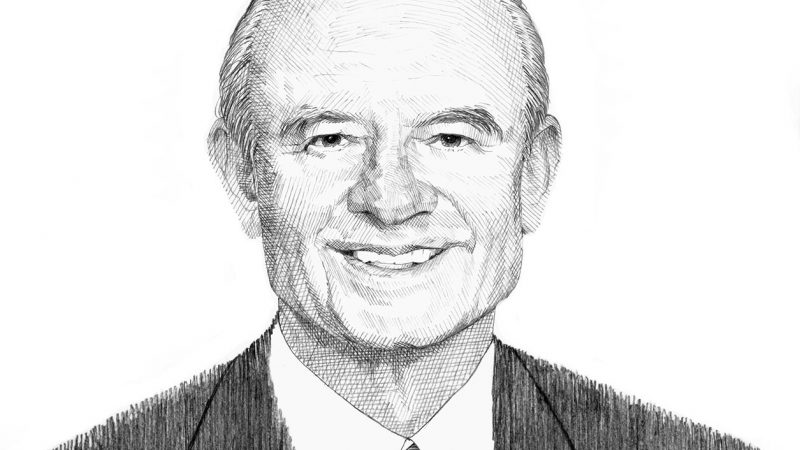
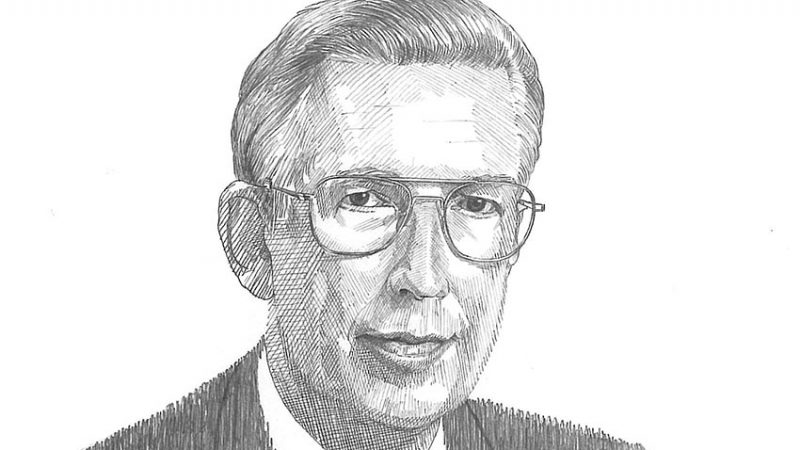
Elmer B. Harris

  • October 4th, 2021

Elmer B. Harris says you can’t buy a step-by-step manual for achieving success, and you can’t find a secret seasoning for making something out of yourself. But for someone whose life is recognized marked by ambition, it’s surprising how Harris can whittle down his prosperity, notch by notch, success by success, to reveal one modest, bare-bones mantra — one he’s followed since he was a kid.

“Don’t ever turn down an opportunity,” he said. Not even when it’s flipping hot dogs and scooping sundaes.  Aside from his first job at the local Dairy Queen in his hometown, Clanton, a few more opportunities knocked on teenage Elmer’s door.  Clanton’s WKLF radio station was looking for help, so 15-year-old Harris signed up to be a DJ. He got the job, and there he played requests for “Hound Dog,” gospel, popular, reported the news, and learned how to be articulate. He introduced himself to worldly affairs and had constant interaction with all sorts of people from different backgrounds — an experience that helped him when he became a leader in business.

Born in 1939 to Alton and Lera Mae (Mitchell) Harris, he attended elementary and high school in Clanton.

While he worked at the station and at Dairy Queen, Harris squeezed in two other jobs.  He ran a printing press and also worked in a local machine shop.  A year or two after Harris graduated from Chilton County High School, a gentleman strolled into the shop and presented Harris with an opportunity.  He asked Harris if he wanted to be considered for Auburn’s co-op education program with Alabama Power Company.  Harris said yes and interviewed with Alabama Power the next week. For five years, he alternated spending three months studying electrical engineering at Auburn and the next three in Selma learning engineering, management, and leadership skills from the folks at Alabama Power.  “If you can learn how to manage and lead people toward their own successes,” Harris said, “your company will take care of itself.”  He believes a person should always find a way to say YES, not NO when needs and opportunities arise.

He graduated from Auburn in 1962 with a degree in electrical engineering and then earned his master’s degrees in engineering and business administration a few years down the road. He has received six honorary doctor degrees.  He stayed on with Alabama Power and over the years handled positions of increasing responsibility in the company, including being elected senior vice president, and then executive vice president and chief financial officer in 1979.  In 1985, he made a move to become the executive vice president of Georgia Power Company, a sister company. And when he returned to Alabama in 1989, he became Alabama Power Company’s President and CEO.  When he came back, he felt several things needed to be changed to increase employee initiative and decision-making, increase employee relationships with customers, enhance community and charitable activities, and minimize price increases.

While Harris was president, a lot of things changed.  On his first day, he “burned” all eight books of procedures and replaced them with “any employee is authorized to make any decision that is in the best interest of the company and its customers, bar none.”   He remembers back in the days of the late 70s and early 80s when Alabama Power had about a 30 percent approval rating with its customers. He attributed that mostly to the lack of direct communication and relationships between the company, elected officials, and its customers. In a bold decision, Harris cut about 50 percent of the supervisors and managers at Alabama Power, predominantly by using early retirements.  He wanted employees to be able to make immediate decisions and be able to give customers immediate answers.  The company’s approval rating climbed significantly into the 95-98% range.  There’s no substitute for personal relationships is another one of Harris’s philosophies.

In the early 90s when Harris was president of Alabama Power, one of the biggest opportunities for the state fell onto his plate.  He remembers when he, Governor Jim Folsom, Jr., and his ADO Director Billy Joe Camp, first got wind that Mercedes-Benz in Stuttgart was looking for a place outside Germany to open a plant. The company announced they had selected 200 potential sites around the globe and Alabama wasn’t one of the chosen. When Folsom asked Harris if Alabama should try to get Mercedes to come, Harris said yes.  He told Folsom the state had to be aggressive, put a team together, start setting goals, and stand behind every commitment made, even if when it became uncomfortable.  Alabama was the only candidate that made every deadline and parameter Mercedes set, and when it came down to the wire, Alabama offered Mercedes a controversial (at the time, but not now) $250 million incentive package and won the plant.  That’s another one of Harris’s philosophies:  When an opportunity comes up, you do what you have to do to be competitive and win in an honest ethical manner.

Throughout his professional life, Harris has made charity part of his career. He founded the Alabama Power Foundation, the largest corporate foundation in the state, and funded it at over $150 million dollars.  The foundation has given nearly $100 million to Alabama charities and institutions. He also founded the Georgia Power Foundation when he was Georgia Power Company’s executive vice president.  He has held leadership roles at many civic and nonprofit organizations and served on the board of directors for well over twenty-five corporations and entities, including Mercedes-Benz US International, Southern Company, Samford University, the Business Council of Alabama, the Economic Development Partnership of Alabama, the Boy Scouts of America and Nature Conservancy.   Harris is a graduate of the Air Command and Staff College as well as the Air War College.  He served twenty-five years in the military as a command pilot flying the latest jets in the Air Force inventory and achieved the rank of Colonel in the Air Force and Brigadier General in the Alabama Air National Guard.  He retired from the Air Force when “the Power Company started interfering with my pleasure.”

Continuing his long history of international and economic development activities, Harris serves as Honorary Consul General of Japan. He is married to Glenda Steele Harris.  They have two children, Lori Harris Elmore and Tommy Harris, and six grandchildren.
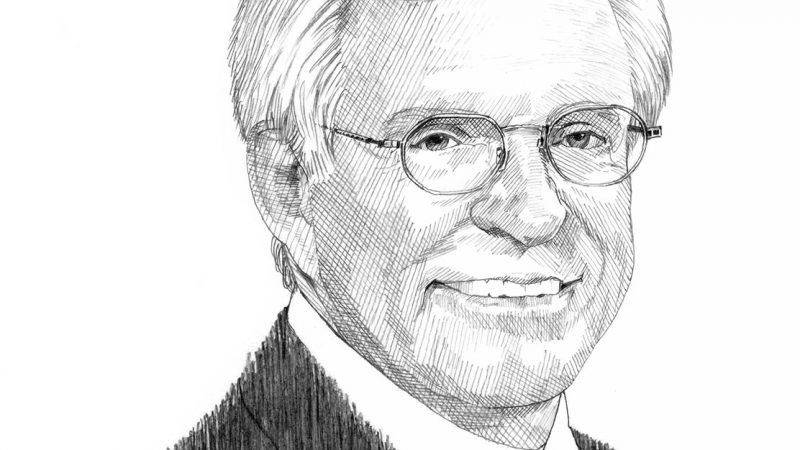
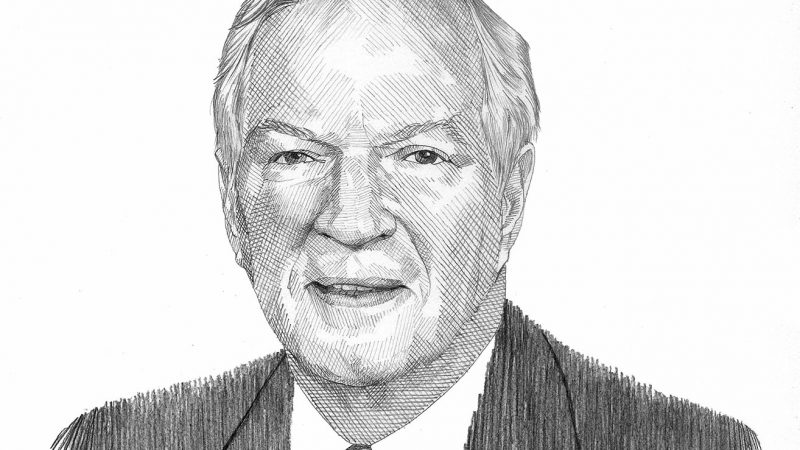
Aubrey Derrill Crowe

  • October 4th, 2021

For most of Dr. Crowe’s medical career, he was engaged in balancing a successful medical practice with building one of the largest medical malpractice insurance companies in the United States.

As a practicing urologist, in 1976, Dr. Crowe was chosen by the State Medical Association to lead a group of physicians in the development of a plan to form a malpractice insurance company.  This became necessary when all but one of the major national insurance companies left almost all Alabama physicians with the prospect of practicing medicine without liability insurance.

After unsuccessful attempts to find coverage with companies in the U.S. and Europe, Dr. Crowe and his colleagues formed the Mutual Assurance Society of Alabama (MASA) in 1976.  A key part of their strategy was the defense of every single case in which there was no negligence. At that time, the national trend was to settle most cases, and that had spawned a large number of frivolous malpractice suits, resulting in the unsafe depletion of the reserves of the companies that wrote this insurance.

Mutual Assurance was one of nearly 50 policyholder-founded companies to emerge from the turbulent liability climate in the U.S. in the seventies. They were derisively called “bedpan mutuals” by the traditional insurance industry experts who predicted that most of them would not survive (and this prediction proved true).

This was not the case for MASA, and by 1985, had paid off both its $5.5 million bank loan and the direct $2.5 million capital loans from physicians. At that time, the company had expanded through the provision of dental liability insurance and hospital liability insurance.  Under Dr. Crowe’s leadership, the company continued to prosper.

Mutual Assurance demutualized and began trading on the NASDAQ system in September 1991.  Policyholders received stock valued at $10.00 per share and the company’s market capitalization was $69 million.  In 1993, Dr. Crowe retired from the active practice of medicine to devote all his time and energy to leading the company.  In 1994, Mutual Assurance began to move outside Alabama and acquired insurance companies and books of business in West Virginia, Indiana, Ohio, Missouri while once more changing the name of the company to MAIC Holdings.  By 1996, MAIC Holdings moved to the New York Stock Exchange with a market capitalization of $129 million.  Expansion continued throughout the Southeast and Midwest.

In 2001, its merger with Professional Group, a Michigan-based insurer of similar size, was completed.  The merger resulted in the creation of ProAssurance, a New York Stock Exchange company with a market capitalization of $450 million.  The combined company is the product of 13 separate M & A transactions and employs almost 600 people.

Today, ProAssurance is the 4th largest medical malpractice company in the United States and its market capitalization is approaching $2 billion.  Over the past 30 years since its founding, the written premium has grown from $8 million to approximately $550 million in 2007.  The company insures more than 30,000 physicians with more than 35,000 policies in force, including most physicians in private practice in the state of Alabama.

The leadership and determination of Derrill Crowe led a dedicated group of employees who adopted his vision, and in three decades, turned a single-state insurance company into a market leader that has delivered financial security and lasting value to its policyholders, shareholders, and employees.

In the 1980s, Dr. Crowe was also a leader in two revolutionary advances in Alabama healthcare.  He was instrumental in developing the first free-standing, physician-owned outpatient surgery center in Alabama (now known as the Outpatient Care Center); and he initiated outpatient treatment of kidney stones by Extracorporeal Shock Wave Lithotripsy.  This treatment alternative was established in a manner that minimized the cost of care while making it readily available within a cooperative physician network throughout Alabama.

Dr. Crowe is a native of Troy, Alabama, and did undergraduate work at Howard College (now known as Samford University) in Birmingham.  He completed his graduate medical education at the University of Alabama Medical College in 1962.  Dr. Crowe completed his internship in 1963 and a surgical residency in 1964, both at Lloyd Noland Hospital in Birmingham.  He underwent residency training in Urology at the University of Alabama in Birmingham, which he completed in 1967.  Dr. Crowe is also a 1990 graduate of the prestigious Owner/President Management Program at Harvard University’s School of Business.

Throughout his 40-year career, Dr. Crowe has been active in organized medicine, serving his colleagues and The Medical Association of the State of Alabama in a variety of positions including their Board of Censors and the Alabama Board of Medical Examiners among others, he was also a member of the Jefferson County Medical Society.  In early 1985, he was asked to serve as the chairman of the Alabama Certificate of Need Board.

Dr. Crowe sits on the Board of Advisors at his collegiate alma mater, Samford University, and was the commencement speaker for Samford’s 1996 graduation at which time he also received his undergraduate degree.

Dr. Crowe was honored by the Birmingham News as “CEO of the Year” for 2004 for his role in establishing ProAssurance as a leader in Alabama and the nation.  One of the judges said of him, “Derrill has line up ProAssurance against all the competition, and they have the best balance sheet, the best management, and the best reserve situation.”  In March 2008, Dr. Crowe was elected to the Alabama Healthcare Hall of Fame, which honored him for his work in medicine and at ProAssurance.

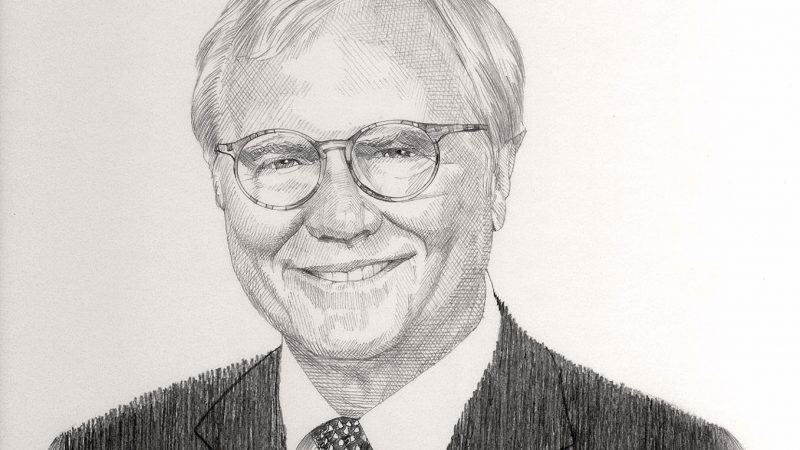
James T. Stephens

  • October 4th, 2021

Mr. Stephens was born in Birmingham, AL on April 14, 1939, and son of Elton B. and Alys R. Stephens.  He attended Birmingham public schools before attending Yale University (A.B. in history – 1961) and receiving his M.B.A. degree in 1964 from Harvard.

He served in the United States Army as a lieutenant and he was airborne qualified.  His career with EBSCO began in 1965 at an early age.  He was named president and chief executive officer of EBSCO at the age of 30.  This was a major decision for his father to make but clearly speaks of his confidence in Jim’s leadership abilities.  In business matters, Jim’s mental and physical energy are constantly apparent to those who work with him.  EBSCO is a complex business organization with a very diverse mix of companies.  Mr. Stephens is engaged in all of them as if each is his only concern.

Currently, Mr. Stephens is Chairman of the Board of EBSCO Industries, Inc.  He served as president from October 30, 1970, through June 30, 2005, through the company’s major growth to its status as a worldwide company of over 5,000 employees at 36 locations in 20 countries.  EBSCO is a widely diversified sales/marketing and manufacturing company operating worldwide with 105 profit/service centers, and with sales of over $2,100,000,000.  It is the largest privately-owned company in Alabama and one of the top 200 privately-owned companies in the United States.  EBSCO has subsidiaries located around the world.

His civic involvement includes numerous positions with the Boy Scouts of America Central Alabama Council.  He is a strong believer in education which is evidenced by his civic involvement in so many different schools.  He was past president of the Board of Trustees of the Highlands School, past president of the Board of Trustees of Altamont School, a member of the Board of Trustees since 1989 of Birmingham-Southern College as well as chairman of the Board for 2005-2006.  He is on the finance committee for the University of Alabama Health Services Foundation and chairman of the Board of Trustees for the Alabama Symphony Endowment Board.  The University of Alabama College of Communication and Information Sciences inducted him into their Hall of Fame in 2003.

Mr. Stephens is philanthropically involved in the Elton Bryson Stephens Science Laboratory Center at Birmingham-Southern College, the Alys Robinson Stephens Performing Arts Center at the University of Alabama in Birmingham, the Alabama Symphonic Association, and the Boy Scouts of America.  He is a member of the United Way’s Alexis de Tocqueville Society.  He chaired successful campaigns for the University of Alabama’s School of Information Sciences in the 1990s.  He also chaired a successful campaign for the Boy Scout’s Character for Central Alabama Council.  The University of Alabama was privileged to have Mr. Stephens as the keynote speaker for the May 12, 2007 commencement ceremonies.  (nominated by Ehney A. Camp III in 2007)

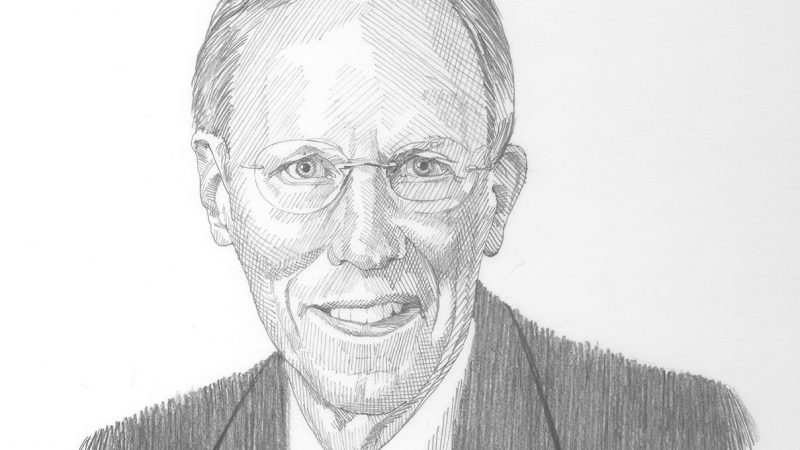
Thomas E. Jernigan

  • October 4th, 2021

The life of Thomas E. Jernigan was the proverbial American Dream. From humble beginnings in rural Alabama, Jernigan grew to become successful in every endeavor he attempted.

Born in Atmore, Alabama, in 1923, Jernigan later moved to Frisco City in Monroe County. He grew up on a farm with his brothers, Ferrell and Carl, and his sister, Loretta. After graduating from high school, Jernigan joined the United States Air Force and served two years during World War II. When he returned from military service, he attended The University of Alabama.

After completing his studies, Jernigan settled in Mountain Brook, Alabama, where he raised his family and emerged as a business leader within the community and around the Southeast.

Jernigan began his entrepreneurial endeavors by developing a line of children’s playground equipment. In 1965, he founded Plantation Pattern Co., a manufacturer of wrought iron casual furniture, which still is operating today.

Four years later, Jernigan founded United Chair Co., an office furniture manufacturer. United Chair exists today as a member of the Groupe Lacasse family of brands.

Showing no signs of slowing, in 1970, Jernigan founded Marathon Realty Co. to build and develop commercial properties. The company primarily did business in the Birmingham market in Alabama and the Fort Lauderdale and Tampa markets in Florida.

In 1971, he decided to test his skills with an additional challenge. He founded Marathon Equipment Co., a maker of commercial and industrial trash compaction equipment. During the time Jernigan was at the helm of Marathon Equipment, the company was recognized as the largest commercial trash compaction manufacturer in the world and a key supplier to some of the largest waste removal companies, such as Waste Management and BFI. Like most of Jernigan’s companies, Marathon Equipment received many awards and commendations from its suppliers.

From its original plant in Vernon, Alabama, Marathon added a new plant in Yerington, Nevada, in December 1985 and another plant in Clearfield, Pennsylvania, in 1989. The company began settling its products overseas, meeting waste management needs in Australia, Mexico, Central American, and the Middle East.

In 1972, Jernigan became CEO of Delwood Furniture, a corporation that consisted of six individual manufacturing companies specializing in home and office furniture.

Not one to rest on the laurels of his mounting business successes, Jernigan put another idea into action in 1973. He developed the concept of neighborhood convenience stores in Alabama, an idea that caught on incredibly well. Jernigan founded and built a chain of Quick Marts throughout the state.

Jernigan started yet another successful business venture in 1976 when he founded Winston Furniture Co. in Haleyville, Alabama. Winston still is a leading manufacturer of aluminum outdoor casual furniture.

The company began making basic wrought iron furniture but soon added simple aluminum furniture with vinyl straps. Winston broadened and modified the materials it used, becoming the first company to develop cushioned fabrics for outdoor use. These new fabrics contained special mildew-resistant fibers and ultraviolet light stabilizers that helped the furniture withstand the elements.

In 1982, a revolution in the casual furniture industry, with Winston at the forefront of this trend. Winston introduced sling furniture, a type of furnishing in which panels of special fabric are pulled taut through the furniture frame, resulting in sleek, comfortable, low-maintenance furniture. The Winston Furniture line includes both cushion and sling furniture in varying styles, finishes, and fabrics.

In addition to his other business ventures, Jernigan was active in the banking industry. He was an original director of the Central Bank and Trust Co., which eventually became Compass Bank. Jernigan’s longtime friend and business colleague, Harry B. Brock, president, and CEO of Compass Bank said Jernigan was instrumental in changing the state’s banking industry. He was a key player and investor in the formation of the Central and State National Corp., a move that sparked the formation of the bank-holding companies in Alabama.

In 1992, Jernigan became interested in the apparel industry. Consistent with his progressive thinking, he was able to marry this new business to a philanthropic course. Marathon Apparel was born under his hand and over a 15-year period donated more than $5 million to a variety of wildlife and conservation organizations, such as Ducks Unlimited, the Audubon Society, the Nature Conservancy, the National Turkey Foundation, Quail Unlimited, and others.

Marathon Corp. has enjoyed several years of success, and it has consistently given back to the community. In 2001, Marathon donated $1 million to the relief centers in New York City following the attack on the World Trade Center. In 1005, Marathon donated clothing and food to the victims of Hurricane Katrina and has helped flood and tornado victims across the country.

Through the Thomas E. Jernigan Foundation, a program was started in Birmingham to help churches provide holiday relief for people in need.

Throughout his life and his many successful business endeavors, Jernigan always remembered people in need. He donated generously to the United Way, the Salvation Army, the American Heart Association, the American Cancer Society, Children’s Hospital, the Big Oak Ranch, Junior Achievement, Juvenile Diabetes, Habitat for Humanity, Cornerstone Schools, and many other organizations. His grant stated the first and only camp for children with cancer in the Southeast. This was done in cooperation with Campfire USA of Central Alabama and Children’s Hospital. He also funded medical research at local hospitals. In 1995, the Association of Fundraising Professionals presented Jernigan with the William M. and Virginia B. Spencer Award for Outstanding Philanthropist. The United Way of Central Alabama honored Jernigan in 2007, awarding him membership in the Alexis de Tocqueville Society in recognition of his generous gifts.

During his long and busy career, Jernigan also gave much of his time and money to education. He was a member of the Board of Trustees for Birmingham Southern College, and in honor of his years of service, the school awarded him an honorary Doctor of Laws. He also served on the Mountain Brook City Schools Foundation board of directors and the Advisory Board at the University of Alabama at Birmingham. He established endowments at Birmingham Southern, Samford University, and The University of Alabama, both the Tuscaloosa and Birmingham campuses. These endowments created scholarships that still provide deserving college and nursing students with the opportunities to pursue higher education.

Jernigan also held memberships at country clubs throughout Alabama, Florida, and North Carolina. He enjoyed socializing with colleagues and friends in his spare time and was involved in the Birmingham Rotary Club, the Young Presidents Organization, and the ROMEOS (Retired Old Men Eating Out).

Jernigan passed away in January 2008 after battling leukemia. He is survived by his wife of 22 years, Donna Conyers Jernigan, and his four children, Thomas E. Jernigan, Jr., Lisa Jernigan Bruhn, Mary Conyers Jernigan, and Jonathan Winston Jernigan.

Jernigan remained chairman and chief executive officer of Marathon Corp. until his death.

Frank Falkenburg, a longtime business partner and friend, summed up Jernigan’s life and character: “HE was as tough and sweet a man as I have ever known. He could be the most rugged person you might meet, and then he’d write a check for some little town in Mississippi that he read about in the newspaper trying to get over Hurricane Katrina.”

Dr. Neal Berte, president emeritus, Birmingham Southern College, said of Jernigan: “By any standard, the Birmingham community and beyond have benefitted greatly from the quiet but generous philanthropy of one of our most successful businessmen, Thomas E. Jernigan is one of Birmingham’s most successful entrepreneurs and businessmen, and his legacy of leadership will live on in the future, including those who are fortunate enough to receive a Thomas E. Jernigan Honor Scholarship.”

Carl E. Jones, Jr.

  • October 4th, 2021

Carl E. Jones, Jr. graduated from The University of Alabama in 1962 with a degree in finance and two job offers. He chose to take the position of management trainee at Merchants National Bank of Mobile, a small decision that set the stage for a long extremely successful banking career.

Jones began his career selling data processing services to smaller community banks and later became a commercial lender. Then in 1978, just 14 years after his arrival at Merchants National, Jones was promoted to president of the Mobile bank, making him the youngest president of a major bank in Alabama. By 1981, he was the president, chairman, and chief executive officer of the bank in Mobile.

Later that same year, Regions Financial Corp., then known as First Alabama Bancshares, acquired Merchants National, and in 1984 Jones became regional president, overseeing the banks in Louisiana and south Alabama.

In 1997, Jones advanced to become president and chief operating officer for Regions nationally, and in the following year, he took on the role of chief executive officer. Two years later in 2000, Jones took on the additional role of chairman of Regions Financial Corp. At that time Regions held just more than $23 billion in assets and consisted of 435 offices in eight states.

Under Jones’s leadership, the bank nearly quadrupled in size through acquisitions and internal growth, becoming one of the top 15 bank-holding companies in the U.S. As Jones reached the age of 65 and stepped down as CEO in May 2005, Regions had more than $84 billion in assets and five million customers served by 1,400 offices in 16 states. While Jones served as CEO, earnings increased every year, and the annual dividend was also raised yearly up to $1.40. When he retired, Regions Financial was the largest publicly traded company in Alabama, as measured by stock market values.

Jones, who fully retired in April of 2006, says that he was “just privileged to be there with a hand on the steering wheel while all that was happening.”

The hands on the steering wheel were more able than the modest banker would admit. J. Stanley Morgan, the former CEO of Regions, said Jones is “not only a seasoned banker, but he is a man of exceptional integrity.”

Throughout his life, Jones has demonstrated true leadership qualities, as well as the motivation to succeed. In high school, he was elected president of his senior class and the student council, along with acting as captain of the basketball team. He graduated as the top student in his class from University Military School in Mobile before continuing to The University of Alabama.

Jones also stood out as a leader among his peers in the college setting. He served as president of the Kappa Alpha fraternity, chairman of the senate finance committee in the Student Government Association, and chairman of the Student Health Insurance Commission. During his senior year, he was recognized with the award for outstanding SGA senator, and the Alabama Bankers Association presented him with the award for outstanding student in banking and finance.

After graduating from The University of Alabama, Jones continued his education, attending Louisiana State University Graduate School of Banking, the National Commercial Lending School at The University of Oklahoma, and the Graduate School of Credit and Financial Management at Dartmouth.

Despite many additional years of education after graduating from The University of Alabama, Jones never forgot his original alma mater. As an alumnus, he has served on the Board of Visitors for the Culverhouse College of Business for nearly 30 years. He has held a seat on every President’s Cabinet since David Matthews’ term in 1969. During the University’s capital campaigns, Jones volunteered his time, including serving as one of four co-chairmen of the very successful national capital campaign completed this summer (2009). His wife, Ann, who he met while they were both in school at the university, was another co-chairman, and the team’s combined efforts exceeded the $500 million goal by 22 percent as they raised more than $612 million.

In 2005, Regions Financial established an endowed scholarship fund at The University of Alabama in honor of Jones. The company donated $1 million for full-tuition scholarships for dependents of Regions employees. Jones and his wife, Ann, tripled the amount with an additional $2 million gift of their own. Currently, over 20 students are utilizing these awards.

Jones’ generosity and years of hard work for The University of Alabama have not gone without recognition. Jones and his wife received the Volunteer in Philanthropy Award in November 2006. In 2007, the couple was again honored at the university, this time with the Frances S. Summersell Award given by the UA chapter of Omicron Delta Kappa.

In addition to his involvement with the university, Jones has also given his time to numerous organizations throughout the years. He has served on several boards of directors, including the Federal Reserve Bank of New Orleans, the Alabama Dry Dock and Shipbuilding Co., the Alabama Chamber of Commerce, and the Alabama Bankers Educational Foundation. Jones was an 18-year member of the Alabama Power Company board of directors, and he was also on the board of the Financial Services Roundtable, a national trade association of the 100 largest financial institutions. Jones chaired both the Alabama Bankers Commercial Credit Committee and the Mobile Area Chamber of Commerce, and he was a trustee for the Public Affairs Research Council of Alabama and the Economic Development Partnership of Alabama.

Somehow, in addition to serving many professional organizations throughout the Southeast, Jones found time to give to several civic groups. He served as president for the Mobile Junior Chamber of Commerce, Mobile Azalea Trail, Mobile Allied Arts Council, and Mobile Rotary Club and national president of America’s Junior Miss. Jones was very involved in education, as well, serving as a chainman for the UMS-Wright Preparatory School board of trustees and trustee for the Mobile Pre-School for the Deaf. He also served as the executive vice president of the Mobile Arts and Sports Association and vice chairman of Infirmary Health System. He is currently active at the Cathedral Church of the Advent.

For his years of dedication to both the banking business and philanthropic causes throughout Alabama, Jones has received much recognition. In 1972, Jones was named Mobile’s Outstanding Young Man of the Year and then a year later became Alabama’s Outstanding Young Banker of the Year. Jones’ high school, UMS-Wright, named him Alumnus of the Year in 1992. The National Association for Community Leadership presented him with the 1997 Distinguished Leadership Award. In November 2004, the Newcomen Society honored Regions and its CEO by named Regions as the featured Alabama company of the year. When Jones retired in 2006, Operations New Birmingham recognized him with the Lifetime Achievement Award, and then in 2007, the Birmingham Business Journal presented him with its Lifetime Achievement Award.

Today, Jones enjoys retirement in Birmingham with Ann, his wife of 47 years. They have two adult children and 3 grandchildren.

D. Paul Jones, Jr.

  • October 4th, 2021

Paul Jones Jr. has been a major force instrumental in the growth of Compass Bancshares, Inc., now BBVA Compass, in addition to his work in law and with other organizations.

Upon his retirement, Compass said, “Paul has provided the leadership necessary to allow Compass to enjoy financial success through a variety of economic environments. His track record of increased profitability while creating shareholder value is unmatched throughout the financial services industry.”

Jones graduated from The University of Alabama in 1964 with a bachelor’s degree in commerce and business administration and completed a J.D. degree from the Alabama School of Law in 1967.  He also received an LL.M. in Taxation from New York University.

In 1967, Jones joined the predecessor to the Birmingham law firm of Balch & Bingham and practiced there for some 10 years.  While with Balch & Bingham, he served for a number of years as the principal legal counsel to Compass Bancshares, Inc.

While engaged in the practice of law, Jones was a member of the Board of Bar Examiners of the Alabama State Bar and a frequent lecturer on banking and corporate law.  He served as the chair and as a member of numerous law revision committees and participated in work on the Alabama Banking Code, the Alabama Business Corporation Act, the Alabama General, and Limited Partnerships Acts, and revisions to the Alabama Uniform Commercial Code.

Jones joined Compass in 1978 as its senior vice president, general counsel, and a member of its board of directors.

In 1991, Jones became chairman and chief executive officer of Compass.  At that time, only 10 percent of its $5 billion in assets was outside Alabama.  Under Jones’ leadership, Compass acquired 60 banks, insurance agencies, and asset management firms; however, much of the company’s growth was organic, with acquisitions serving primarily as entry points into desirable, high-growth markets.

When Jones retired in March of 2008, the bank had grown to $47 billion in assets, had 622 offices in seven states, employed more than 12,000 employees, and ranked as the 26th largest bank in the United States based on deposits.  When Compass was purchased by the Spanish bank BBVA in September 2007 for $9.6 billion, approximately two-thirds of its assets were located outside Alabama.

During his time as a banker, Jones was involved in the formulation of legislative policy for the banking industry through the Government Relations Council of the American Bankers Association. He also was president of the Alabama Bankers Association, and a director of the Association of Bank Holding Companies, the Financial Services Roundtable, and its predecessor, the Reserve City Bankers Association.

Jones also served as a director of the Federal Reserve Bank of Atlanta from 1993 to 2000, after being appointed by the board to fill an unexpired term.  He was subsequently elected by banks in the Sixth District to two additional three-year terms.  During his tenure, he served variously as chair of the personnel committee and as a member of the audit committee.

In addition to his professional contributions, Jones has been an active supporter of education, particularly at The University of Alabama, where he has served as a member of the President’s Council at both the Birmingham and Tuscaloosa campuses.  He is a member of the Board of Visitors of the Culverhouse College of Business Administration.  Two endowed chairs, established jointly by Jones and his late wife, Charlene Jones, together with resources from Compass, have been funded at the Culverhouse College of Commerce and the Law School.

Active in civic affairs, Jones has served as chairman of the Business Council of Alabama, and as a director of the Economic Development Partnership of Alabama, the Alabama Symphony, the Public Affairs Research Council of Alabama, and the Greater Birmingham Chamber of Commerce.

On the charitable front, Jones has supported the United Way through the Alexis de Tocqueville Society, the Salvation Army, the Multiple Sclerosis Society, the Juvenile Diabetes Foundation, and the Alabama Liver Foundation.

John J. McMahon, Jr.

  • October 4th, 2021

John J. McMahon, Jr. of Birmingham, has been the chairman of two companies in his career, both of which received global recognition for their performances.

McMahon, the son of John J. McMahon and Alma Gardner Bilbro McMahon, is a native of Birmingham. He earned an undergraduate degree from Birmingham-Southern College in 1965 and a law degree from The University of Alabama School of Law in 1968.

For 25 years McMahon worked for McWane, Inc. where he was president and chairman of the board. McWane operates 25 manufacturing plants, including 13 iron foundries, and produces iron pipes, valves, and fittings used to move water across North America. The company also produces other products such as propane tanks, fire hydrants, and fire suppression systems.

During his career at McWane, McMahon held numerous positions and was responsible for negotiating more than 25 acquisitions ranging from publicly held companies to small privately held companies. Under McMahon’s leadership, McWane played a significant role in the creation of the McWane Center Science Museum in Birmingham.

In 1999, McMahon founded Ligon Industries, LLC, a privately held manufacturing company with subsidiaries that produce a wide range of industrial products such as hydraulic cylinders, aluminum castings, and aluminum components for water and wastewater treatment facilities.

McMahon was a key figure in the creation of the Birmingham Airport Authority and served as chairman of the committee that supervised the renovation of the airport terminal, which led to an increase in air transportation service.

McMahon also was a pivotal figure in the establishment of the University of Alabama at Birmingham Health System and served as the organization’s first chairman of the board of directors.

His civic and business activities are far-ranging. He is a director of the National Bank of Commerce, Protective Life Insurance Company, ProAssurance, and Cooper/T. Smith Corporation.

He currently serves as a trustee of Birmingham-Southern College, the Hugh Kaul Foundation, and the Board of Trustees for The University of Alabama where he served three terms as president pro tempore and has chaired numerous standing committees including athletics, compensation, executive, finance, and investments. He is the Sixth Congressional District representative on the UA System Board.

Past activities include serving as director of the Alabama National Bancorporation, Birmingham Police Foundation, Callahan Eye Foundation Hospital, John H. Harland Company, and Opera Birmingham. He served as chairman of the United Way of Birmingham’s Alexis de Tocqueville Society. He is a member of the Alabama Academy of Honor and Rotary Club of Birmingham.

He and his wife Betty Thurman McMahon have three sons, John J. McMahon III, Joel W. McMahon, and David A. McMahon.

Drayton Nabers, Jr.

  • October 4th, 2021

Drayton Nabers, Jr. of Birmingham has been a successful business executive, a chief justice of the Alabama Supreme Court, an attorney, a civic leader, an author, and a man of faith.

Nabers was born in Birmingham, the son of Drayton Nabers and Jane Porter Nabers. He is a 1962 graduate of Princeton University and a 1965 graduate of Yale School of Law. He began his law career as a judicial clerk to United States Supreme Court Justice Hugo Black. HE returned to Birmingham to join the law firm of Cabaniss, Johnston, Gardner, Dumas, and O’Neal as an associate, 1967-1971, and as a partner, 1971-1978. It was at Cabaniss, Johnston that he began his association with Protective Life Corporation, an association that lasted for 40 years.

After 12 years at Cabaniss, Johnston, Nabers left his potations there to become general counsel at Protective Life Corporation, where he rose to the positions of president, chief operating officer, then the chief executive officer in 1992, and then chairman of the board.

Nabers led Proactive Life through a period of extraordinary growth. During the 10 years, he was CEO, Protective’s assets grew from $3.3 billion to $17 billion; during the same period, annual operation earnings per share grew from 69 cents to $2.39 and the market value of the common stock increased from $6 to $31.62 per share.

In 2002, when retired from Protective, he was appointed by Gov. Bob Riley to the post of finance director of Alabama. He served as the state’s finance director until 2004 when Gov. Riley appointed him to the state Supreme Court, to serve as Chief Justice.

In 2007, Nabers returned to the practice of law with the law firm of Maynard, Cooper & Gale, PC.

He is a director of Infinity Property and Casualty Corporation and ProAssurance Corporation.

Nabers has volunteered his time and leadership to a number of business, civic, educational, and philanthropic endeavors.

In addition to Protective Life, he has served on the boards of Parisian, Energen Corporation, National Bancorporation, and the National Bank of Commerce.

He is chairman of Cornerstone Schools of Alabama.

He also has served as chairman of Leadership Birmingham, United Way of Central Alabama, and the Rhodes Scholarship Selection Committee for District 7.

Over the years, he has served in various capacities with Altamont School, UAB’s President’s Council, The Salvation Army, Birmingham Area Chamber of Commerce, Leadership Alabama, the Alabama Region of the National Conference of Christians and Jews, and the Health Insurance Association of America.

He is on the board of directors for the Alabama Symphony, the Railroad Park Foundation, the Newcomen Society of Alabama, and the Alabama Christian Foundation.

Nabers has been a frequent speaker on the issues of ethics in business and has written two books relating to character and faithful obedience.

Each year he travels to Rwanda and Uganda to support ministries and teach.

Nabers and his wife, Fairfax, have three children, Drayton Nabers III, Mary James Nabers Doyle, and Fairfax Virginia Nabers Blount. They also have two granddaughters and five grandsons.

Richard E. Anthony

  • September 29th, 2021

“Destined to be a banker.”

Richard E. Anthony, 66, was born in Troy, Ala., and from the beginning, he was destined to be a banker.

His maternal great-great-grandfather founded Farmers & Merchants Bank in Troy in 1880. In 1906, his great-great-uncle founded Troy Bank and Trust. And his paternal grandfather was chairman and CEO of Commercial Bank in Andalusia, where he was succeeded by Richard Anthony’s father Eiland Eland Anthony Jr. In addition, his son, two brothers and two brothers-in-law are or have been involved in the financial services industry.

And while American bankers are sometimes painted as a tough bunch, Anthony guided Synovus to the No. 1 ranking on the Fortune Magazine’s list of the best places to work in America. “We try to do more than just compensate people,” Anthony said at the time. “People want more from an employer than just compensation.” Synovus employees call it a “culture of the heart.”

Anthony earned a bachelor’s degree in finance from The University of Alabama and continued his education at the University of Virginia where he received his MBA. He also graduated from the management and banking programs at Duke University and Louisiana State University.

The retired Chairman and Chief Executive Officer of Synovus Financial Corp., a regional banking company headquartered in Columbus, Georgia, with banking offices in Georgia, Alabama, South Carolina, Florida, and Tennessee, began his banking career at AmSouth Bank where he served as Executive Vice President. As a co-founder of First Commercial Bancshares in 1985, he helped lead the company’s expansion into Birmingham, Tuscaloosa, Montgomery, and Huntsville, using its Jasper community banking presence as a foundation.

Anthony was President of First Commercial Bancshares when it merged with Synovus in 1992. He became vice-chairman of Synovus in 1996, overseeing Synovus’ banking operations. In 2003, he became president and chief operating officer, then taking over CEO responsibilities in 2005. In 2006 he was named Chairman and CEO. His service at Synovus concluded in April 2012, when he retired as a board member.

His leadership responsibilities at Synovus covered a tumultuous period of financial stress and he led the company through two major capital raises, a dramatic restructuring, and a successful spin-off of Total Systems Services, its credit card processing subsidiary.

Civic affiliations have included: President, Birmingham Kiwanis Club; Captain, Monday Morning Quarterback Club; Leadership Birmingham; Leadership Alabama; The University of Alabama President’s Cabinet; the Culverhouse College of Commerce and Business Administration’s Board of Visitors; Member of the Board of Directors for the School of Fine Arts; Director of the Economic Development Partnership of Alabama. He also led the United Way Campaign in Columbus, Georgia, and was Chairman of the Columbus Chamber of Commerce.

Anthony served on the Board of Directors of the American Bankers Association, the Financial Services Roundtable, and Total Systems Services, Inc.

Anthony and his wife, Ginny, have been married 45 years and have two grown children, Richard Jr. and Lee, and six grandchildren.

He began playing golf at age eight and still plays. He played competitively at the junior and amateur levels in his teens and early 20s, winning a number of events including the Alabama State Junior Championship, The Future Masters Tournament, and the Alabama State Amateur Tournament.

T. Michael Goodrich

  • September 28th, 2021

When BE&K was named one of “The Best Companies to Work for in America,” Michael Goodrich, then the company’s president, was quoted as saying, “We take care of our own.”

Michael Goodrich, 66, of Birmingham, went on to become chairman and chief executive of BE&K, a top engineering and construction company with headquarters in Birmingham. The company, which has sold to Houston-based construction giant KBR in 2008, provided engineering and commercial projects throughout the world.

Goodrich spent 37 years with BE&K, first as legal counsel when the company was formed. He became president in 1989 and became chairman and CEO in 2003.

Goodrich was born in Milan, Tennessee. He is a civil engineering graduate of Tulane University and received his law degree from The University of Alabama. He serves as a captain in the U.S. Army Corps of Engineers.

During Goodrich’s tenure as CEO, BE&K had major offices in Wilmington, Delaware, Birmingham, Alabama, Raleigh, North Carolina, Houston, Texas, Helsinki, Finland, St. Petersburg, Russia, and Kwidzyn, Poland.

In 1990, BE&K became the first construction company to offer child care at construction sites. The company was recognized as one of the most family-friendly companies in the nation. The company’s family-friendly reputation earned Goodrich an invitation to participate in a business forum at the White House.

He serves on the Board of Directors of First Commercial Bank, Synovus Financial Corporation, AGI/Shorewood, LLC, and Energen Corporation. Following his service at BE&K, Goodrich started an investment management company, Goodrich Management Company.

Goodrich received the NOVA Award from the Construction Innovation Forum and the Excellence in Construction Cornerstone Award by the Associated Builders and Contractors.

He is a longtime supporter of the Boy Scouts of America and served on its national board since 2001 and was chairman of the Greater Alabama Council in 2000. He was awarded the Silver Buffalo and Distinguished Eagle Scout awards by the Boy Scouts of America.

He is a former president of the Associated Builders and Contractors and a member of the National Academy of Construction. He is a member of Leadership Birmingham and Leadership Alabama.

He has been active with the Birmingham Civil Rights Institute and Eisenhower Fellows. He is a member of the President’s Cabinet at The University of Alabama and The University of Alabama at Birmingham.

Goodrich served as a captain in the U.S. Army Corps of Engineers from 1971-1972 and is a member of the Alabama Academy of Honor and the Alabama Engineering Hall of Fame. Goodrich is a member of South Highland Presbyterian Church where he has served as an elder and a deacon.

He and his wife, Gillian, were the 2011 winners of the Virginia B. and William Spencer Outstanding Philanthropist Award given by the Alabama Chapter of the Association of Fundraising Professionals for their work in helping children in poverty and communities in distress. In 2009, Goodrich and his wife created the Mike and Gillian Goodrich Foundation to focus on education and neighborhood revitalization.

They have four children and eight grandchildren.