Location: Birmingham AL

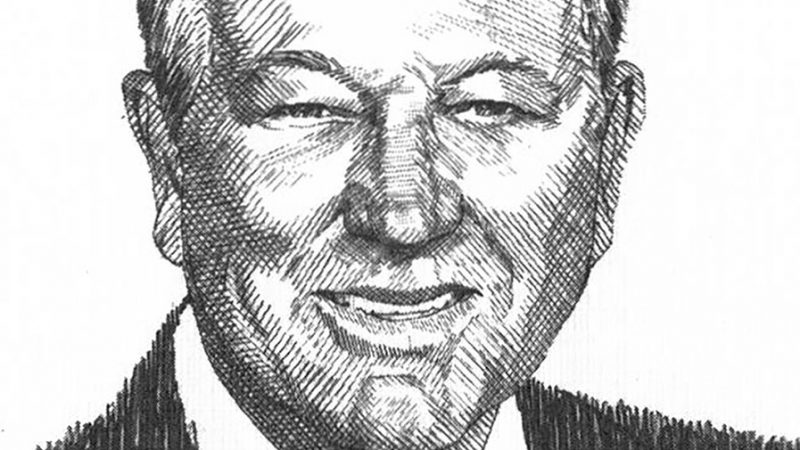
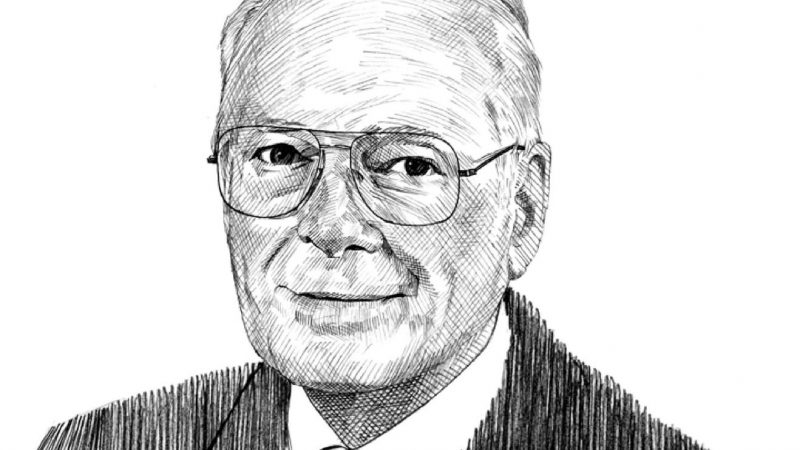
Frank Bromberg, Jr.

  • October 5th, 2021

Frank H. Bromberg Jr.’s great-grandfather Frederick Bromberg, a Prussian immigrant, set sail from Germany in 1832. He was bound for the New World, and four years later he would Bromberg and Company in Mobile.

The name “Bromberg” would become synonymous with fine jewelry and become one of the oldest and most successful businesses in Alabama’s history, as well as the largest supplier of fine crystal, china, and sterling flatware in the Southeast. Bromberg’s ranks 45th on a list of the 102 oldest U.S. companies and is the second oldest retailer in the nation. Bromberg’s is even older than Birmingham, the city the company now calls home.

Born in Birmingham on November 15, 1931, the only child of Frank Bromberg, Sr. and Annie Maud Wilkinson, Frank Hardy Bromberg, Jr. was destined to one day head Bromberg and Co. But before he could take his place as head of the jewelling giant, Bromberg would have to make his own place in the family business by proving his worth to his father’s generation.

As a child, Bromberg spent many winters in Florida with his grandparents because of his health. The climate of the area was better for his breathing problem, a minor aliment Bromberg would outgrow by his mid-teens.

After graduating summa cum laude from the Capstone in the College of Commerce and Business Administration in 1954, Bromberg and his wife Leila Clayton Bromberg, moved to Bew York so that he could enter the master’s program in retailing at New York University. It was there that the couple’s first child, one of four children, was born.

Upon completion of NYU’s master’s program, Bromberg returned home to Birmingham, ready to work and get his career going. But less than a month later he was back in New York. Duty called, and Bromberg was shipped overseas so he could run the Post Exchange at Dreux Air Force Base in post-WWII recovering France. His family went with him. Two years later, they were back in Birmingham, this time to stay.

Finally back home, Bromberg began his ascent up the Bromberg and Co. chain. He began in sales in 1957 and took on the role of assistant treasurer a year later. It was also during this period that Bromberg and Co. was facing financial problems, in that it wasn’t making enough money for all three Bromberg families to make a good living. Bromberg pushed the family to open branch stores, the first in Mountain Brook in 1959. There are now five stores in the Birmingham area and Montgomery.

In 1960, Bromberg became the company’s vice-president, a position he occupied for nearly 25 years. In 1984, Bromberg became president of the company.

He has also served as president of several professional organizations, such as the Jewelers of America, the American Gem Society, the Retail Jewelers Research Group, and the Alabama Jewelers Association, and has served as director of the Jewelers Vigilance Committee.

A major reason for the longevity and success of Bromberg and Co. are the rules within the family that govern how and when a family member may enter the family business and rules that provide for how the business should be run. If a person wants into the family’s business, he/she must have a college degree, and each of the three Bromberg families is allowed only three spots to fill when the next generation comes of age.

This system, Bromberg believes, encourages hard work and prepares upcoming generations to manage the family business.

Frank Bromberg, Jr. was instrumental in the family business’s bold move to branch out and open more stores in the late 1950s. His foresight has proven invaluable to the company.

With as much as Bromberg has on his plate, he still finds time to remain involved with several civic and community organizations. He served as president of the Kiwanis Club of Birmingham from 1969-70, during which time the Birmingham club was chosen as the outstanding large club in the world by Kiwanis International.

Bromberg is also past president of the Sales and Marketing Executives of Birmingham, and like the Kiwanis Club of Birmingham during the years of his presidency, Sales and Marketing Executives International chose the Birmingham club as the outstanding club of any size worldwide, 1966-67.

Bromberg was elected vice-president of the Birmingham Area Chamber of Commerce in 1974, an organization he has been a member of since he stepped back onto American soil from France in 1957.

Bromberg’s ties to The University of Alabama are many. Three generations of Brombergs have graduated from the school, and his wife’s great-grandfather served as president from 1886-1889. Bromberg is and has served as a member of countless university organizations.

Among the more notable, Bromberg has served as president of the National Alumni Organization, 1975-76, chairman of the President’s Cabinet, 1973-75, chairman and founder of the Culverhouse Executives Society, 1976-present, a member of the Culverhouse Board of Visitors, and a member of the University’s Board of Trustees, 1983-2000.

Bromberg’s ability to anticipate the financial benefits of adding more stores is part o the reason his family’s business is around today. Bromberg’s has remained in the family for over 167 years, and it appears that is the way it will remain.
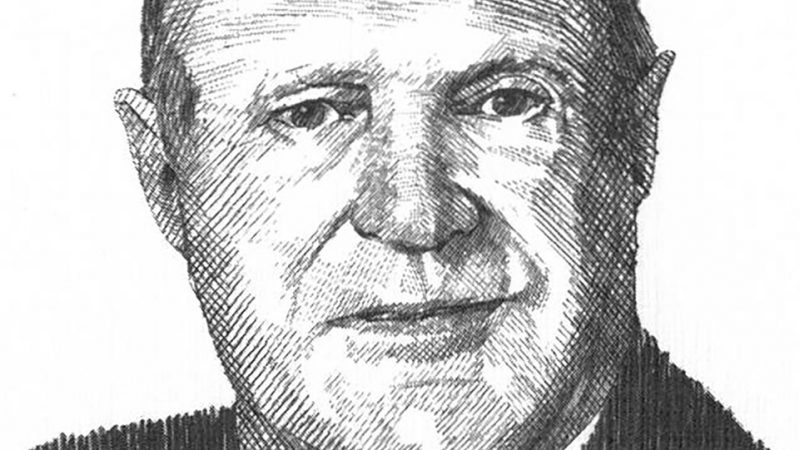
Garry Drummond, Sr.

  • October 5th, 2021

In 1943, Heman Drummond obtained a bank loan of $300 to buy new equipment for his Walker County coal mine. He secured the loan with three mules, one of which was named “Tobe.” “Tobe” still lives, but he lives today in the form of a dragline with a boom longer than a football field and a bucket that holds 115 cubic yards of material.

That parallels the story of Drummond Company, Inc.

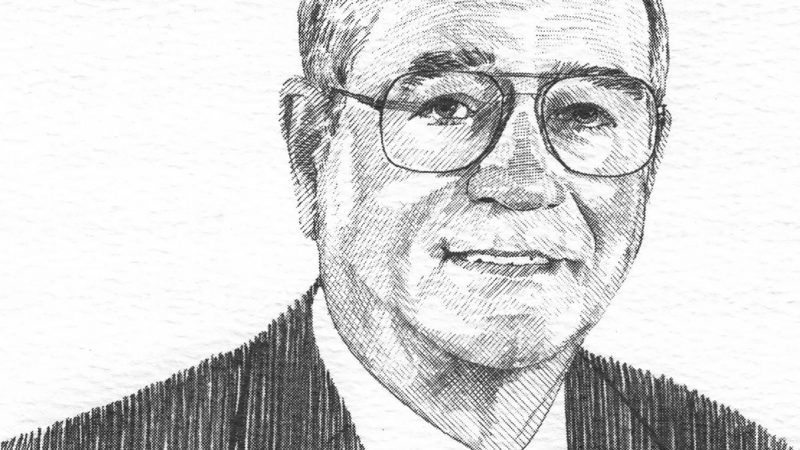
If you look at a map of the nation’s coal reserves, you will see a large coalfield that extends from northern Pennsylvania down through Kentucky and Tennessee into northwest Alabama, down into the Jasper area. That’s where Heman Drummond founded the H.E. Drummond Coal Company in 1935, in an area between Empire and Sumiton. Garry Neil Drummond, Sr., one of five sons, is now chairman and chief executive officer of Drummond Company, Inc., which in almost 68 years of operation has become one of the leading coal-producing companies in the nation.

Drummond Company employs more than 3,300 people around the world and has annual revenues of more than $800 million, placing the company in the top 500 of the Forbes list of largest private companies.

The company’s holdings include large coal mines in Alabama, Wyoming, and Columbia, South America; a worldwide coal sales organization, ABC Coke, the largest merchant foundry coke producer in the United States, and a real estate division with major community developments in Alabama, Florida, and California. The company headquarters is located in Jasper, with some executive and staff offices in Birmingham.

Garry Neil Drummond has been actively involved in the company since his graduation from The University of Alabama in 1961, where he earned a civil engineering degree He and his brothers have built the company into a major economic force. The 1960s were a period of growth for the Drummond Company, which leased new reserves, developed new mines, and acquired larger and most efficient equipment. By the late 1960s, the company had coal sales approaching $8 million.

Coal industry observers say the company’s big break came in 1969 and 1970 when Garry Neil Drummond, who had then been with the company eight years, negotiated a contract with, Ataka & Company of Tokyo, a Japanese company, to deliver $100 million in coal over the next 10 years. The Japanese company needed metallurgical quality coal that was found in the eastern half of the Warrior Basin, Drummond Company’s backyard. That was the firm’s first export sale, but it opened the way for what became a major part of the business, and Drummond, after becoming CEO in 1973, has negotiated many more ventures with the Japanese steel industry.

The company expanded rapidly during the 1970s to meet the Japanese demand and to compete for additional business worldwide. A major step in the growth of the company has been the merger of Alabama By-Products Corporation, which was incorporated in 1920. The ABC coke plant at Tarrant is the largest single producer of foundry coke in the United States. Drummond Company acquired majority control of ABC’s voting stock in 1977, and eight years later completed the acquisition of all ABC stock through a tender offer. By the end of 1985, ABC was merged with Drummond and continues to operate as a division of Drummond while maintaining its nationally recognized name.

It was also in 1985 that Drummond ventured into real estate development with Oakbridge, a $500 million residential, commercial, professional office, and business park community in Lakeland, Florida. Rancho La Quinta is located in La Quinta, California, near Palm Springs. The project, a 700-acre golf-oriented residential development, was acquired in 1992. Development activities restarted in 1993 and include residential communities and a country club with two 18-hole courses. Liberty Park is a 3,300-acre mixed-use development in Vestavia Hills, Alabama. Development started in 1991 and includes residential communities, corporate offices, retail space, and Old Overton Golf Course, ranked by Golf Digest in 1994 as “America’s Best New Private Course.”

Garry Neil Drummond has been the chief executive officer of Drummond Company, Inc. since 1973. The four other brothers also have been involved continuously in company operations. E. A. “Larry” Drummond is president of the company, Segal E. Drummond is executive vice-president and assistant to the chief executive officer, Donald D. Drummond is president of the Drummond Coal Division, and John H. Drummond is vice-president management.

Among his many honors, Garry Neil Drummond was awarded an honorary Doctorate of Science from The University of Alabama and was the UA College of Engineering Distinguished Lecturer for 1987-8 and outstanding Fellow in 1987. He received the Keith-Woodman Award in 19 87 and was inducted into the Alabama Engineering Hall of Fame.

He served on the University of Alabama Board of Trustees from 1983 through 2001. during which time he served three years a President Pro Tempore. He and the Alabama Coal Industry established the Garry Neil Drummond Endowment at The University of Alabama in 1985.

He is actively involved in state, national and international organizations within the coal industry and has served on the board of numerous local and state organizations dedicated to charitable causes and economic development. He serves on the board of the National Mining Association, Business Council of Alabama, SouthTrust Corporation, the Center for Energy and Economic Development, and is a past chairman of the board of Economic Partnership of Alabama. He is a member of the Birmingham Rotary Club and was elected to the Alabama Academy of Honor in 1989. He al o has been active in the Boy Scouts of America and in several conservation organizations including Ducks Unlimited.

Drummond is the father of four sons and one daughter. He lives in the Birmingham area with his wife, the former Peggy Snoddy. Ir. Drummond’s father was inducted into the Alabama Business Hall of Fame in 1990.

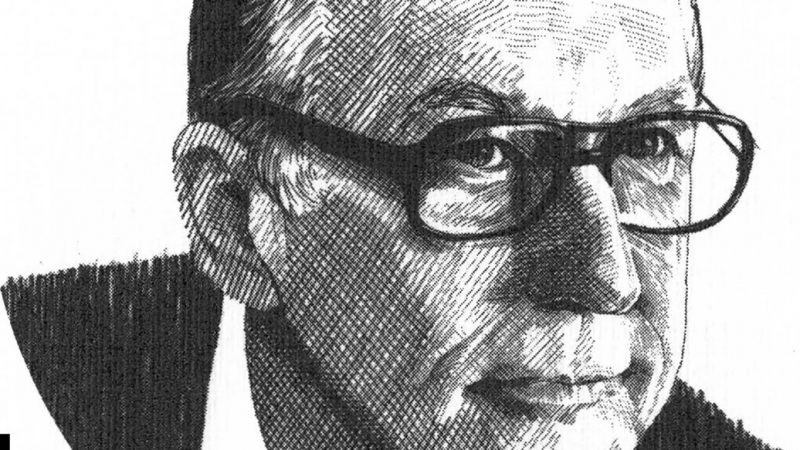
Donald C. Brabston

  • October 5th, 2021

An ancient Chinese proverb says, “One generation plants the trees, another gets the shade.” Early in life, Donald Campbell Brabston learned to plant trees of service for the future and to help others less fortunate. His mother, Mrs. Elizabeth Dameron Brabston, taught him to tithe to his church and serve others. Brabston’s life, including his business career and his civic leadership, has enriched the lives of countless people.

Don Brabston, CPA, was born and raised in Birmingham, graduating from Ramsay High School and Birmingham-Southern College (Phi Beta Kappa). He earned his M.B.A. at Northwestern University, where he excelled in the classroom and as a leader on campus. He was a member of Phi Beta Kappa, Omicron Delta Kappa, Beta Alpha Psi, and Beta Gamma Sigma honorary societies and was president of Alpha Tau Omega fraternity.

When World War II began, Brabston completed Northwestern’s two-year M.B.A. program in a record nine months and immediately joined the Navy. Brabston served on the battleship USS Alabama for two and a half years during World War II and attained the rank of lieutenant commander. He received nine battle stars and Philippine Liberation Ribbons.

One week after returning from the war in 1945, Brabston joined the Birmingham office of Ernst & Ernst (later Ernst & Whinney and now Ernst & Young LLP) where he retired 34 years later as managing partner of the Alabama practice. When he became a partner, the firm’s Alabama practice had a professional staff of 30. Under Brabston’s leadership, the firm’s Alabama offices in Birmingham, Huntsville, and Mobile grew to approximately 200 professional accountants, nearly all of whom were CPAs. He hired the first woman and the first African-American on the professional staff in the firm’s southern offices.

In the 1960s, Brabston saw the need for changes in the way the accounting profession served Alabama businesses. The state’s economy was becoming more diverse with strong growth in the health care, banking, insurance, and high technology industries. Also, Medicare, bank-holding companies, and other new laws regulations, and reporting requirements were dramatically affecting the demands of these industries. Brabston recognized the significance of these changes early on and adopted a strategy of developing and training staff and partners with highly specialized industry skills to address the needs of these fast-growing businesses. At the time of his retirement in 1979, Ernst & Whinney was the dominant professional services firm in Alabama, and the Birmingham office was the firm’s largest office in the South.

Brabston believed in recruiting beyond the firm’s requirements to meet the immediately foreseeable needs of Alabama businesses. This philosophy enabled him to recruit and train outstanding accountants for his own practice and for positions in the firm’s offices around the country. Fellow managing partners knew they could always call on Brabston for help whether the need was for short-term assistance requiring highly specialized skills or to fill a long-term leadership position. As a result, dozens of individuals recruited and trained by Don Brabston went on to serve as partners in firm leadership roles. Three partners (all University of Alabama graduates) eventually became vice-chairmen of Ernst & Young and served on its executive management committee, overseeing the Big Four international firm’s operations around the world.

Don Brabston built a culture at the firm which emphasized active participation and leadership in community affairs. He often told employees that “we should pay our civic rent.” He led by example, setting high standards for service in and supporting important civic affairs.

Don Brabston was a leader in the accounting profession throughout his career. In 1947, he received the Silver Medal for placing second out of about 7,500 candidates nationwide on the Certified Public Accountants examination. Brabston served in active roles with the Institute of Management Accountants for many years. He was a national vice president of the Institute and a member of its national Board of Directors and Executive Committee and president of its Birmingham chapter.

Brabston has long been involved in support of education. He has been honored as an Alumnus of the Year by Birmingham-Southern College and was a founder and the first president of Birmingham-Southern College’s Norton Center, the purpose of which is to foster relationships between the college and business. He served as chairman of The University of Alabama’s Accounting Advisory Board for many years, during which time the University’s accounting department became the School of Accountancy. He is a lifetime member of Samford University Board of Trustees, having served 31 years, and has served as chairman of the executive, business affairs, and investment committees.

During his business career, Brabston was a tireless servant and civic leader. In retirement, Brabston has remained committed to and continues actively serving his community and state.

Brabston served in leadership positions of numerous civic organizations. He served as president of the Birmingham Area Chamber of Commerce and chaired the taxation committee of the National Chamber of Commerce. While Brabston was its president in 1979, the Birmingham Chamber initiated its Crime Stoppers program which offers rewards for tips leading to arrests and convictions for crimes in the city. On behalf of the chamber, he worked hard to promote racial harmony in the city. Following an incident in which an African-American woman was shot by a white Birmingham police officer, Brabston led a negotiating team of community leaders in successfully addressing the concerns of African American citizens. This effort was critical in preventing an economic boycott and potential further serious conflict.

Brabston served as Chairman of the Board of United Way of Central Alabama in 1975, 1976, and 1981 and is the only chairman in the history of that organization to serve three times in that capacity. He was one of the founders instrumental in establishing the United Way Community Food Bank and was a member of its board of directors and its treasurer.

He was chairman of the Salvation Army and recipient of its highest award for a lay individual, the William Booth Award. Brabston has been a trusted advisor to commanders of the Greater Birmingham Area Salvation Army for 40 years and he is an Emeritus Member of the Advisory Board.

Brabston was chairman of the Young Men’s Christian Association of Birmingham for several years and a trustee of the YMCA for over 25 years, as well as chairman of its Capital Funds Campaign. During his tenure as chairman, the first African-Americans joined as members of the Birmingham YMCA.

He served as vice president, treasurer, and a member of the Board of Directors of the Birmingham Football Foundation, Inc., and as chairman of the Board of Trustees of the Alabama Association of Independent Colleges and Universities (for three years), as well as president of the Baptist Hospital Foundation and director of its Baptist Hospital Service Corporation. He was a member of the Community Foundation of Greater Birmingham Steering Committee, as well as a director and member of Rotary Club of Birmingham. He has served on the board of the Birmingham Chapter of the American Red Cross and other civic and charitable organizations, including the Greater Birmingham Convention and Visitor Bureau, Executive Service Corps of Birmingham (as a founder and chairman), and the Metropolitan Arts Council (as chairman of Its allocations committee). He was a member of the first Oil and Gas Board of Alabama.

Brabston is a life deacon and has served as chairman of the board of trustees, chairman of the board of deacons, and chairman of the finance committee (for over 25 years) at Mountain Brook Baptist Church and is a member of the church’s Endowment Trust Fund Board.

While a student at Northwestern, Brabston met and married Mary Jane Coolman, his wife of 53 years until her death in 1996. He has a son, Donald C. Brabston, Jr. of Manhattan Beach, California, and a daughter, Mary Elizabeth Brabston, of Winnipeg, Manitoba, Canada, and one grandson, Benjamin Kenneth Forman Brabston of Manhattan Beach, California.

Another old Chinese proverb proclaims, “The best time to plant a tree was 20 years ago. The second best time is today.” Although he paid his “civic rent” long ago, Don Brabston’s dedication to service today at age 83 is as active as it was as a boy when his mother first taught him to tithe. Brabston’s trees of service have grown tall and continue to grow straight and strong. And the shades from his trees have benefited and “will continue to benefit people.”

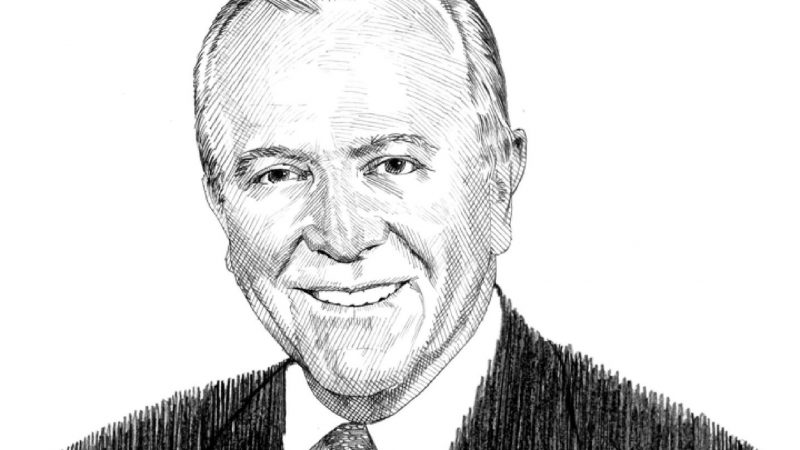
Bernard A. Monaghan

  • October 5th, 2021

The late Bernard A. Monaghan, former chief executive officer of Vulcan Materials Co., was a successful lawyer who left the legal profession to become a successful and innovative businessman as president and chief executive officer of Vulcan Materials Company until 1981.

Vulcan is the largest U.S. producer of construction aggregates, which it sells primarily to the private sector. The construction materials unit operates more than 220 aggregates plants, not including other production and distribution facilities, in the U.S. and Mexico.

Born in Birmingham to Bernard A. and Mary Frances Monaghan, he attended Birmingham-Southern College and earned a law degree from Harvard at 21, after which he traveled to Britain and earned a Rhodes Scholarship at Oxford.

After finishing at Oxford, he returned to Birmingham where he joined the law firm of what is now Bradley Arant Rose and White During World War II he rose to the rank of captain in the Marine Corps and received the Purple Heart and the Bronze Star medal. He remained active in the Marine Corps Reserve, rising to the rank of Lt. Colonel.

In 1948, he became a partner in the law firm and four years later took a leave of absence to serve as Department Counselor for the Department of the Army, for which he received the Exceptional Civilian Service Medal in 1953.

Almost 40 years earlier, the Ireland family had purchased a 75 percent interest in Birmingham Slag, a small Alabama company established in 1909 to process slag from a Birmingham steel plant. Third-generation Charles Ireland became president in 1951 and transformed Birmingham Slag from a regional operation into a national one. In 1956 it renamed itself Vulcan Materials and went public.

Monaghan had worked closely with Vulcan for many years as company counsel and consultant, so it was not a complete surprise when the company’s board of directors hired him as executive vice president in 1958. His hiring came at a time when the company was growing rapidly, expanding its facilities through acquisitions and mergers with production facilities in 12 states.

The firm was undergoing a period of reorganization and transformation from a family-owned business to a national corporation and at 42 years old, it was his responsibility to make sure the transition and reorganization worked.

As the slag supply decreased, the company began acquiring companies dealing in other aggregates, detinning, and chemicals. Monaghan realized the potential of chlorinated solvents, which are used in pharmaceuticals, chemical processing, aerosols, food extraction, paint stripping, dry cleaning and metal cleaning, and specialty adhesives. Detinning takes tin-plated steel scraps and separates the tin from the steel for re-sale.

Under Monaghan’s leadership, Vulcan’s diversification and expansion moved the company into the Forbes 500 ranking. Today Vulcan Materials Company is a leading provider of infrastructure materials required by the American economy. Vulcan Chemicals produces basic industrial chemicals, which include chlorine, caustic soda, hydrochloric acid, potassium chemicals, and chlorinated organics. Vulcan’s chemicals serve many industries and are used in a wide range of modern applications.

Monaghan was an active supporter of education, serving on the board of governors of Indian Springs School and as a trustee at Birmingham Southern College, where he was awarded a Doctor of Humanities degree. He also was a member of the Alabama Rhodes Scholarship Committee. The B.A. Monaghan’s Professorship in Business Administration at Birmingham Southern College is named in his honor.

He received the 1967 Gold Knight of Management Award from the National Management Association and in 1978 he was inducted into the Alabama Academy of Honor. In 2003, he was inducted into the Birmingham Business Hall of Fame.

He was a member of the board of directors of Beatrice Foods of Chicago, South Central Bell, Protective Life, SouthTrust Bank, Avondale Mills, and Southern Research Institute.

He also was a member of the Downtown Club, Mountain Brook Club, The Relay Club of Birmingham, and The Chicago Club.

A leader of cultural affairs in Birmingham, he was a member of Trustees for the Birmingham Civic Ballet, Birmingham Symphony Association, the Rushton Lectures of Birmingham, and a member of the Newcomen Society. He was given the 1972 Brotherhood Award from the National Conference of Christians and Jews.

His other civic interests included: participation as a member of the Executive Steering Committee of the Alabama Heart Hospital; Board of Directors of the Birmingham Committee of 100; Board of Directors of the Alabama State Chamber of Commerce; Director and member of the Executive Committee of the Birmingham Chamber of Commerce; member of the Board of Trustees of the Ireland Foundation of Birmingham; Chairman of the Jefferson County Survey Committee in 1950 to 1952; member of the National Executive Committee and Chairman of the Birmingham Executive Committee for the National Council on Crime and Delinquency; Board of Directors of the National Institute for Public Affairs, Washington, D.C., 1967 to 1973; Board of Directors for the Birmingham Urban League, 1968 to 1974.

Active in fund-raising for civic causes, Monaghan was chairman of the 1967 Ford Foundation Matching Grant Campaign for Birmingham-Southern College; agent for the Harvard Law School Fund from 1956 to 1960; on the Board of Directors for the Birmingham Community Chest, 1960, 1962 to 1966; Chairman, Special Gifts Campaign for the National Conference of Christians and Jews, Alabama Region in 1961 and 1963; Director and Chairman of the 1959 Christmas Seals Campaign for the Anti-Tuberculosis Association of Birmingham; chairman of the 1965 Foundation Committee of the Rotary Club of Birmingham; member of the Board of Directors of the Baptist Hospital Foundation; served the United Negro College Fund as the corporate chairman of the Birmingham Area 1977 Campaign; member of the Alabama Rhodes Scholarship Committee since 1949 and its Secretary in 1972; member of the Steering Committee for the Samford University’s 1970 Decisive Years Campaign.

He was married in 1941 to Margaret Rushton, with whom he had a daughter, Margaret Monaghan. He later was married to the former Mary Jackson Hughes.

J. Stanley Mackin

  • October 4th, 2021

James Stanley Mackin, retired chief executive officer of Regions Financial Corporation, rose to the top of the banking industry thanks in large part to his vision and an uncanny sense of what was right for his company. With Mackin holding the reins, Regions grew from a company with $6.3 billion in assets in 1990 to $43.7 billion prior to his retirement in 2001.

Mackin was born to Louis and Aileen Tanner Mackin on July 30, 1932, in Birmingham, Ala., and grew up on the city’s Southside. He graduated from Auburn University with a bachelor’s degree in Industrial Management and also graduated from the Stonier Graduate School of Banking and the Commercial Lending School at the University of Oklahoma.

After his graduation from Auburn in 1954, Mackin served in the United States Navy on active duty from 1954-1958, before he returned to Birmingham to enter the construction and real estate business. He served in the Naval Reserve from I 950 until 1961 and retired as a commander in the United States Naval Reserve.

In 1966, Mackin entered the banking world and made a smooth transition from building houses to building a bank. He took a job in the Commercial Loan Department with Birmingham’s Exchange Security Bank. By 1971 he was serving as the head of his division in what had become First Alabama Bank. The builder-turned-banker served in numerous and varying roles within the company. He served as a vice president, senior vice president, executive vice president, senior executive vice president and continued to head the Commercial Loan Division until 1983.

In 1983 he was elected president and chief executive officer of Regions Bank. He was elected chairman and CEO of the bank as well as central region president of Regions Financial Corporation in 1986. He held that office until January of 1990. At that point, Mackin was named president and chief operating officer of the corporation. He received yet another promotion in August of the same year when he was elected chairman and chief executive officer of Regions Financial Corporation. Mackin’s leadership and vision led to Regions’ growth not only in assets but also made the company a major presence in the South.

In 1998 Mackin stepped down as CEO but remained chairman of the board and he served in that capacity until his retirement in May 2001 when he reached the mandatory retirement age that he established for the bank. “It’s important to step down and bring in new people with new thoughts and energies,” Mackin told Auburn’s magazine The Shareholder. “All of my waking hours have been devoted to this bank.” Mackin is a 1998 inductee into the Alabama Academy of Honor, created by the state legislature in 1965 to honor living distinguished citizens of the state. That same year, he was honored as a “Builder of Birmingham” by ReEntry Ministries.

Aside from his heavy involvement in the banking world, Stan Mackin has also invested heavily in his community through civic involvement. He has served as a board member for the SETON Health Corporation, Alabama Public Television Foundation, Birmingham Operaworks, and the John Carroll Foundation. He is a member of the Kiwanis Club of Birmingham, Operation New Birmingham, and Leadership Birmingham Class of 1984, as well as Auburn University’s Business School Board.

Mackin has served as the president of the Better Business Bureau for North Central Alabama as well as on the board of directors for both the Boys’ Club and the Jefferson County Boy Scouts.

During his tenure, he was involved in numerous professional organizations as a member of the American Bankers Association, the Alabama Bankers Association, the American Institute of Banking, International Financial Bankers, the Association of Bank Holding Companies, and the Reserve City Bankers. He also was on the Bankers Roundtable Board

and a member of Robert Morris Associates. He is a 1991 recipient of the Auburn College of Business’ “Distinguished Alumnus of the Year” award, the highest alumnus honor given by the college.

In 1996, the J. Stanley Mackin Eminent Scholar Chair in the College of Business was established in his name by the board of directors of Regions Bank.

He married Mary Jo Williams on June 7, 1954, and the couple has three children, James S. Mackin, Jr., Leah McKinney, and Brian W. Mackin, as well as nine grandchildren.

C. Caldwell Marks

  • October 4th, 2021

Overlooking Birmingham is a statue of Vulcan, the Roman god of fire and forge. As a young boy, Charles Caldwell Marks used to climb through a trap door between Vulcan’s feet, stand by the top of the statue’s head, and gaze down upon the city, a city on which he has had a tremendous impact.

When he was nominated for the Birmingham Business Hall of Fame, he was described as an accomplished businessman as well as a “dedicated servant leader who has worked hard to move this community and this state forward.”

Marks was born on top of Red Mountain to Charles Pollard Marks and Isabel Caldwell on June 1, 1921, and as a young man enjoyed hunting and fishing, and traveling with his parents. Most of his early education came at Birmingham University School.

He attended the University of the South and graduated Phi Beta Kappa in 1942 with a bachelor’s degree in physics. He was also a member of Blue Key. After leaving Sewanee, Marks went to graduate studies at Cornell University, Harvard University, and The University of Alabama.

After graduation, he joined U.S. Steel but cut that short to join the Navy as World War II heated up. He enlisted as an officer candidate, then became a midshipman and served as a lieutenant aboard ship in the Atlantic and Mediterranean, part of it spent in escort duty protecting civilian freighters. Marks’ duties as an engineering officer proved to be valuable in civilian life. In 1945, Marks married his first wife, Jeanne Vigeant, and moved into a duplex in Mountain Brook, and began raising a family.

After World War II, on April 1, 1946, Marks and his friend Bill Spencer bought the Owen Richards Company, a small mill supply firm in Birmingham, beginning a long and illustrious business career. They sold off most of the firm’s inventory of other products and decided to focus on ball and roller bearings, gears, and mechanical power transmissions. Marks and Spencer changed the name to Motion Industries and took the company public in 1972. He served as president of Motion Industries until his retirement in 1983. In 2004, Motion Industries had sales exceeding $2.5 billion.

Marks’ next major project was helping in the formation of BE&K,  a Birmingham-based, top construction company, specializing in high technology engineering, construction, environmental and maintenance services for the process industries. It was a natural fit because Motion Industries and BE&K had many of the same clients.

While he has been very successful in the business world, Marks has also been very involved in civic life. He has served on many boards and in numerous leadership positions, including a stint as co-chairman of the United Way and another serving on the Board of Directors of the Birmingham Museum of Art and president of Children’s Hospital.

He was the managing director of the Alabama Education Study Commission, a founding director of the Executive Service Corporation of Alabama, and has also served on the Board of Governors of the Indian Springs School, Highlands Day School, and Brooke Hill School.

The 1987 recipient of a distinguished alumnus award, Marks has also been a trustee and chair of the board of regents at his alma mater, the University of the South. He is also a past vice president of its alumni association. Some of the other organizations Marks has been involved in include serving as the president of the Children’s Aid Society, chairman of the Birmingham Committee for JOO, president of the Workshop for the Blind, director and vice-president of the Birmingham Chamber of Commerce, and chair of the federal reserve Birmingham branch. He was one of five selected to meet with President Kennedy in Washington during the civil rights demonstrations in Birmingham.

Marks has also been awarded two honorary degrees. He was awarded an honorary degree of Doctor of Civil Law by his alma mater in 1989, as well as an honorary degree of Doctor of Laws by The University of Alabama at Birmingham in 1990.

In the fall of 1998, Marks was selected by the Kiwanis Club and inducted along with five other men to the Birmingham Business Hall of Fame. At present, Marks serves as director emeritus for several companies, including Genuine Parts Company, BE&K Inc., UAB Research Foundation, and The Children’s Hospital.

Marks is now married to Alice Scott Marks. He and his late wife, Jeanne V. Marks, had three children, Margaret M. Porter, Randolph C. Marks, and Charles Marks.

John A. Williamson

  • October 4th, 2021

John Alexander Williamson, by his own admission, was a risk-taker, a characteristic which, as he wrote in his book, “would stand me in good stead in the Pacific” where he earned hero status in World War II.”

Williamson was born in Brighton and moved to Birmingham at age two. He attended Hemphill School, skipping several grades, and starting at Ensley High School a year and a half younger than his classmates. He graduated from Birmingham-Southern College in 1939 with a degree in mathematics and a minor in English.

He began his professional career selling Chevrolets for Drennen Motor Company but World War II was brewing and Williamson joined the Navy, eating extra heavily in order to gain the needed weight to be accepted. He was a Navy veteran of both World War II and the Korean conflict and was decorated for bravery and leadership. Mr. Williamson commanded a sub-chaser in the Caribbean and a destroyer escort in the Pacific during World War II. As Executive Officer of the Destroyer Escort, USS England, he directed his ship in attacks that sank six Japanese submarines in 12 days. His ship was credited with materially impacting the course of the Pacific Campaign and he received the Presidential Unit Citation. Williamson also held the Legion of Merit for Combat and the Silver Star Medal for Combat in the Pacific Area.

While serving as an instructor in the Anti-Submarine Warfare and Seamanship in the Subchaser Training Center in Miami, he developed a man overboard recovery procedure that was later named the “Williamson Turn,” which is still used in the U.S. Navy as well as in other navies and the merchant marine and is credited with saving countless lives at sea.

After his military service, Williamson returned to Birmingham and work as a car salesman with Don Drennen and later as a district manager with General Motors. Williamson became prominent in American automotive affairs through his consulting and training activities, which developed into a lifelong mission of developing businesses based on finding and filling customers’ needs with high levels of professionalism and integrity. These activities led to the creation of several allied business firms, including his career-long core consulting firm, John Williamson & Associates, later known as Williamson, Merrill, Taylor, & Darling, and then Vantage Associates. He was the founder and chairman of Key-Royal Automotive, whose mission was to increase professionalism in the automobile business and to increase the success of automobile retailers. Key-Royal sought to attract bright young people into the retail automobile field, teach them the business, and help them to become independent dealers. Key-Royal grew to over 25 retail dealerships throughout the United States and operated a training arm that worked with automobile manufacturers and dealers around the world. Mr. Williamson was also a founder of Birmingham-based CARS, Inc., which was an early pioneer in the integration of computers and technology in the automotive business. CARS eventually became publicly traded DYATRON which later merged into SunGard Data Systems, a specialty company in the operations of computers and computing systems with products utilized in the automobile, banking, personnel, brokerage, and mortgage banking industries. John Williamson founded each of these firms and served each as a perpetual advocate, board member, and, from time to time, chairman.

John Williamson received the National Freedom Foundation Award for his open address to Congress, “After 200 Years,  Citizen Speaks to Congress,” published July 4, 1976. In 1999 he was presented the Department of Defense Medal for Distinguished Public Service, the highest medal that can be bestowed on a civilian. Mr. Williamson is well-known in the Defense Department establishment and has lectured military students on numerous occasions, including the War College. He served on the boards of numerous defense-related organizations. Mr. Williamson also was extremely active in religious and civic affairs, serving on and often chairing the boards of numerous organizations. It was once said that he was such a prolific and determined fundraiser for charity that people would hide behind a tree when they saw him coming down the street. In addition to his business career, he tirelessly sought to help others, both directly and through numerous charitable and civic endeavors, devoting particular attention to the Boys and Girls Clubs, the Boy Scouts, IMPACT Family Counseling, Re-Entry and KAIROS prison ministries, and the Rotary Club.

1st. Lieutenant William J. Cabaniss

  • October 4th, 2021

William J. Cabaniss, Jr. has had successful careers in business, public service, and community affairs, including serving as U.S. Ambassador to the Czech Republic.

Ambassador Cabaniss was born in Birmingham, the son of William Jelks Cabaniss and Florence Pierson Sanson Cabaniss. He attended The Lawrenceville School in New Jersey where he graduated in 1956 and then enrolled at Vanderbilt University.

After graduating with a bachelor of arts degree from Vanderbilt University in 1960, Ambassador Cabaniss entered the United States Army, having received his commission as a second lieutenant through the U.S.

Army ROTC program. On active duty, he served as an Airborne Ranger first lieutenant. In 1964, after a three-year tour of duty in Germany, he was awarded the Army Commendation Medal. After his service in the armed forces, Ambassador Cabaniss returned to his hometown of Birmingham, Alabama, where he began his business career with the Southern Cement Company Division of Martin Marietta Corporation.

In 1971, he resigned from his position as director of market development with Southern Cement and acquired the assets of a small metal grinding company. Since then, he has built Precision Grinding, Inc. into a successful steel plate processing and metal machining business.

Ambassador Cabaniss ran for public office in 1978 and served in the Alabama House of Representatives from 1978 to 1982 and the Alabama State Senate from 1982 to 1990.

Ambassador Cabaniss has been a leader in the Birmingham business community, having served on the Boards of Directors of the following publicly-held companies: AmSouth Banlc, Birmingham Steel Corporation, the Southern Company, and Protective Life Corporation. He served on the Metropolitan Development Board and was past chairman; served on the Board of the National Association of Manufacturers; and previously served on the Board of the Southern Research Institute. He has held

membership in the Birmingham Chamber of Commerce, Business Council of Alabama, Association of Iron and Steel Engineers, and the National Tooling and Machining Association. In 2002, Mr. Cabaniss received the Distinguished Builders of Birmingham Award.

He was sworn in as U.S. Ambassador to the Czech Republic by Secretary of State Colin Powell in Washington, DC on December 9, 2003. He arrived in Prague on January 9, 2004, and presented his credentials to President Vaclav Klaus on January 13, 2004. In community affairs, Ambassador Cabaniss has served on the following Boards: A+ (The Coalition for Better Education), Kings Ranch (a residential ministry for neglected women and children), and the Boy Scouts. He previously served as Board Chairman of Junior Achievement of Jefferson County and is a current member of the Birmingham Rotary

Club where he has served on the Board. He also led the Alexis de Tocqueville Society of United Way in the 2000 campaign; previously served on the Board of Trustees of Sweet Briar College; and is past Senior Warden of St. Luke’s Episcopal Church.

Ambassador Cabaniss received the Community Service Award from the Rotary Club of Birmingham in 1993. In August 2004, Ambassador Cabaniss was inducted into the Alabama Academy of Honor.

Ambassador Cabaniss and his wife Catherine, an artist, have two daughters, Mary Cabaniss Ballard of Seattle and Frances Cabaniss Johnson of Mobile, and two grandchildren.

M. Eugene Moor, Jr.

  • October 4th, 2021

M . Eugene Moor, Jr., better known as Gene Moor, showed early in life that he was going to be a leader and had a strong desire for excellence. He became an Eagle Scout, a rank that only four percent of all Boy Scouts attain. And he did it at age 14.

Mr. Moor was born in Birmingham and attended Ramsay High School, where he was elected senior class president. After graduating from Ramsay, Mr. Moor enrolled at Auburn University. But World War II began, and Mr. Moor left Auburn in 1942 to serve as a pilot in the Army Air Corps until 1945. After the war, he returned to Auburn to finish his studies and graduated with a degree in industrial management in 194 7. After graduating from Auburn, Mr. Moor spent three years working in Alabama’s coal industry until 1950 when he began his legendary banking career at First National Bank of Birmingham which later became AmSouth Bank.

Mr. Moor began as a check sorter, but soon showed his affinity for the banking industry and quickly worked his way through the banking ranks. During the mid-1950s, Mr. Moor served as an assistant cashier, commercial loan department manager, and branch manager. In 1956, he graduated from the School of Banking of the South at Louisiana State University. Mr. Moor was promoted to assistant vice president in 1957, vice president in 1959, and senior vice president in 1967. In 1968, Mr. Moor was named executive vice president and served in this position until he was named president in 1972. Mr. Moor served as president until 1978 when he was named vice chairman of the board for AmSouth Bank.

Mr. Moor demonstrated unsurpassed dedication to banking and his customers. That dedication was evident when he landed one of the bank’s largest new accounts after hobbling through New York in a snowstorm on a broken leg to visit the prospective client.

While he was with First National, the bank changed its name to AmSouth and grew from a single Birmingham branch system serving Jefferson County, to a bank with regional influence. AmSouth currently has more than 600 branches in six states.

Mr. Moor retired in 1988, but because of his knowledge, ability, and leadership, AmSouth asked him to assist in the transition of recently acquired banks in North Florida. Mr. Moor graciously agreed and was elected vice-chairman of the board for AmSouth of Florida. Mr. Moor returned to retirement from the banking business for good in 1991. However, Mr. Moor has remained very active in civic organizations, the community, and business efforts.

Mr. Moor currently serves as chairman of the board of Blue Cross Blue Shield of Alabama, a position he has held since 1968, after serving on the company’s board for four years. He has played a critical role in Blue Cross’ growth and success and helped increase the company’s membership from less than one million members to 3.6 million. In 2001, Blue Cross recognized Mr. Moor’s service by dedicating its new corporate headquarters to him, naming it the M.E. Moor, Jr. Corporate Center.

Mr. Moor has served as a board member for a number of area businesses, including Alabama By-Products Corporation, Matthews Electric Supply Company, and Engel Mortgage Company. He also served as the president of the Alabama Bankers Association.

Mr. Moor has been involved in a number of civic and philanthropic causes in many leadership positions. He was instrumental in helping Blue Cross establish the Alabama Child Caring Foundation (ACCF), a nonprofit organization that provides medical coverage for disadvantaged and uninsured Alabama children. Since its inception in 1987, the program has served over 50,000 children.

Mr. Moor has served as the United Appeal (now United Way) co-chairman and chairman, president of the Community Chest, corporate chairman of the United Negro College Fund, and treasurer of the Girl Scout Board and Y.M.C.A. In addition, he has served as chairman of the Birmingham Post Office Postal Customers Council and finance chairman CHM, Heart Fund, as well as on The Salvation Army Advisory Board, Boy Scouts Board of Directors, Birmingham Downtown Improvement Association, Birmingham Centennial Corporation, and Downtown Action Committee. Additionally, Mr. Moor dedicated his time to the Alabama Chamber of Commerce, Operation New Birmingham, The Newcomen Society, The Redstone Club, and Rotary Club of Birmingham.

In a lifetime filled with achievement, if you ask Mr. Moor, he would probably say his greatest successes in life include his wife of 61 years, Anne, and his four children and nine grandchildren.

Charles Watkins Adair

  • October 4th, 2021

It’s a long way from Dora, Alabama to LaQuinta, California, but Charles W. Adair is no stranger to travel.

Born in 1923 to William Fred and Frances Esther Adair, he began his working life as a laborer in a blast furnace and along the way held a variety of professional and managerial positions with companies whose names are synonymous with Birmingham’s development as a 20th-century city.

Adair graduated from Bessemer High School in 1941 and went to work in the iron ore mines operated by U.S. Steel Corporation. Two years later, he found himself in the middle of World War II, serving for eight months in the Army Infantry before moving over to the Army Air Corps. While in the Air Corps, he served in the 20th Air Force in the South Pacific as a flight engineer on a C-46 cargo plane.

When the war ended he returned to Alabama and attended The University of Alabama, where he received an accounting education and went to work in U.S. Steel Corporation’s steel mill.

His next move was over to Woodward Iron Company in 1948, where he held various positions in accounting and finance, and in 1966, was named vice president of finance and controller, positions he held when Woodward merged with Mead Corporation. He also was general manager of Longview Lime Division, Chattanooga Coke and Chemicals Division, and Roane Electric Division.

He was promoted to executive vice president of the Mead’s Woodward Division in October 1971 and a few months later was named president of Mead’s Iron and Metals Group and Group Vice President of Mead Corporation.

In 1982 he retired from Mead to become vice president and assistant to the chief executive officer at the Drummond Company, a mining and real estate development company with corporate headquarters in Birmingham. Presently, Drummond operates surface and underground coal mines in Alabama and a large surface mine near LaLoma in Colombia. In addition, Drummond operates Alabama By-Products Corp., a coke facility in Tarrant, Ala., where Adair went to work in 1983 as president and chief executive officer. Three years later he became executive vice president of administration at Drummond, before retiring from that position in 1989.

Drummond called again in 1994, this time asking Adair to handle the start-up duties at a real estate development in the California desert.  By this time the Drummond Company had moved into real estate development and golf courses, a ready-made position for Adair, who still plays frequently and shoots his age.

Adair was given the responsibility for planning and managing the operations of Rancho La Quinta Country Club in La Quinta, California (home of the ’96, ’97, and ’98 Skins games). Homes there range from $400,000 to $850,000 plus.

Adair now is a member of the board at Drummond Company and at Ford Tool & Carbide Company, Inc. He formerly served on the boards at Central Bank (now Compass Bank), AmSouth Bank-Birmingham, Blue Cross Blue Shield of Alabama, and Alabama By-Products Corporation.

He is presently on the board of Fellowship House, and has a long history of civic involvement, including serving on the boards of the Boy Scouts of Central Alabama, St. Anne’s Home, as president of the Regional Council on Alcoholism, as chairman of the Baptist Hospital Foundation, the United Way of Central Alabama, the Bessemer Committee of One Hundred and the Bessemer Chamber of Commerce. He is a former member of the Birmingham Rotary Club and a member and elder at Briarwood Presbyterian Church.

He and his wife, Martha Edd Chisenhall, have three children, seven grandchildren, and eight great-grandchildren.